VCS 3072RegisteredRwanda
Rwanda: Riparian Restoration
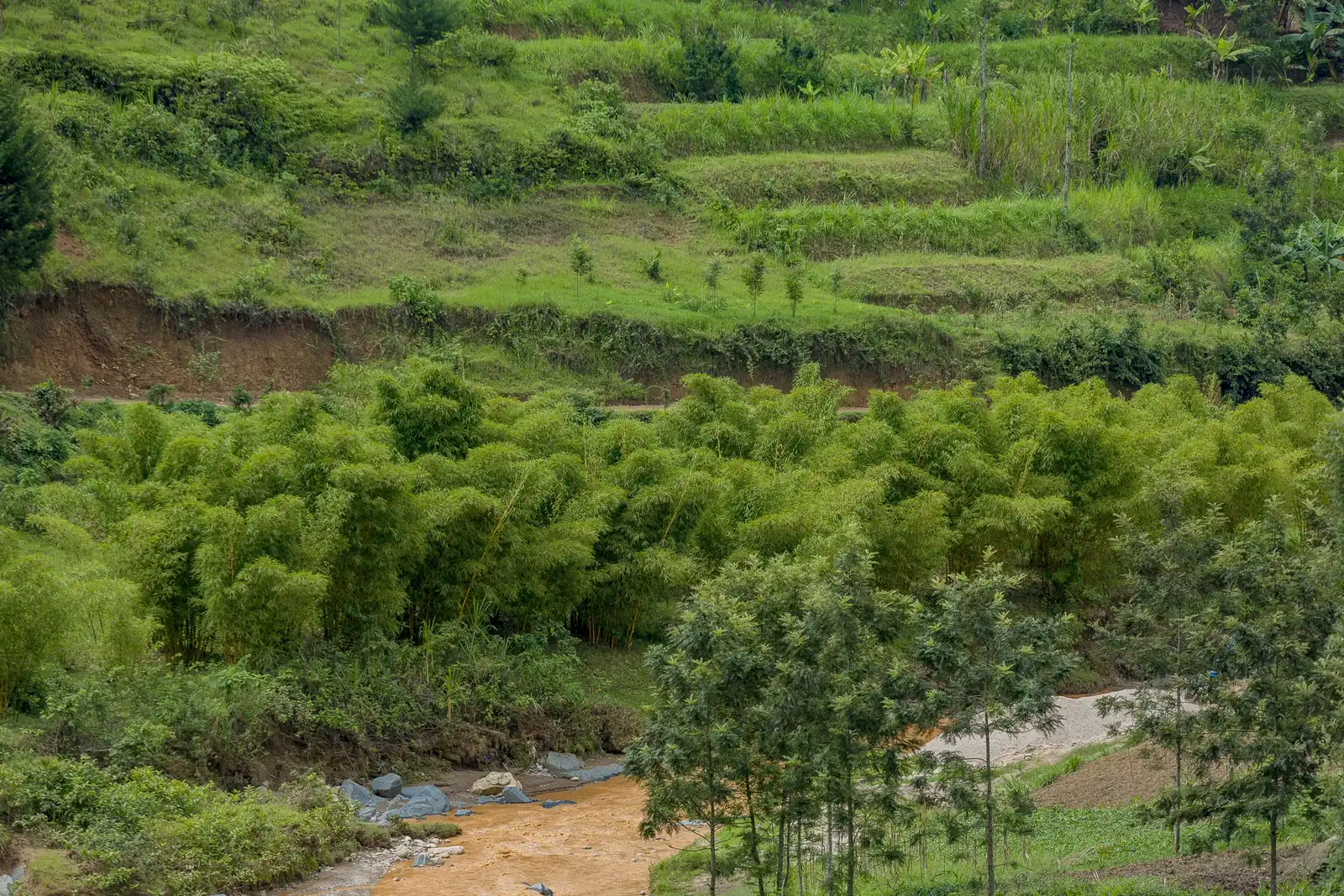
A 1,000 km riparian buffer restoration protecting fragile watersheds across Rwanda's highlands, on land too narrow and too wet to farm.
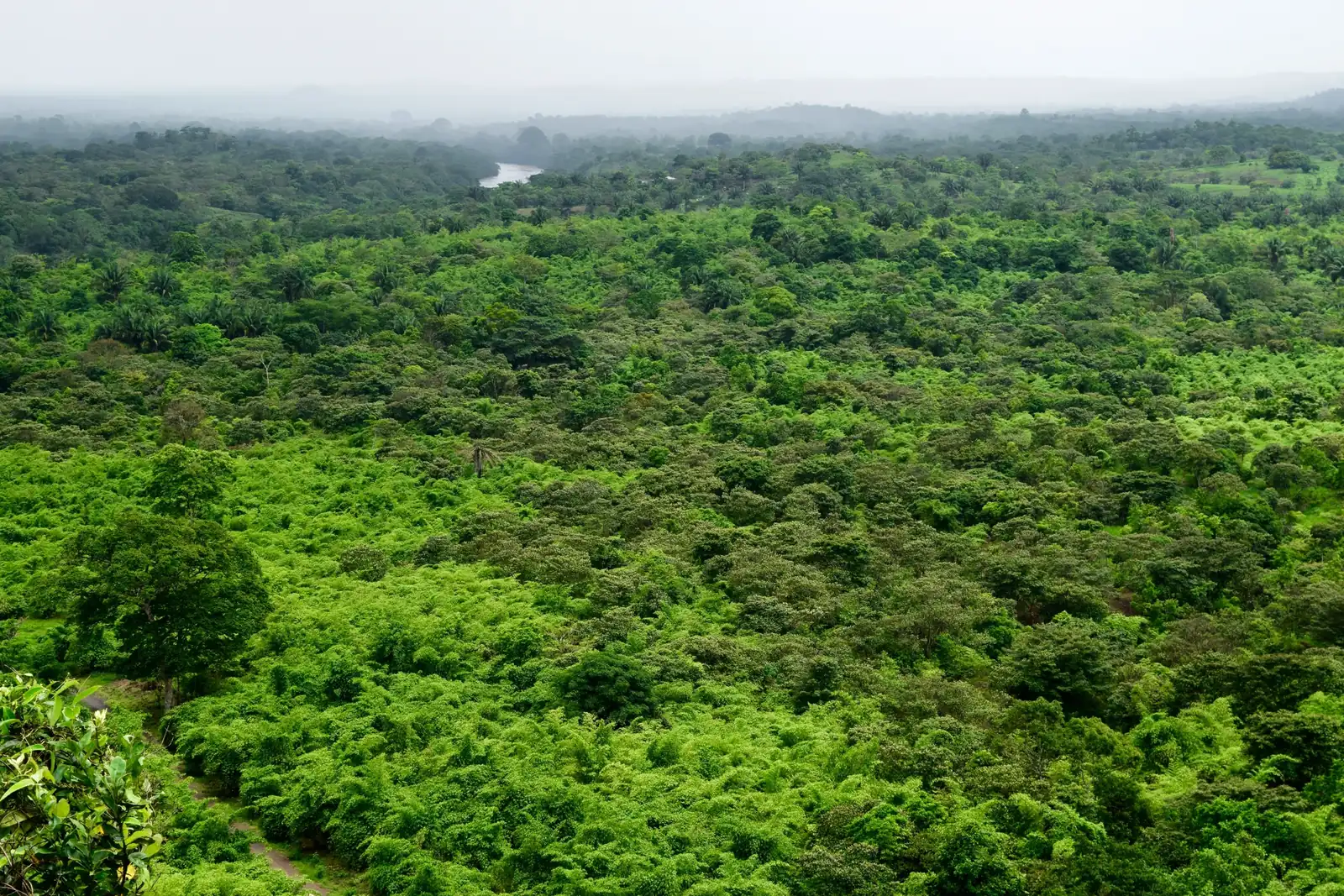
We restore degraded land at scale, capturing carbon in the forests we grow while developing regenerative fuels, sustainable materials, and rural livelihoods for the future.
EcoPlanet is an integrated land-restoration and bioeconomy company. We restore degraded land at industrial scale and use the resulting renewable biomass to deliver verified carbon removals, replace forest- and fossil-derived inputs in major global markets, and create lasting rural work in the places we operate.
Every year, the world clears more forest for fibre and burns more fossil carbon for fuel. Yet the land to grow a better answer sits idle: hundreds of millions of degraded, abandoned hectares. EcoPlanet turns that ground into certified, biodiverse bamboo forest. Bamboo is why it works: it reaches maturity in six to eight years, regrows from its own roots after every harvest, and keeps producing for decades without replanting.
At EcoPlanet we partner with leading corporations, governments and institutions across the planet to restore land, capture carbon, and create sustainable jobs. As a trusted development partner, we have worked with Fortune 100 and Global 1000 companies to restore land at scale.
We partnered with Volkswagen ClimatePartner on the Eastern Cape Restoration Project: spekboom thicket restoration inside a contiguous conservation sanctuary of more than 10,000 hectares, being developed as a future home for elephant and black rhino. They sent a crew to film what their backing actually built.
Learn more about the partnership →Backing EcoPlanet's Eastern Cape Restoration Project, large-scale spekboom reforestation delivering carbon removal, biodiversity, and rural livelihoods in South Africa.
An 11,145-hectare public-private partnership, a bamboo-led forest restoration initiative at national scale.
Gorilla-habitat protection and park expansion at Volcanoes National Park, integrating conservation with community benefit.
Designated project developer positioning bamboo as a tool for continental-scale forest landscape restoration across Latin America and Africa.
EcoPlanet was the first company in the world to deliver verified carbon removals from bamboo, issued, retired, and standing behind real corporate climate commitments. Fifteen years of operating history sits behind that: land secured, nurseries built, crews trained and forests standing.
We plant more bamboo every year, and the platform underneath it is broader than one species: fifteen years of large-scale land restoration across five countries and three continents, built country by country with governments, conservation organisations and the communities who live on the land. Where a landscape calls for something else, we plant something else.
More than 10,000 hectares, roughly a quarter of the portfolio, are restoration-led — projects where the objective is the ecosystem itself rather than a harvestable crop. A quarter to as much as half of every other property we operate is set aside permanently for native species and conservation.
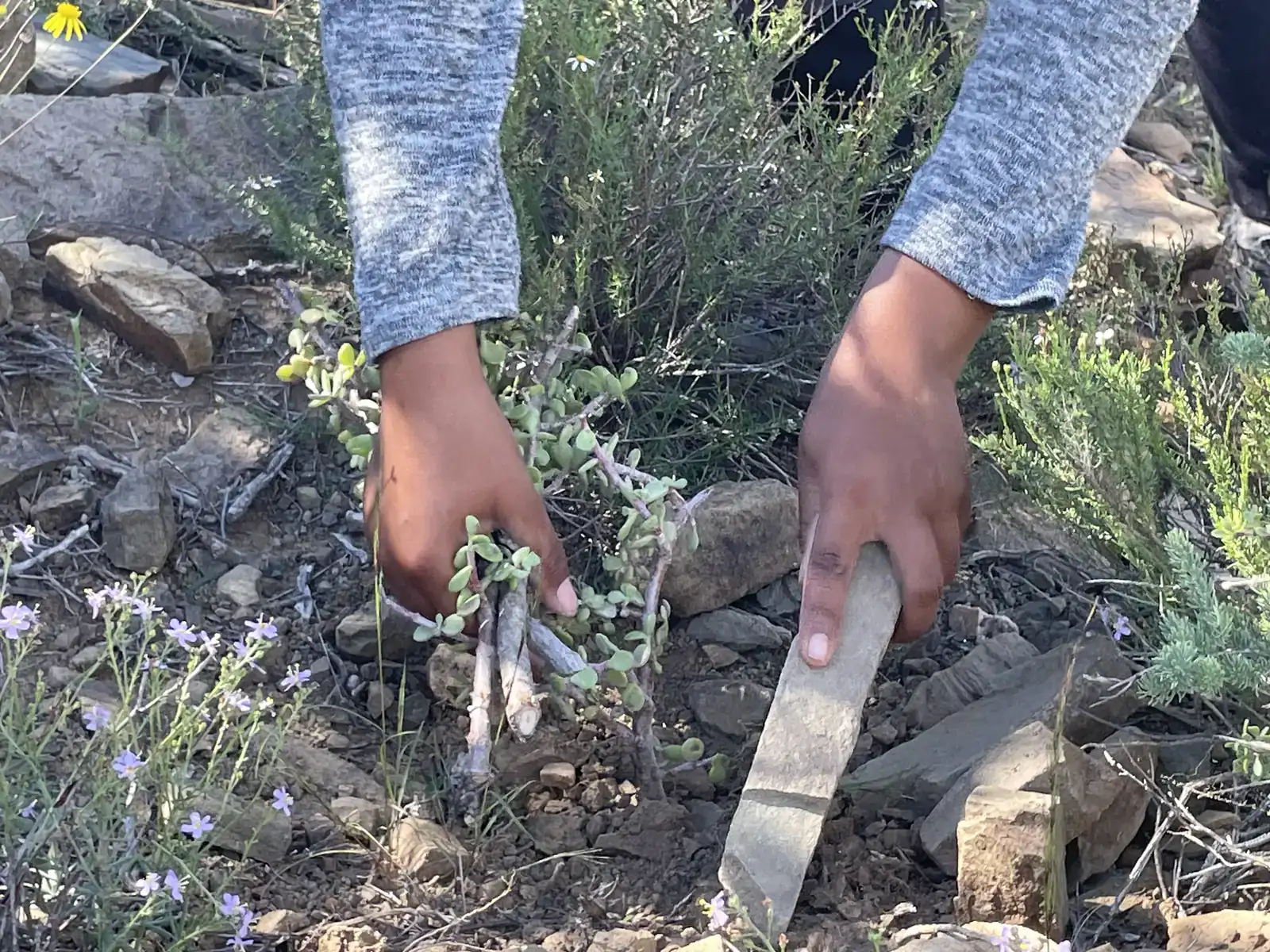
No bamboo at all. The Albany Subtropical Thicket is a global biodiversity hotspot, and spekboom is the keystone species that rebuilds it, drawing down carbon at night while losing almost no water. The restored land is becoming a contiguous sanctuary of more than 10,000 hectares, a future home for elephant and black rhino.
See the project →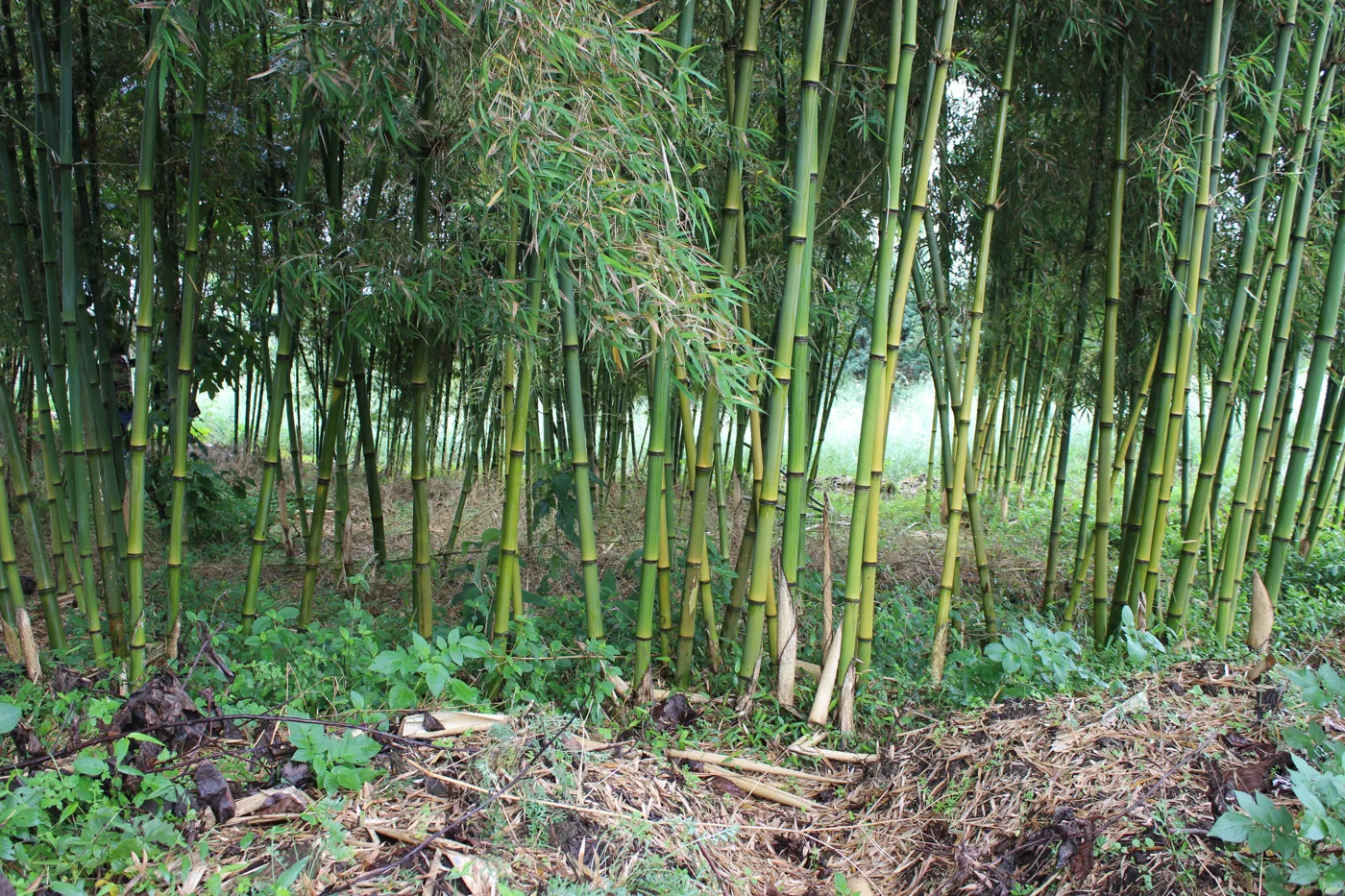
Bamboo doing pure conservation work. With the African Wildlife Foundation, EcoPlanet delivered the pilot phase of a habitat expansion at Volcanoes National Park, growing the endemic bamboo that endangered mountain gorillas feed on. No carbon project, no harvest, no crop.
See the impact →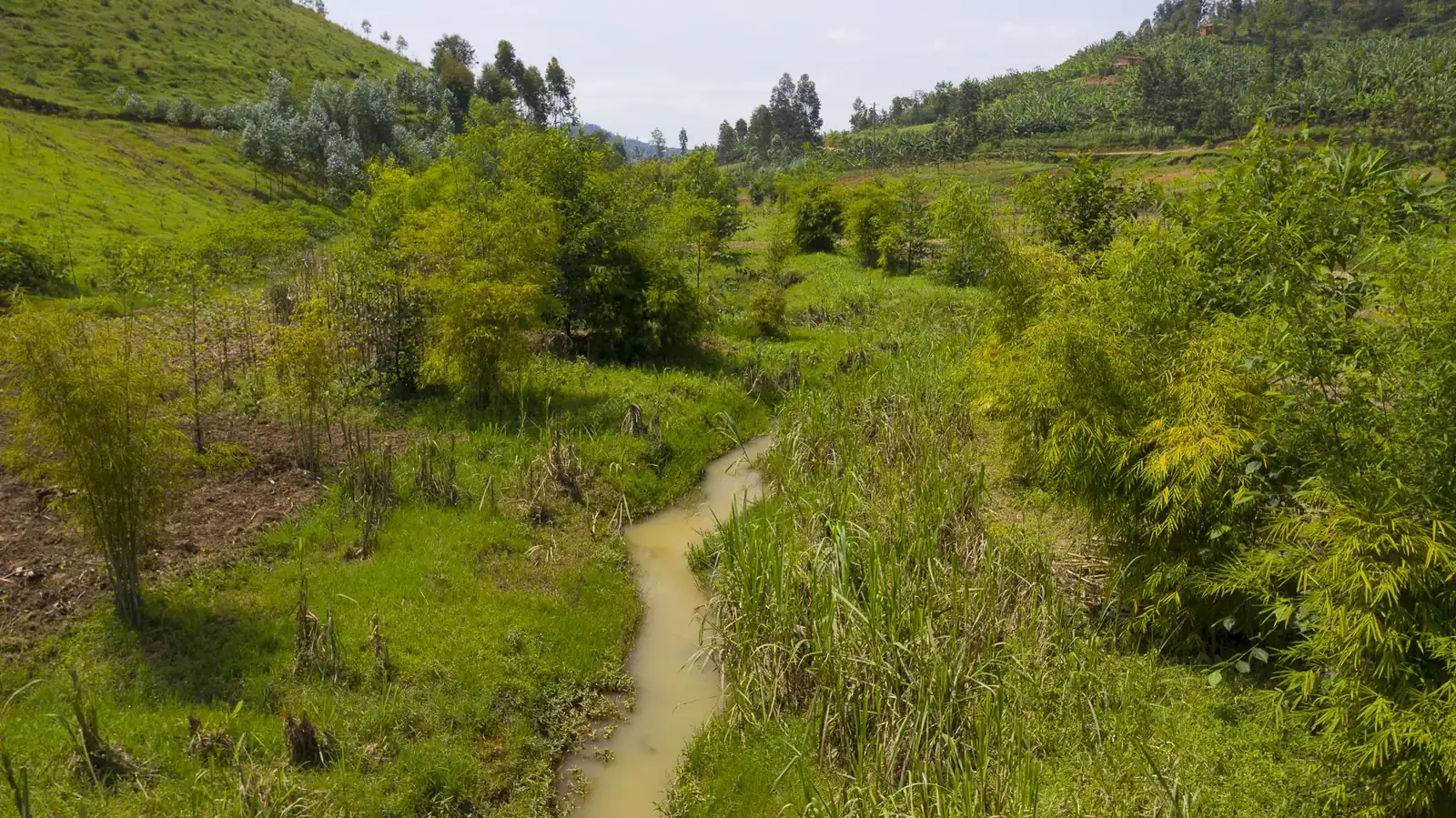
Also bamboo, also not a crop. Clumping bamboo planted as a living barrier along 1,000 km of riverbank, in partnership with the country’s water authority. Rwanda is steep, densely farmed and heavily rained on, so topsoil moves fast. Once restored, the buffers are protected under Rwandan law and nothing is harvested from them.
See the project →Every project is on the Verra registry, independently verifiable, and open for diligence. Follow any of them to the registry. See all nine →
A 1,000 km riparian buffer restoration protecting fragile watersheds across Rwanda's highlands, on land too narrow and too wet to farm.
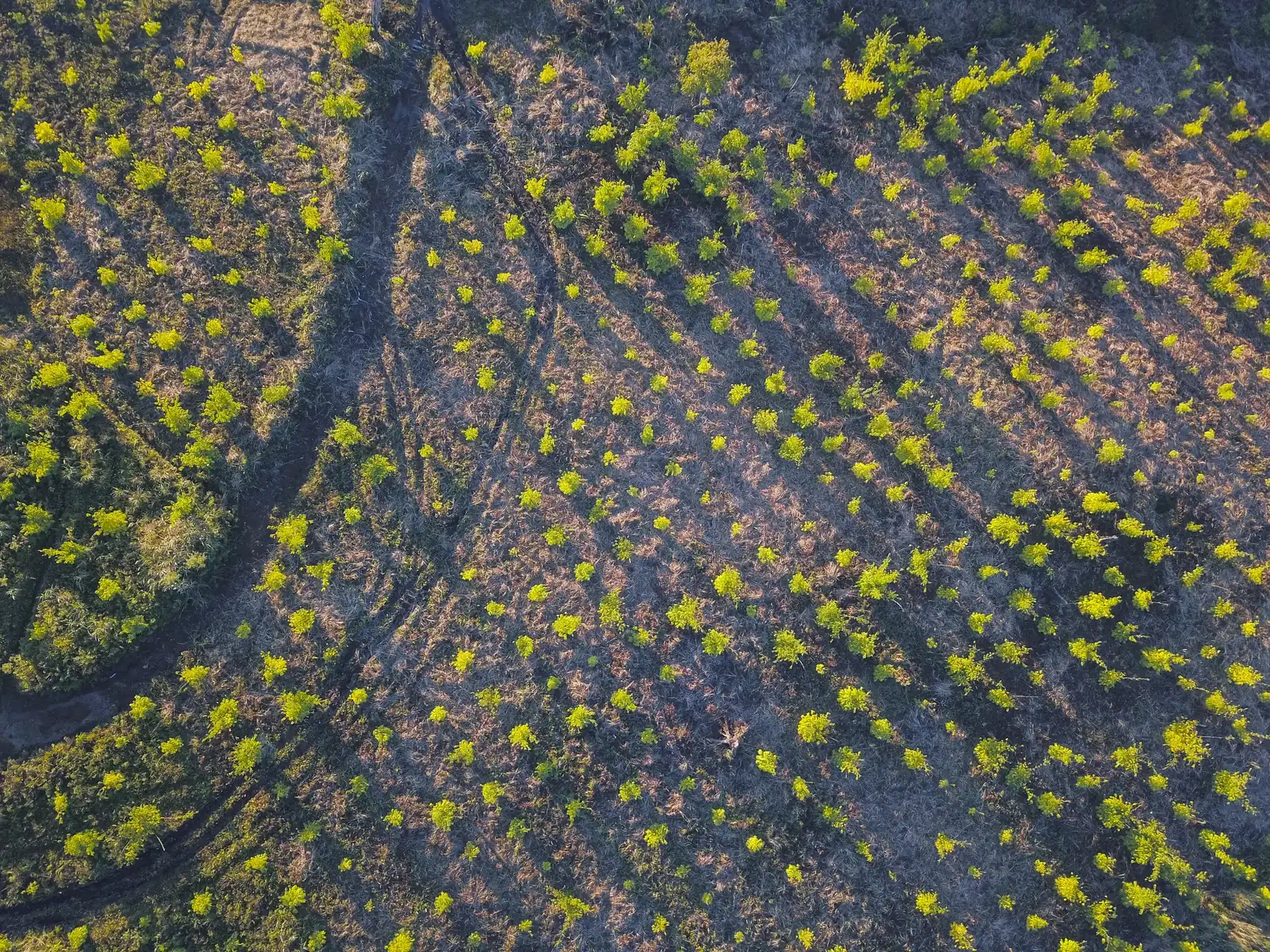
An 8,360-hectare project area on Mindanao: native bamboo reforestation alongside native trees, conservation and regenerative smallholder farms.
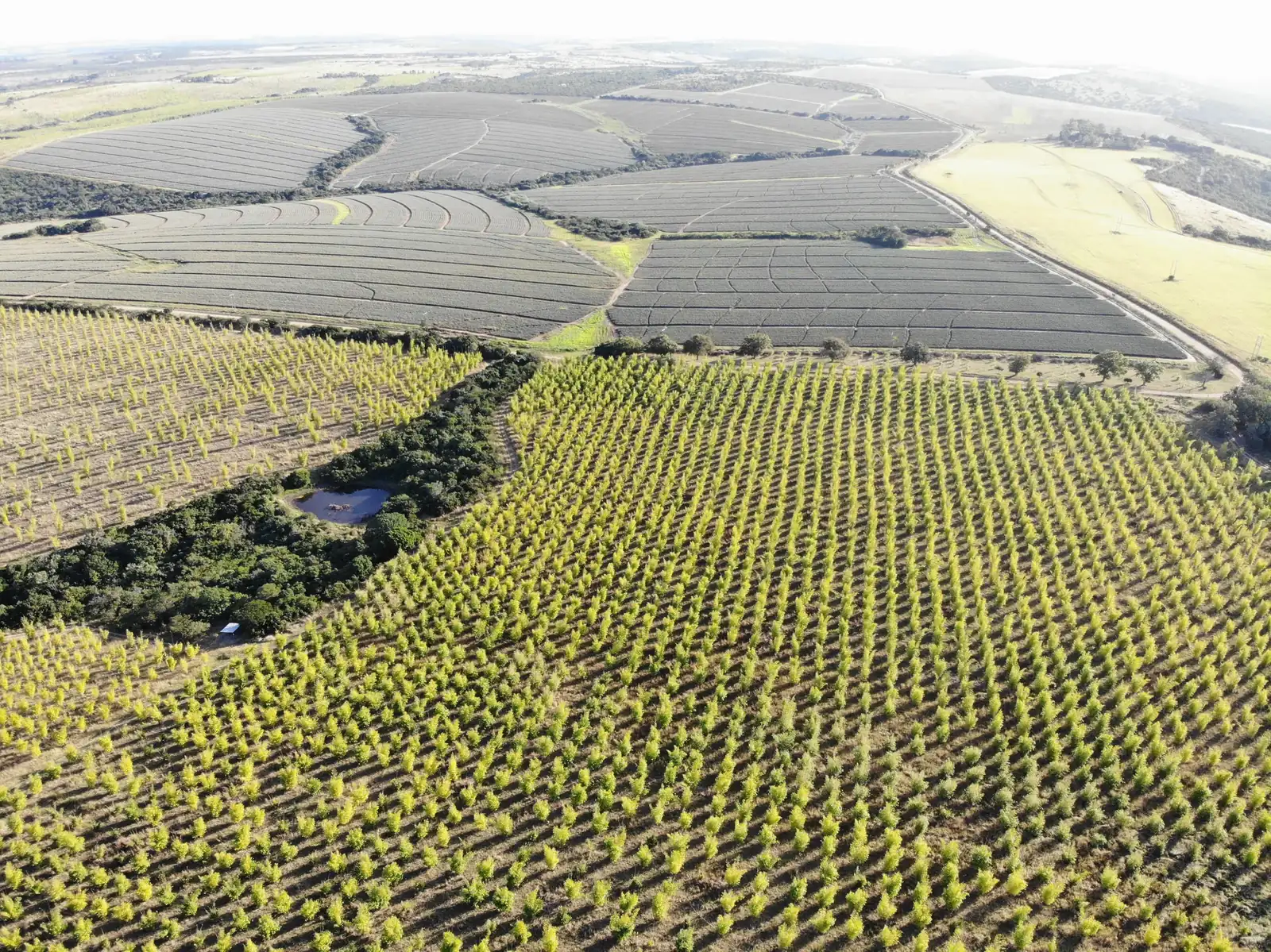
Giant bamboo returning degraded, overgrazed farmland to production, farm by farm, anchoring a regional fibre economy.
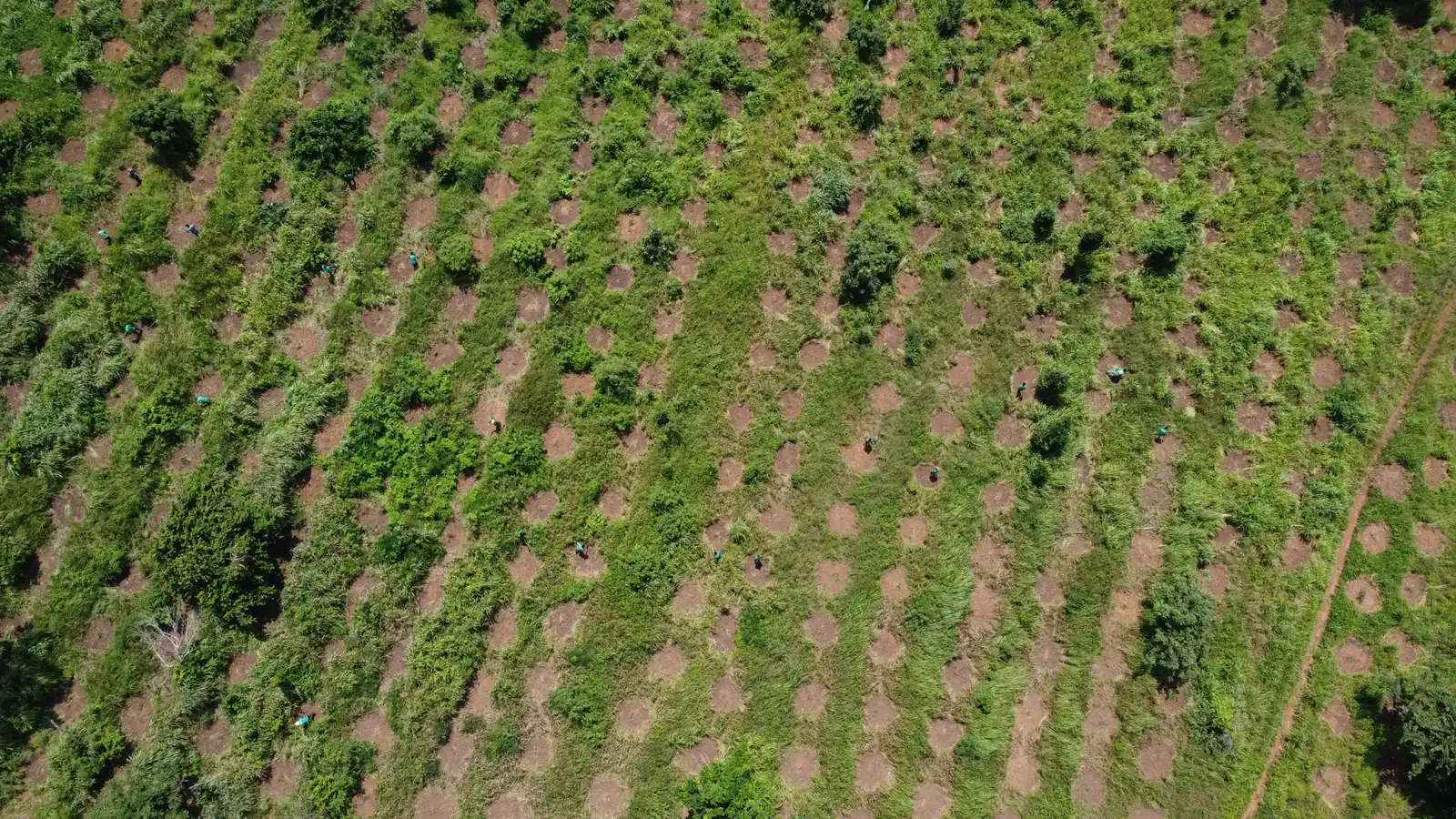
A national-scale bamboo public-private partnership, built with the Ghana Forestry Commission, with a workforce that is nearly half women.
A replicable cycle that turns degraded land into a self-sustaining forest economy, without competing for farmland or felling a single tree.
Tropical clumping bamboo is planted on marginal, unproductive land. Within five years, barren ground becomes biodiverse forest, with a quarter to as much as half of every farm set aside permanently for conservation.
As it grows, the forest draws carbon from the air into a living, regenerating sink, harvested for decades without replanting. No new ground broken. Removals are monitored, then assessed by an accredited body before Verra issues any credit, and sold forward to fund the planting.
At maturity, the same hectares return more than carbon: deforestation-free fibre and packaging today, and the feedstock for renewable fuels for the planes and ships we cannot electrify tomorrow.
A bamboo farm matures like nothing else in forestry, and each hectare compounds into the next engine. Carbon funds the planting today. Fibre builds the manufacturing base next. Fuel, for the planes and ships we cannot yet electrify, is where this scales. One platform, engineered to run all three.
Why bamboo →A portfolio of VCS projects generating removal credits, sold forward under transparent per-hectare project finance that buyers can audit to the dollar.
Tree-free, deforestation-free fibre for the pulp, paper and packaging industries that still drive most tropical deforestation, with manufacturing planned in-country where the bamboo grows.
The same biomass that makes fibre can become renewable liquid fuel for the planes and ships the world cannot electrify. That pathway comes next. Explore the pathway →
Four markets still run on forests and oil: pulp and packaging, sanitary tissue, aviation and shipping. See how each one changes →
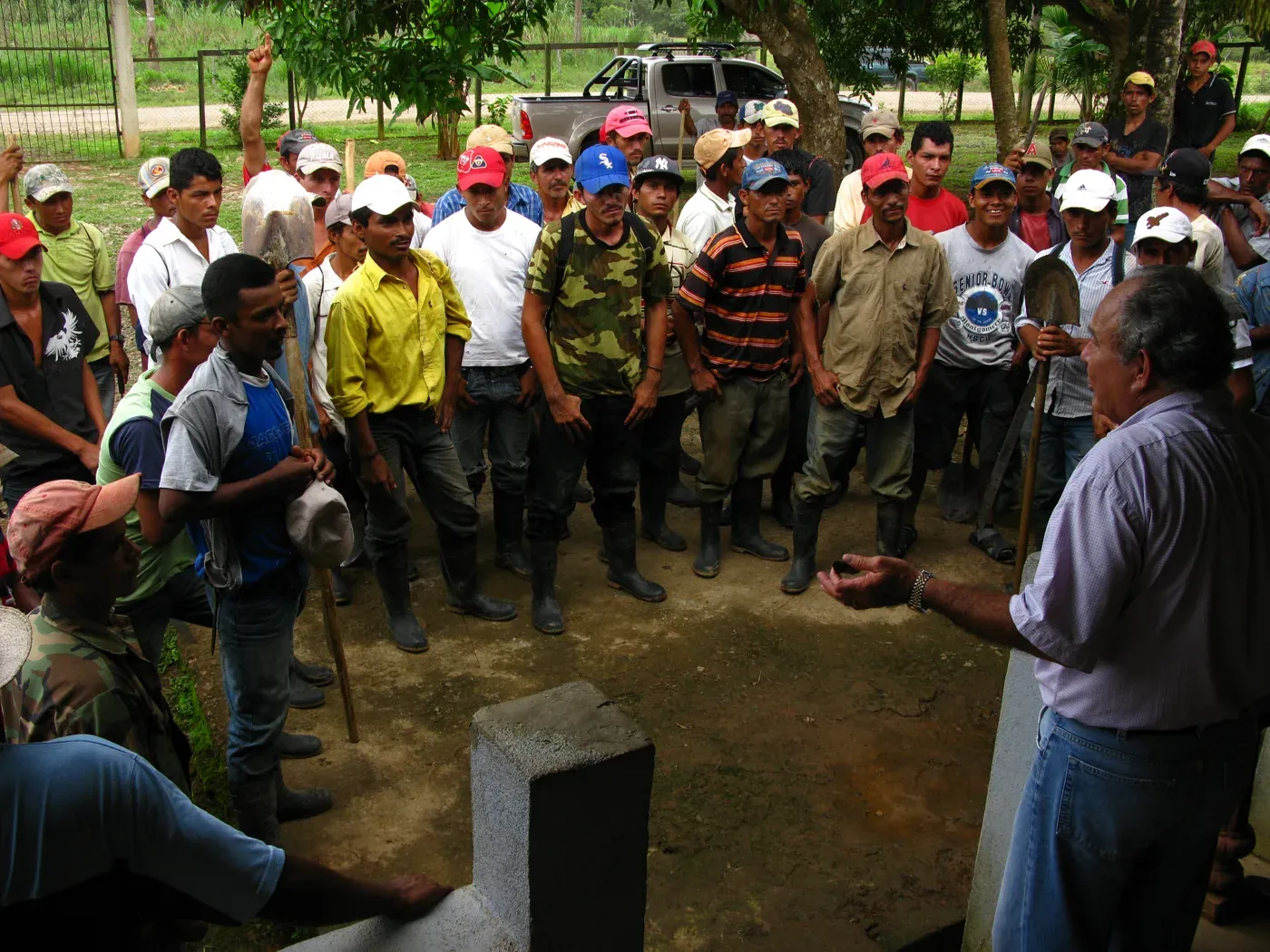
More than 99% of our team is hired locally. Roughly half of management roles are held by women. A quarter to as much as half of every farm is set aside, permanently, for native species and conservation.
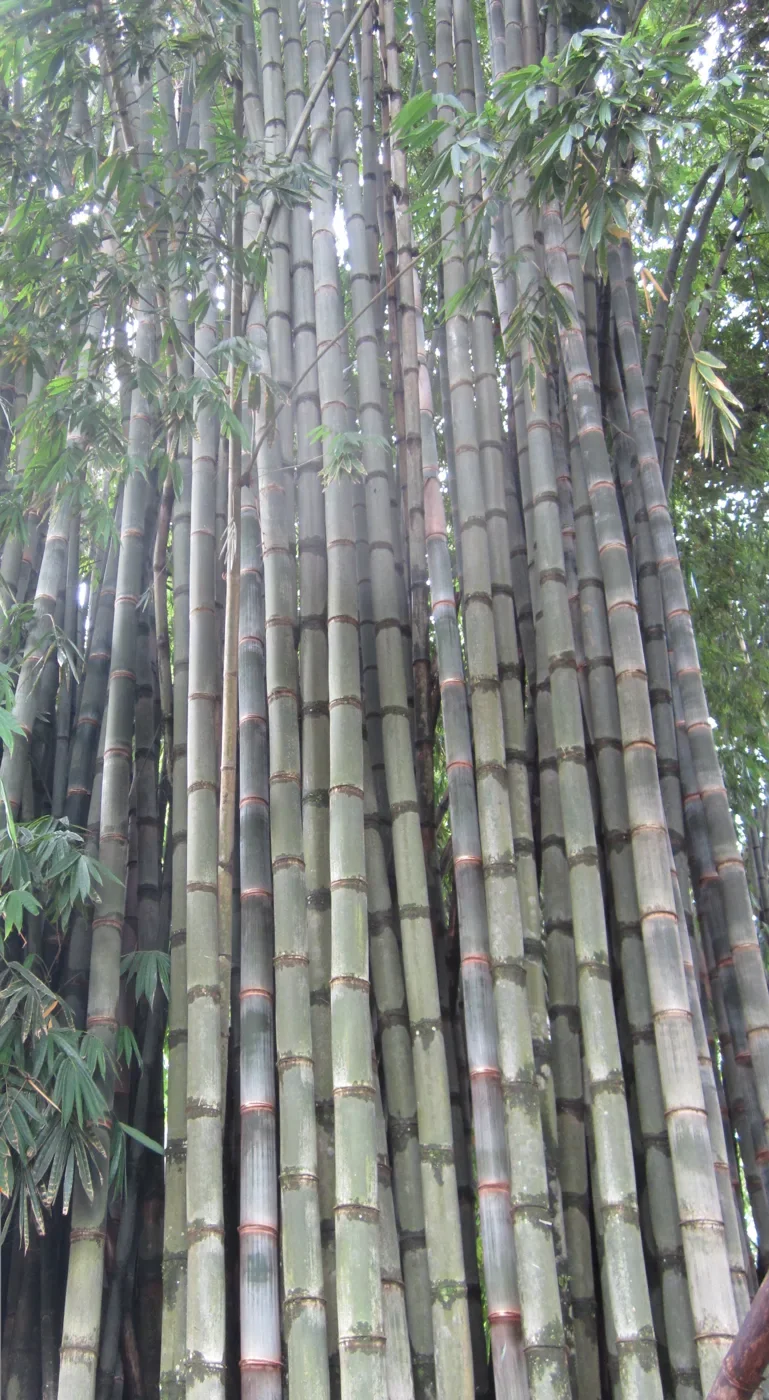
Buyers, investors, and partners come to EcoPlanet for different reasons. Find where you fit.
For teams retiring removals against a net-zero or science-based target, or locking in forward supply ahead of a tightening market. Every tonne traces to a hectare and a registry entry.
Explore carbon →For manufacturers planning future fibre offtake or an in-country manufacturing partnership. Feedstock is standing today; processing and offtake come next.
Explore fibre and materials →For governments, corporates, investors, conservation groups, and operators looking to build or scale restoration alongside us.
Start the conversation →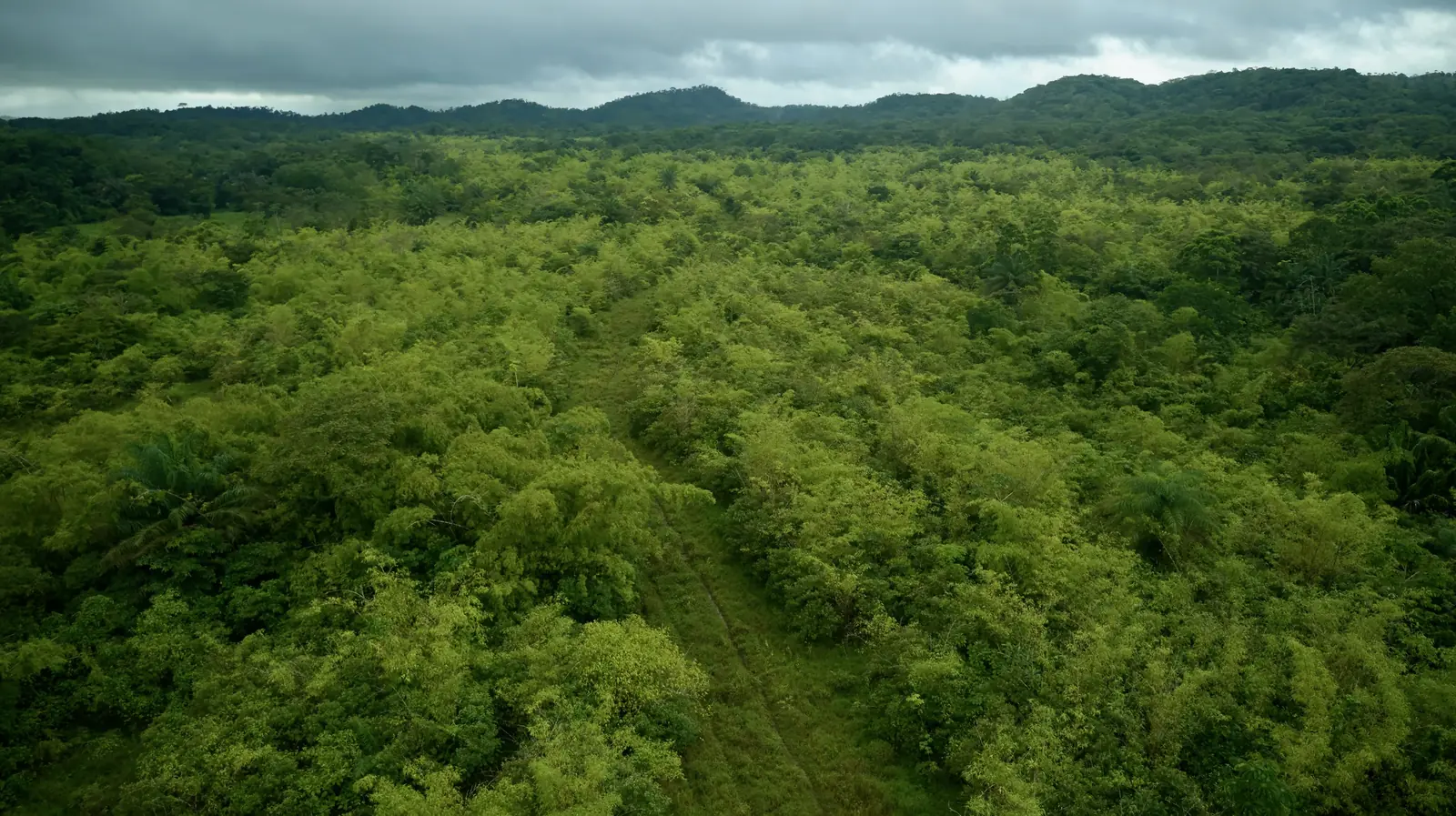
Fifteen years in the ground. We are restoring more than 40,000 hectares of degraded land across five countries and three continents, capturing millions of tonnes of carbon and creating thousands of rural jobs, through nine projects registered with Verra.
Every year the world puts far more carbon into the air than it takes back out, and the gap is still widening. Closing it needs removal at scale, and removal that can actually be checked. EcoPlanet works in removals only: carbon physically captured into living biomass and soil. Most of what we sell is forward-contracted against projected removals, which become credits once monitored, verified and issued. We were the first company in the world to deliver them from bamboo.
Those removals are financed by institutional buyers, among them Volkswagen ClimatePartner, Aker BP, A.P. Møller, Tomorrow Bank and Geobrugg, alongside Fortune 100 and Global 1000 companies. Each committed after auditing the projects hectare by hectare.
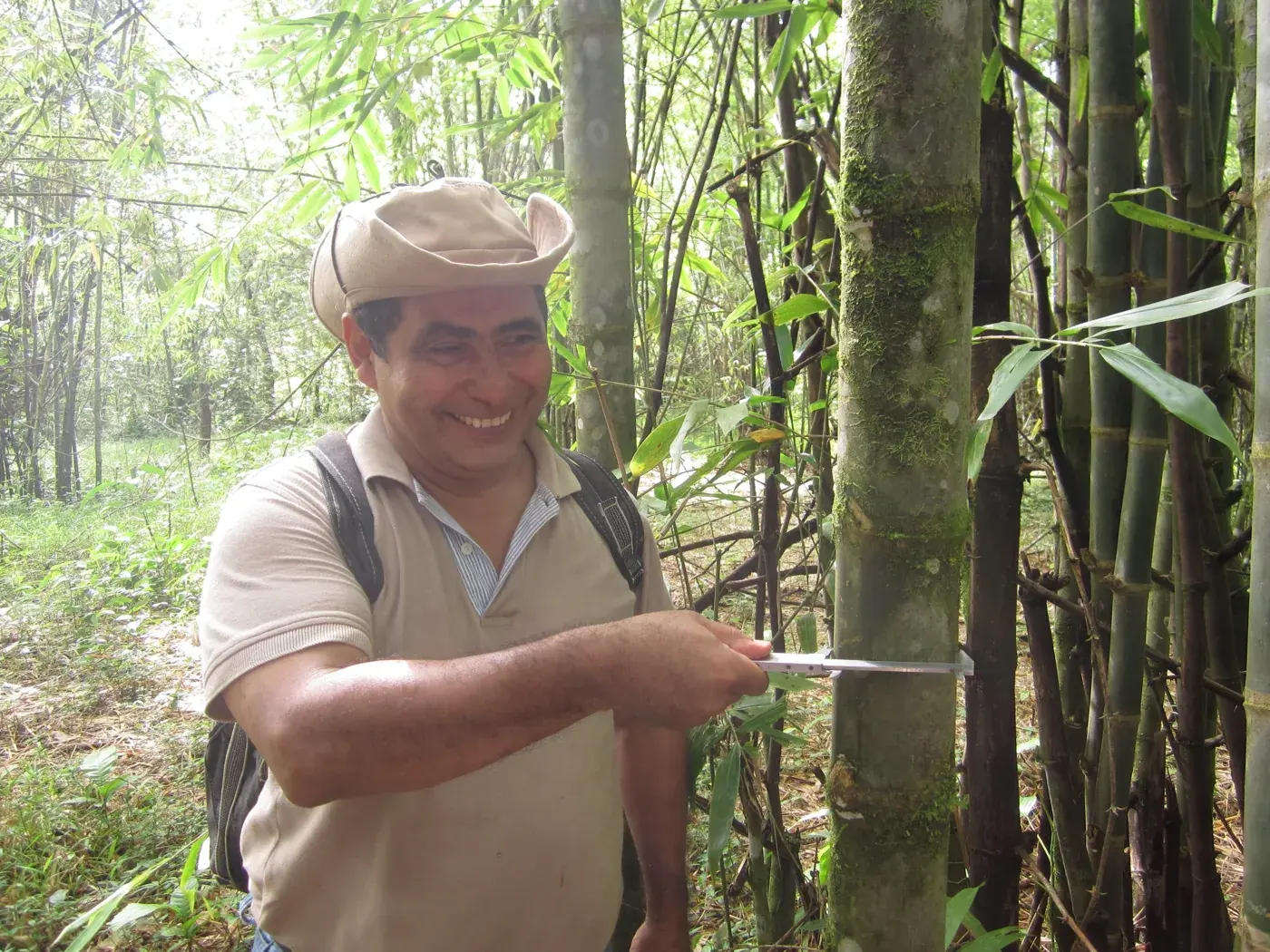
The team applying them helped write the VCS, CDM and REDD methodologies the market now runs on. If you want a view on your own project, or a second opinion on someone else’s, get in touch below.
Every project is developed under the Verified Carbon Standard, each with a public Verra registry entry a buyer can audit: the methodology, the verification, and every credit issued and retired, all on the public record.
Removals are projected from years of measured planting data, not models alone. Harvesting bamboo stimulates regrowth rather than ending the plant’s life, so a stand keeps producing for 60 to 120 years rather than ending as a crop does. Where we restore native thicket, as at Sand River, the carbon is committed to the land for a century. Land is held freehold where we own it, and under long-term lease or government tenure elsewhere.
Each standard does a different job. The Verified Carbon Standard governs the carbon itself, from validation of the project design through to verification of achieved removals. SD VISta assesses sustainable-development benefits, and CCB assesses community and biodiversity outcomes, where a project carries that status. EcoPlanet is also a UN Global Compact participant.
Every partnership traces to a hectare you can visit and a registry entry you can audit. We take this work seriously and believe that transparency and trust are critical. To that end, all of our projects are Verra registered and held to the highest standards across the board.
Philippines · Lanao del Sur, Mindanao
An 8,360-hectare project area of degraded montane land on Mindanao: 5,000 hectares of native bamboo reforestation alongside 1,200 hectares of native trees, 1,000 hectares of conservation and 620 hectares of regenerative smallholder farms. This offering covers 4,000 of the bamboo hectares, of which 1,600 are already planted.
South Africa · Eastern Cape
Giant bamboo converting degraded, overgrazed farmland, built farm by farm toward a target of 7,000 planted hectares. Three carbon farms are in the ground alongside Kowie, the pilot that proved the model. Unemployment in the town stood at 86% when we arrived, which is why the work this creates carries so far.
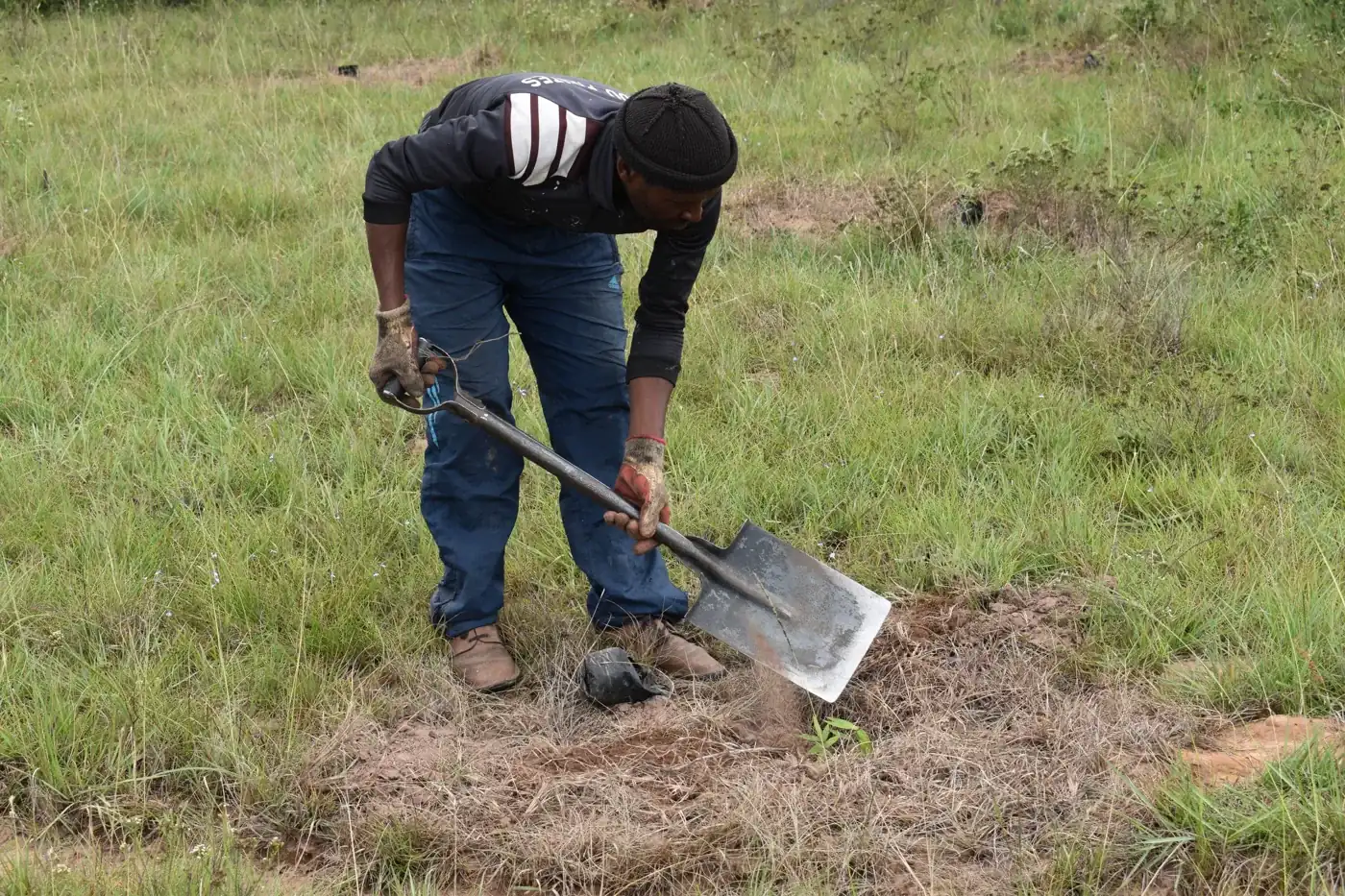 South Africa · Albany Thicket biome
Reviving the Eastern Cape's ancient subtropical thicket with Portulacaria afra, a keystone succulent that sequesters high volumes of carbon for a semi-arid region. No bamboo at all. The restored land is becoming a contiguous sanctuary and a future home for black rhino and elephant.
Rwanda · Highland watersheds
A 1,000 km riparian buffer-zone restoration protecting fragile watersheds against erosion, with 500 km already planted. Clumping bamboo is planted as a living barrier rather than a crop, on land too narrow and too wet to farm, and nothing is harvested once the banks are restored.
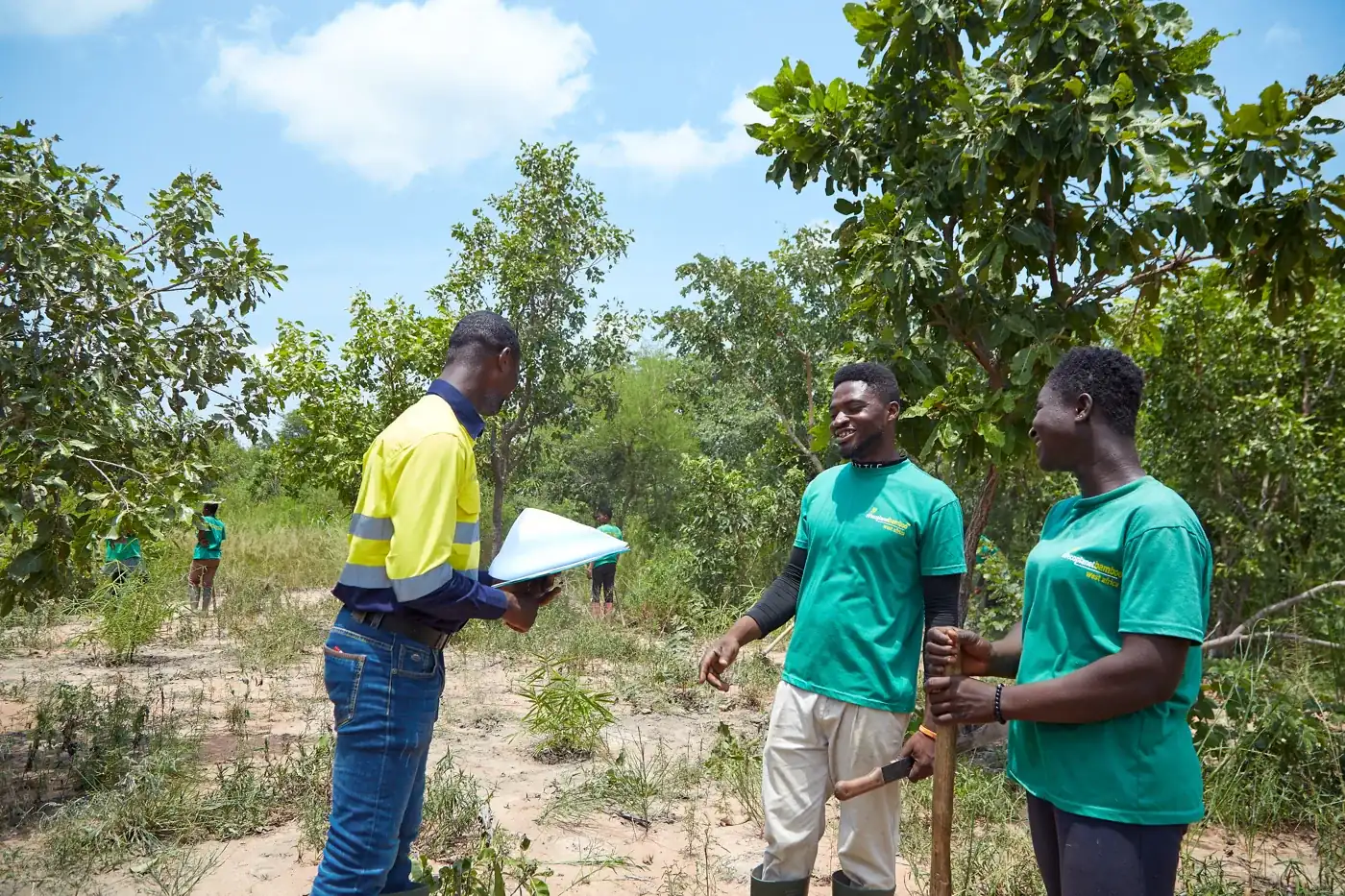 Ghana · North Bandai PPP
An 11,145-hectare public-private partnership regenerating land degraded by fire and illegal charcoal harvesting. Over 775,000 bamboo clumps planted, integrated with native trees and remnant forest. The workforce is nearly half women, and the project funds water and sanitation for surrounding communities.
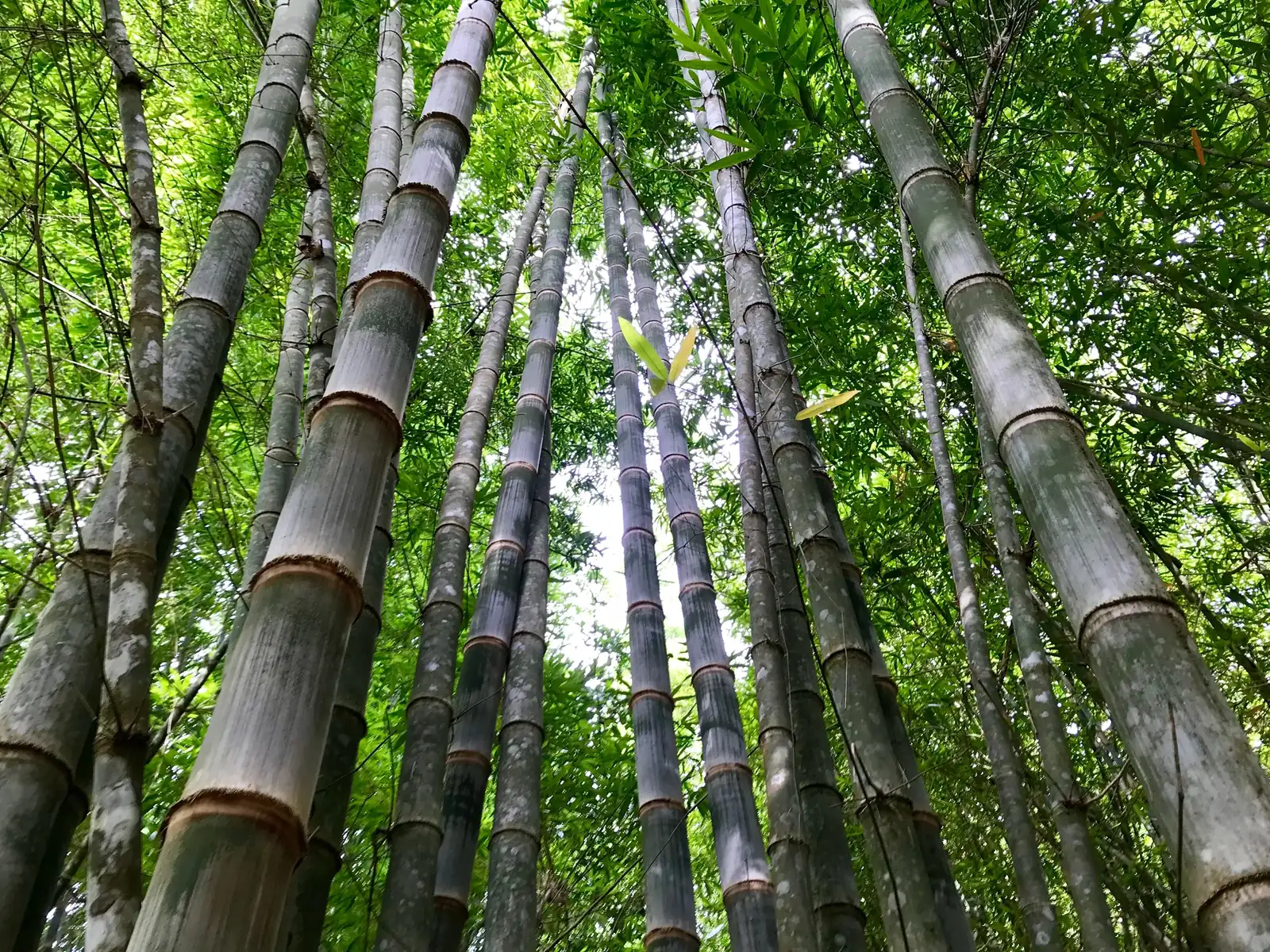 Nicaragua · San Jose Farm and El Rama
The project that proved the model. Heavily degraded pastureland converted into biodiverse bamboo ecosystems, generating the world's first accredited bamboo carbon offsets under the Verified Carbon Standard. Hundreds of stable jobs above minimum wage, funding local health clinics in a region of historically high unemployment.
Tell us your volume, timing, geography, and the impact story that matters to you: biodiversity, gender, community health. We map it to the projects that fit.
Every project links straight to its Verra registry entry. Walk the documentation, or walk the actual land. We host buyers on site.
Forward offtake or spot, structured around your delivery horizon and reporting needs, with vintages and pricing set transparently.
We monitor the removals, an accredited body verifies them, Verra approves the verification and issues the credits, and they are retired against your commitment.
Every project is designed so the land and the people on it grow together. A quarter to as much as half of every property is set aside permanently for conservation. We prioritise hiring locally, with more than 99% of our teams being local, and prioritise gender equity, with women in roughly half of management roles. Our projects are built with co-benefits baked in, focused on supporting local ecosystems, creating sustainable jobs, and meeting SD VISta goals.
See the impact in full →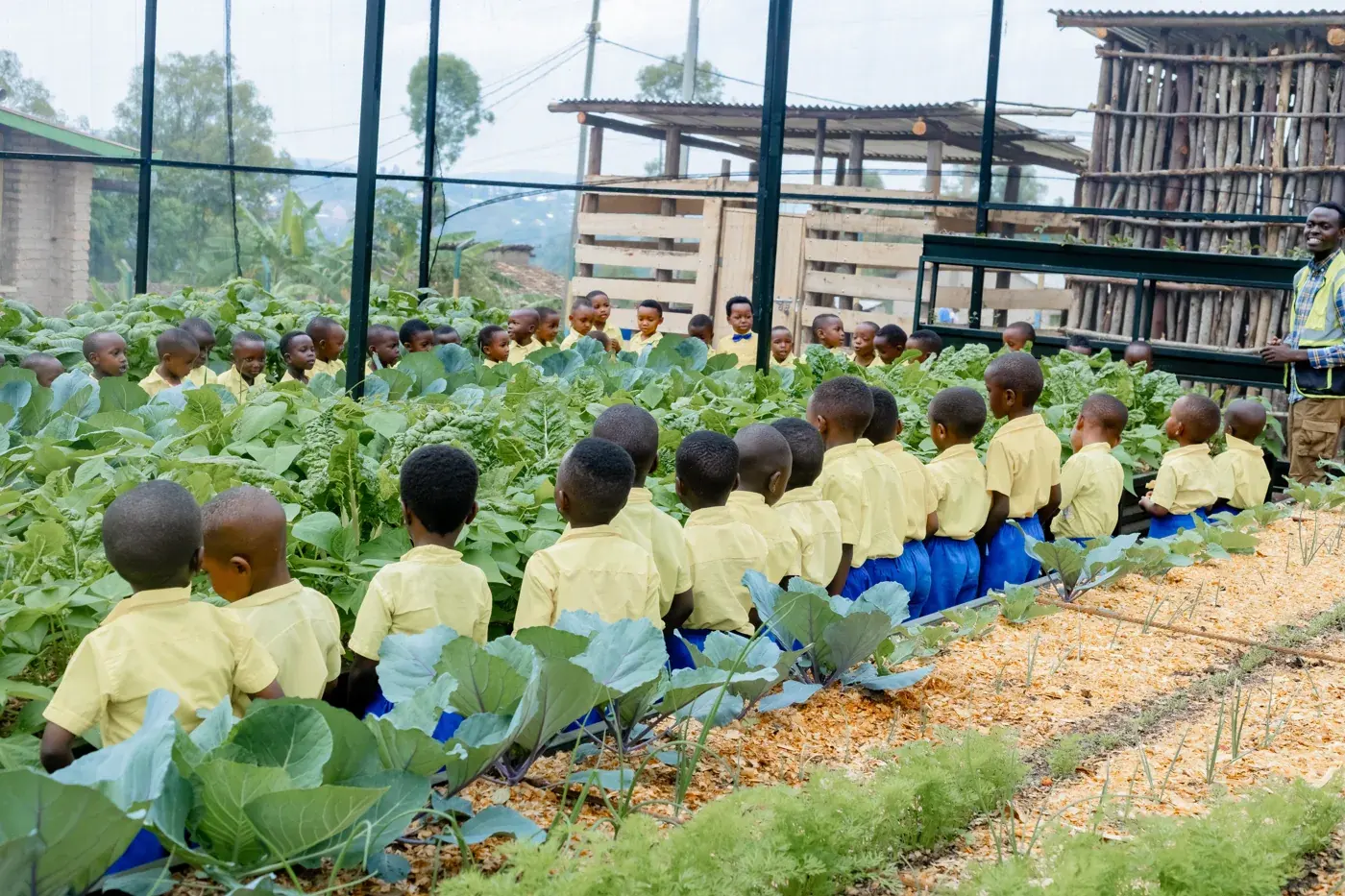
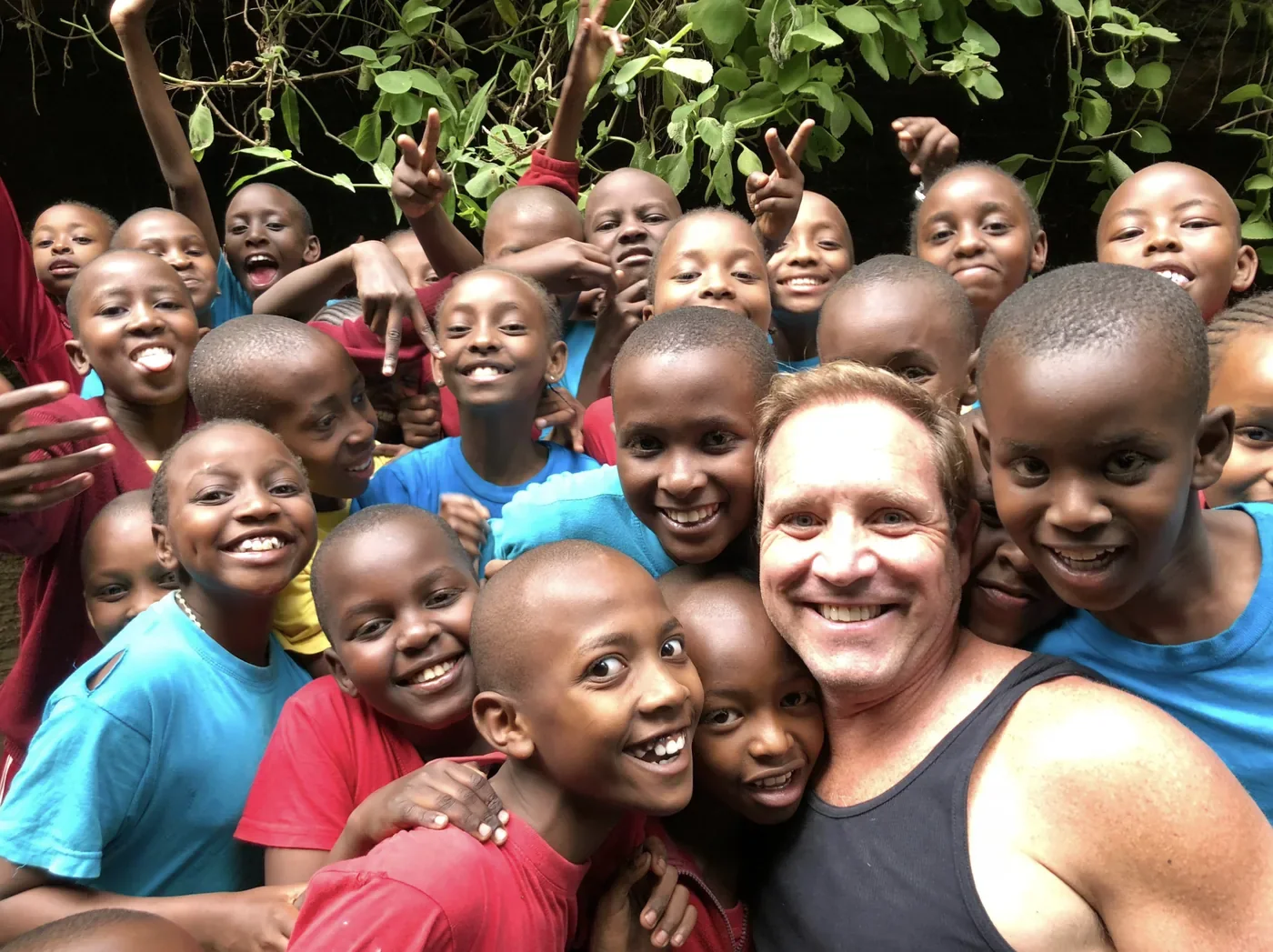
A school growhouse at an Early Childhood Development centre in Rwanda now supports 378 children, whose food-secure days rose from 12 a month to 20 at the age when nutrition shapes everything that follows.
We work best with buyers who know what they’re trying to achieve, and we say so when we’re not the right match. Tell us your goal. We’ll show you where it meets fifteen years of work already in the ground.
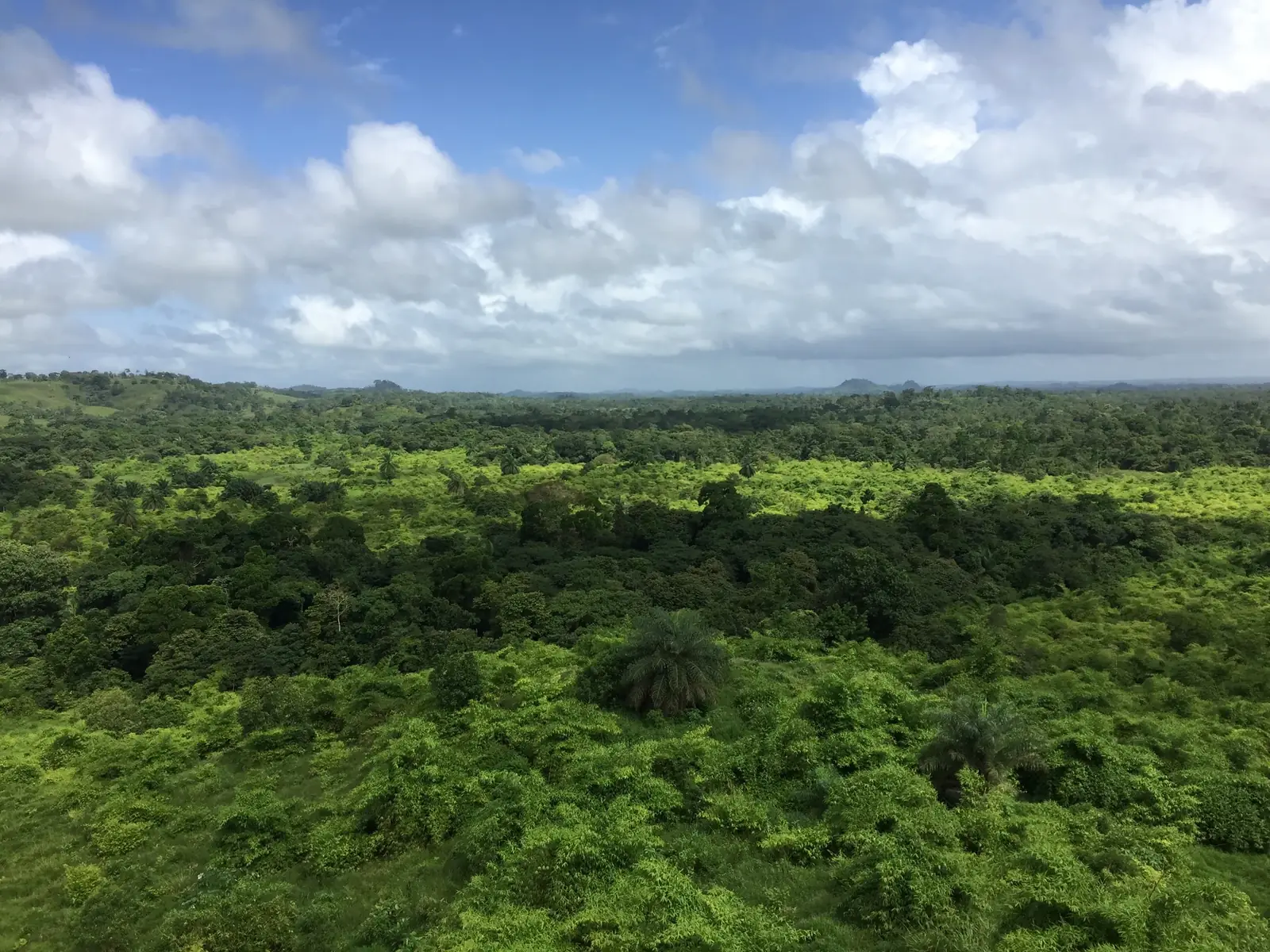
EcoPlanet is an integrated land-restoration and bioeconomy company. We take land so degraded there are few other opportunities left on it, and use giant clumping bamboo to bring it back. What grows there becomes verified carbon removals today, deforestation-free fibre and renewable fuel next, and work that can hold a rural community for two or three generations.
In her TEDxBoston talk, co-founder and CEO Camille Rebelo sets out the case for regenerative economies: why the hardest sectors to electrify still need a molecule, and why that molecule can be grown on land nobody wanted.
Invited by the Government of Rwanda to name a baby mountain gorilla at the 20th anniversary of its flagship conservation ceremony. The name chosen means "bamboo."
Among the first commercial bamboo operations in the world to carry the Verified Carbon Standard alongside CCB gold-level certification. CCB assessment and SD VISta co-benefit reporting increasingly matter for European sustainability disclosure.
CEO Camille Rebelo sits on the Council, convened by the German Federal Ministry for the Environment and supported by the World Resources Institute, alongside former heads of state.
Recognized among the Meaningful Business 100, which honors leaders uniting commercial success with measurable social and environmental impact.
Presented by the U.S. Department of State, one of the U.S. government's highest recognitions for American companies operating responsibly abroad.
EcoPlanet's Nicaragua farms generated the world's first carbon credits from bamboo, verified under the Verified Carbon Standard.
Commissioned EcoPlanet to produce a full commercialization and bioeconomy analysis for the country, mapping how restored bamboo landscapes can anchor a national industry.
KOICA, South Korea's development agency, engaged EcoPlanet on behalf of the Government of Ethiopia to help industrialize the country's bamboo sector.
The World Bank's Multilateral Investment Guarantee Agency issued up to $48.8M in political-risk guarantees for EcoPlanet's operations in Nicaragua, with IFC environmental, health and safety standards built into operations.
CEO Camille Rebelo's eleven-minute case for bamboo as the feedstock of the post-fossil economy.
The continent's leading platform for women entrepreneurs profiles the operator behind a continent-spanning bamboo restoration portfolio.
In The Business of Planting Trees, the World Resources Institute and The Nature Conservancy named EcoPlanet one of only 14 investable restoration-economy companies worldwide, the sole bamboo operator on the list.
Most people go looking for good land. In 2010, Camille Rebelo and Troy Wiseman went looking for the worst.
They found it in Nicaragua: abandoned pastureland that had been rainforest once and grew almost nothing by the time they arrived. Bringing it back was only half the idea. The other half was building a company that could pay for the work, employ the people living around it, and still be standing in thirty years. Restoration funded by grants ends when the grant does.
Three years later those same farms produced the first carbon credits ever issued from bamboo. Fifteen years on the model runs across five countries and three continents, employing more than 1,800 people, over 99% of them hired locally.
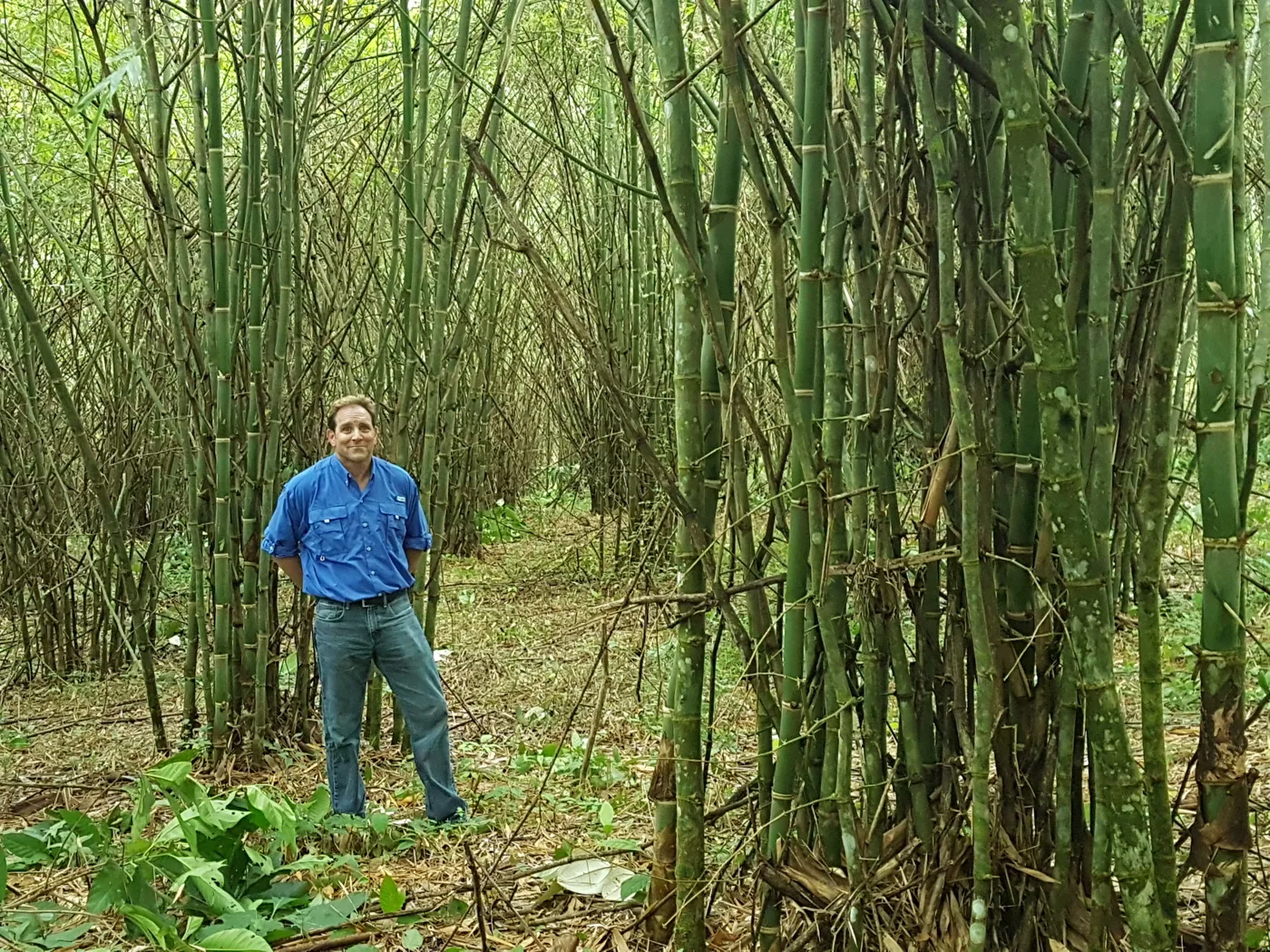
EcoPlanet runs one blueprint across five countries: a lean, technology-enabled global team, with country operations led almost entirely by local hires.
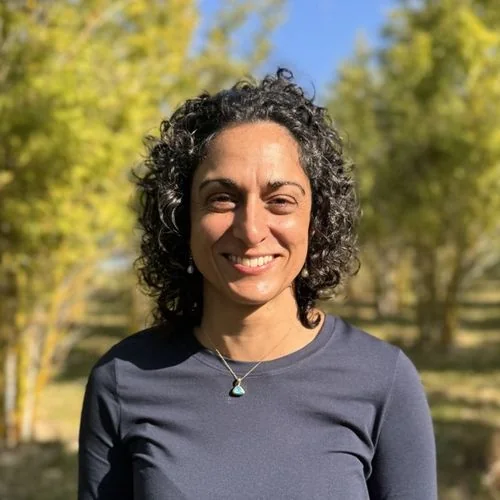
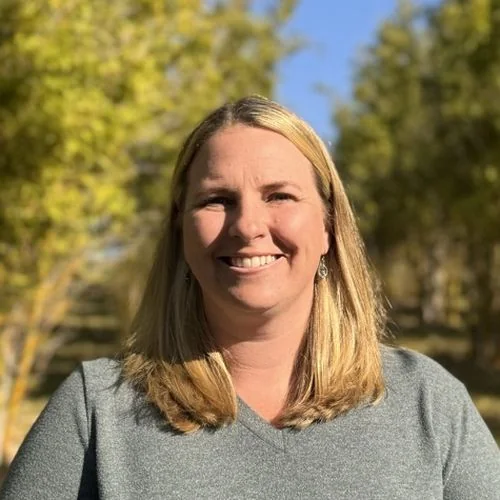


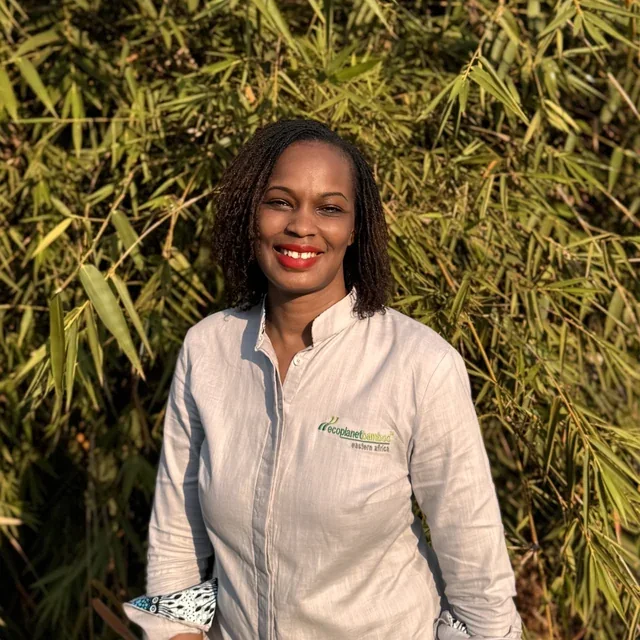
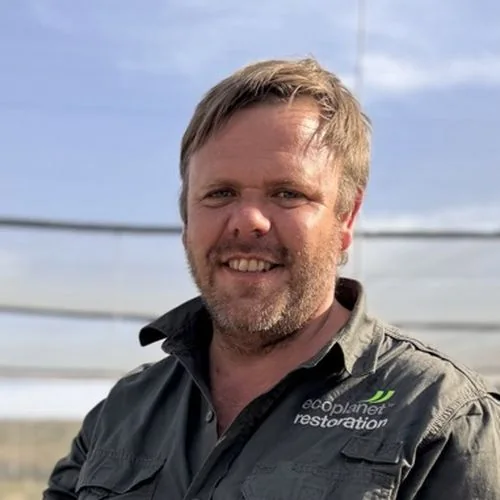
These country-team roles are held by local hires across our five geographies.
EcoPlanet is a triple bottom line company. People, planet and profit carry equal weight, and the team is built to match: collaborative, entrepreneurial, and genuinely interested in driving long-term impact through a business rather than around one.
The work is fast-paced and multi-national. Most of it happens in rural regions across five countries and three continents, which means the people who do well here communicate easily across cultures, carry a real sense of responsibility, and would rather solve a problem than escalate it.
More than 99% of the team is hired locally, and roughly half of management roles are held by women. For global roles, remote works for the right person: what matters is being disciplined about time zones and serious about the mission.
What we offer: competitive pay, real room to grow, and a platform to do exciting and meaningful work alongside an ambitious and passionate team, in a global company driving genuine change.
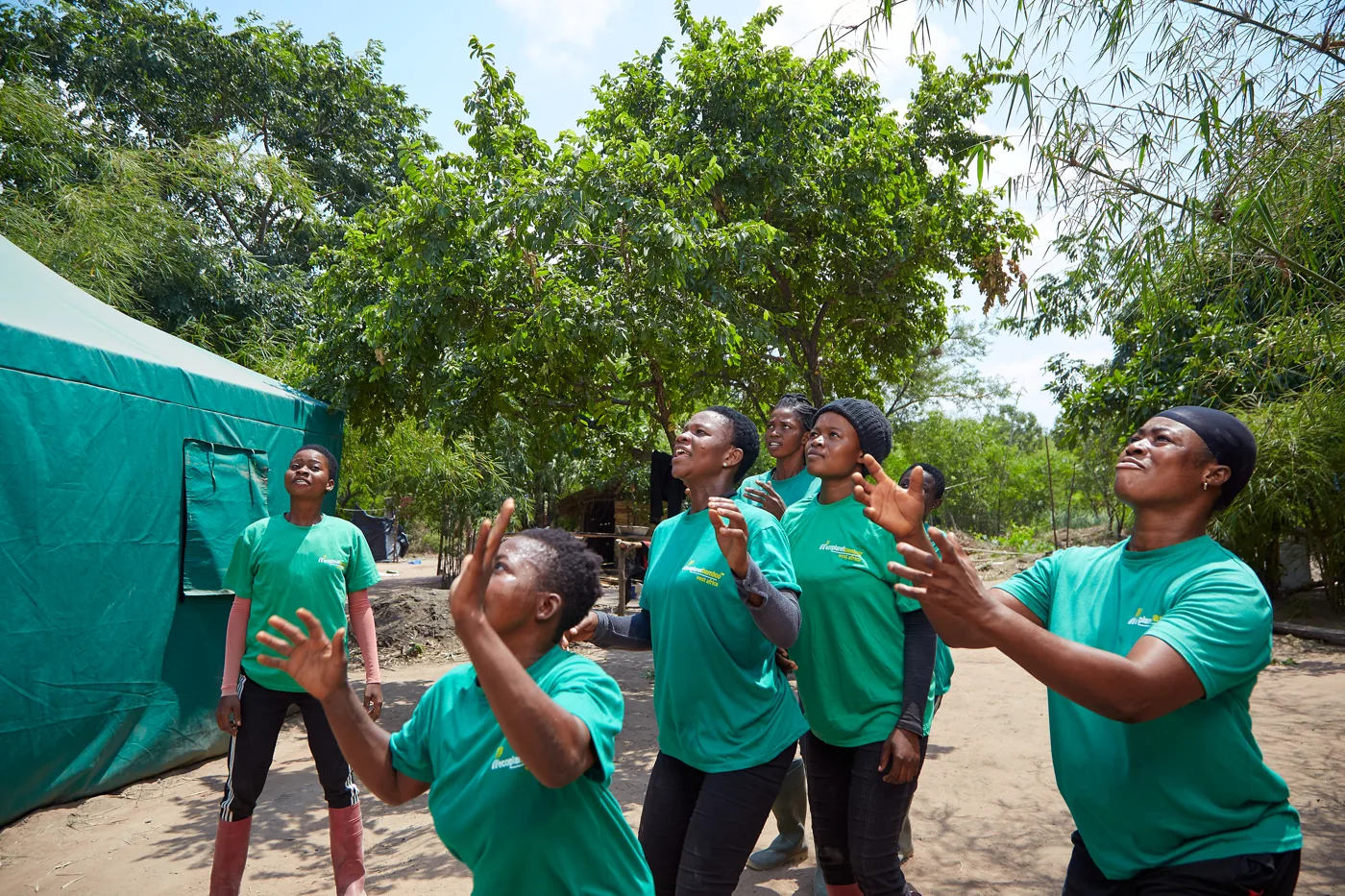
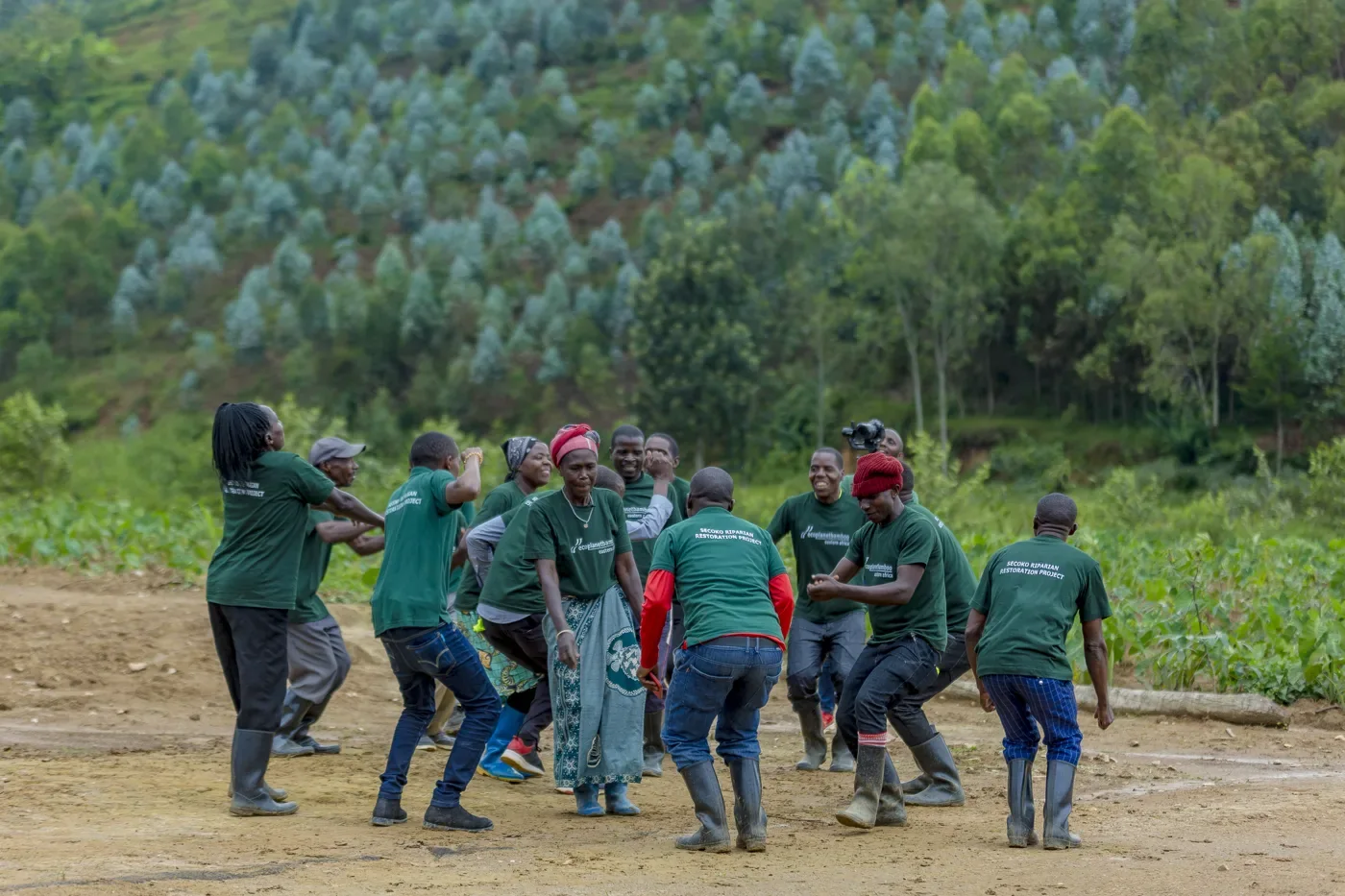
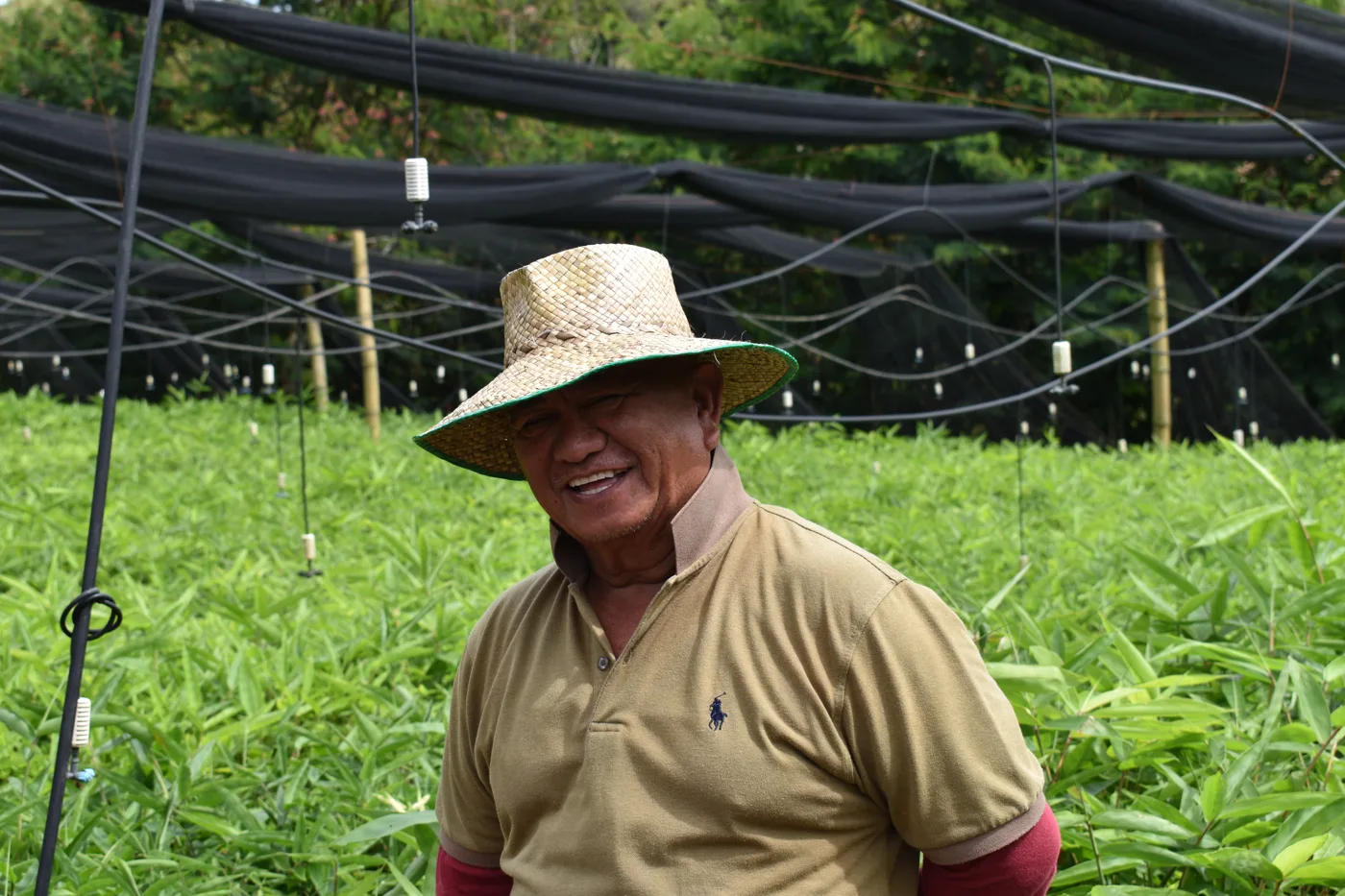
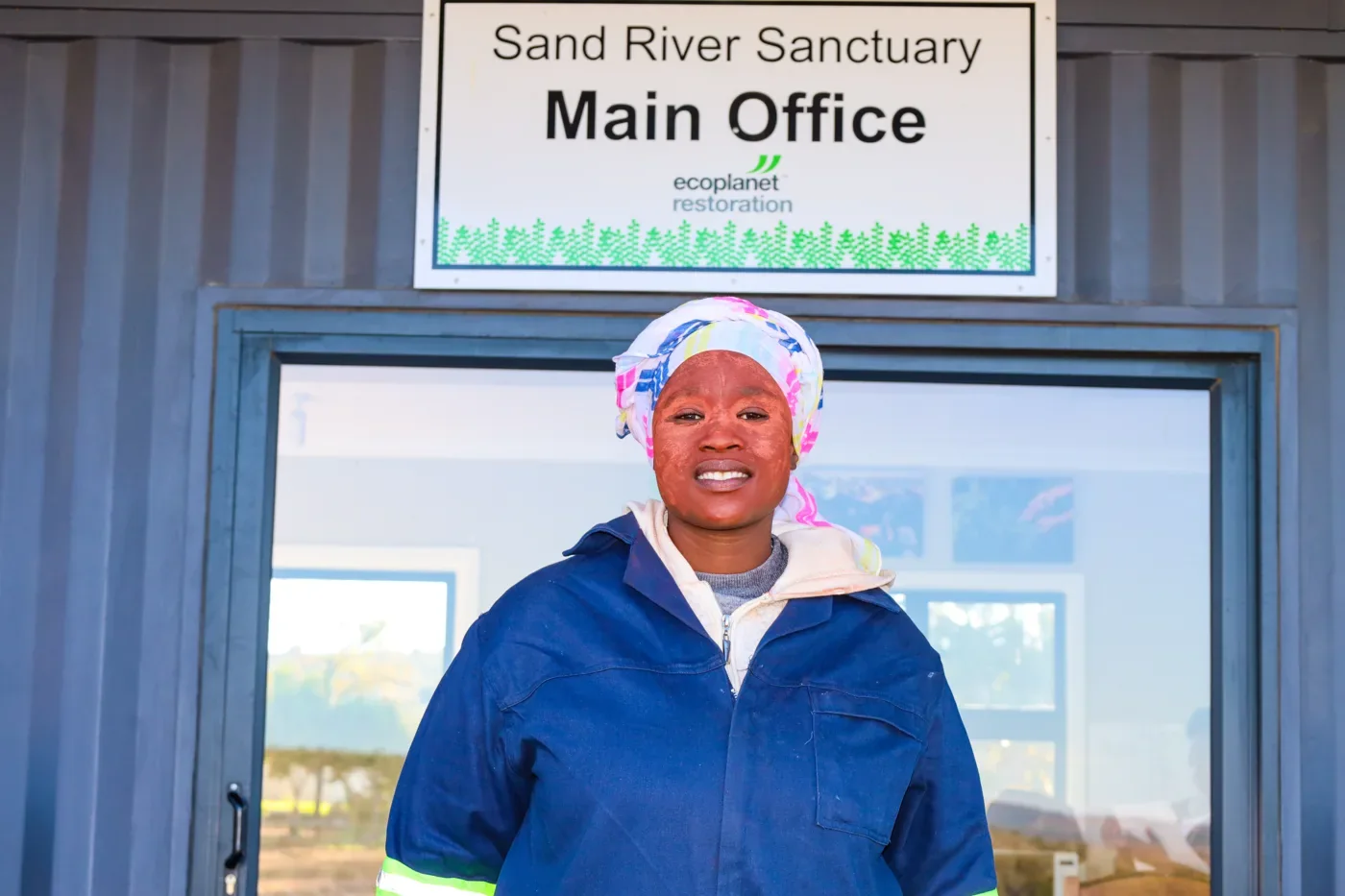
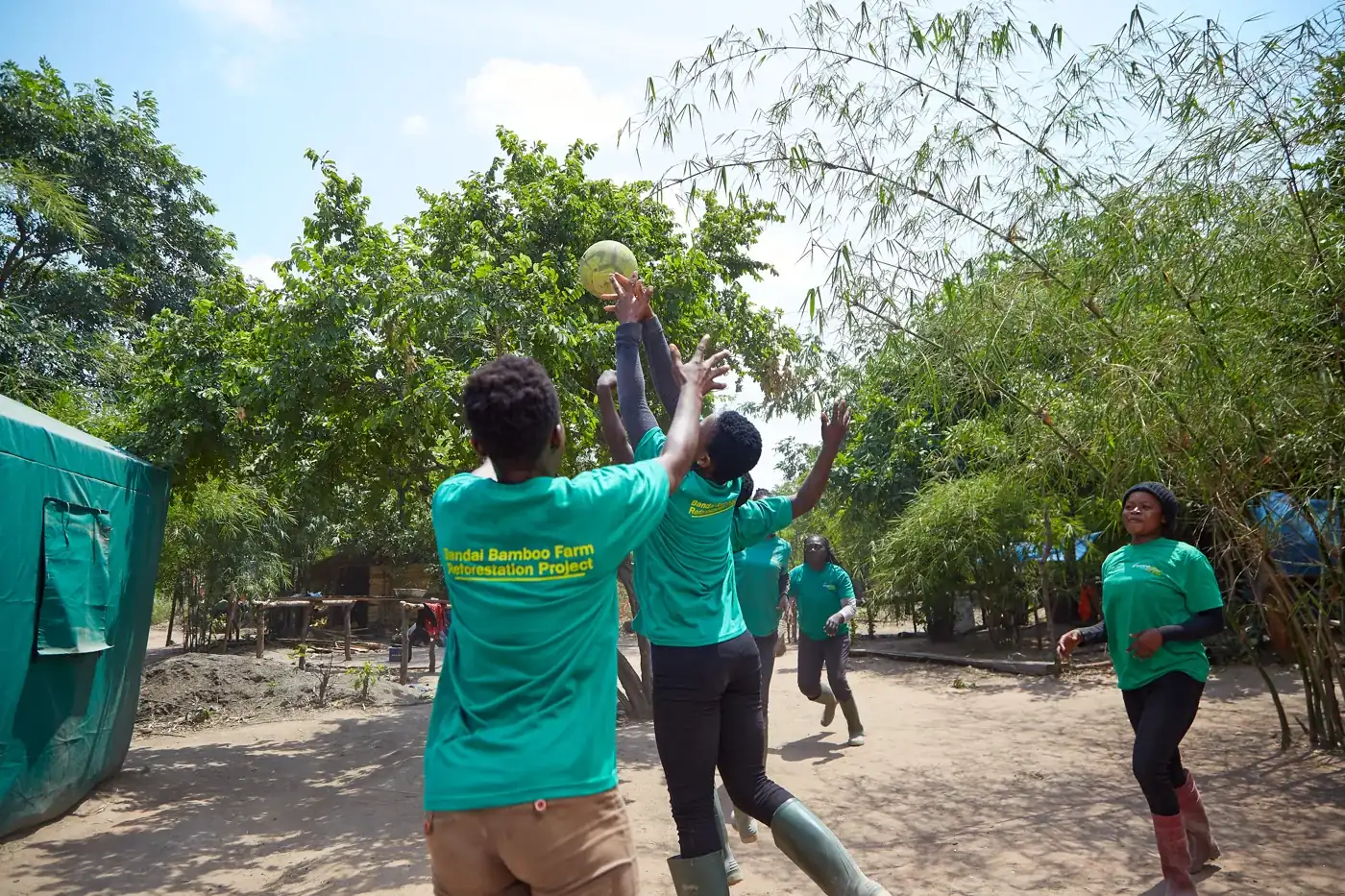
EcoPlanet's work happens in some of the most underserved rural regions on Earth. It's done almost entirely by people from those regions. More than 99% of our team is hired locally, roughly half of management roles are held by women, and the jobs are long-term, not seasonal.
Most openings are field and country-team roles: forestry and nursery operations, carbon and certification, community development. Based in the countries where we operate. We also hire for the global team. If restoration at industrial scale is the work you want to do, we’d like to hear from you.
Whether you're securing removals, exploring an offtake partnership, or backing the platform. We'd love to talk.
In 2010, Camille Rebelo and Troy Wiseman went looking for the worst land they could find.
The ground they chose first was ground nobody wanted. A stretch of Nicaragua’s dry corridor that had been primary rainforest once, cleared in the 1970s for commercial agriculture, then abandoned when the soil gave out. By the time Camille Rebelo walked it, it grew almost nothing.
That was the point. The entire thesis depended on starting somewhere worthless, because land that is already productive does not need restoring, and land that is already valuable cannot be bought at a price that lets restoration pay for itself. If the model could not work there, it would not work anywhere worth trying.
Rebelo had arrived at that idea the long way around. She grew up in Kenya, watching well-funded conservation projects arrive on her home continent with their pilot programmes and their grant cycles, and watching a great many of them fail. The forests kept disappearing anyway. The frustration was the seed of everything that followed.
She studied ecology at Imperial College London, lived and worked across Southeast Asia, and took a master’s at the Yale School of Forestry. Then she started a company of her own in Indonesia and discovered she was not ready for it.
What rescued her was a mentor who made an unusual offer: leave the company, be an entrepreneur later, and give me two years of your life. For the next twenty-four months she was sent country to country on short forestry contracts. Ten days in Mozambique. Six weeks in Malaysia. For one full year she had no place to live. She has called it the most important education she ever received, a ground-level fluency no graduate programme could have given her.
She came back to Africa with field experience in more than twenty countries. She founded a consulting firm, helped pioneer some of the world’s first forest carbon market projects through her early involvement with the UN climate convention, and advised the forestry ministries of Indonesia, Turkey, Papua New Guinea and Ghana on how to certify and finance restoration. Somewhere in all of it she arrived at the conviction that still runs the company: that capital, not aid, is the only force large enough to restore land at the scale the planet requires. Aid runs in grant cycles. Forests do not.
The difficulty with that conviction is that it requires convincing capital, and most of the capital she had met treated environmental and social outcomes as a cost of doing business rather than a reason to do it.
Troy Wiseman did not. He had spent his life building things: a clothing company he co-founded at twenty that grew from nothing to nine figures, then a private-equity and advisory firm, then an impact fund built on the belief that capital markets could be pointed at the world’s hardest problems. By 2010 he had had enough of backing the work from a distance and wanted his own feet on the ground. He treated impact as something capital should produce, not merely tolerate.
They met that year, and found they had been circling the same idea from opposite directions. Together they co-founded EcoPlanet Bamboo.
Bamboo is badly misunderstood in the West, where it is remembered as the plant that ate the neighbour’s yard. Those are running bamboos, temperate and genuinely invasive. EcoPlanet works only with tropical clumping species, which form tight clumps with no capacity to spread. Of roughly 1,700 bamboo species in the world, the handful the company selected are a different organism from the one most people picture.
They are also unusual enough to change the arithmetic. Clumping bamboo reaches commercial maturity in five to eight years, against the fifteen to twenty a tropical hardwood plantation needs, and once mature it can be harvested every year for decades without replanting. An investor who would never underwrite a fifteen-year hardwood project can fund a bamboo farm that begins paying back in year five and produces every year after. The economics, in other words, are what make restoration at scale fundable at all.
The first plantings went into that Nicaraguan pastureland. Three years later, in 2013, those farms produced the first carbon credits ever issued from bamboo anywhere in the world, and were among the first to hold the Verified Carbon Standard alongside CCB gold-level certification. The framework Rebelo helped develop to get there is now used as a reference across the industry.
Then they did it again, and kept doing it: South Africa, Ghana, Rwanda, the Philippines. Every farm was built the way the first one was, because the point was never only the carbon. More than 99% of the team is hired locally. Roughly half of management roles are held by women. A quarter to as much as half of every property is set aside permanently for native species and conservation. Restoration that does not pay the people living beside it does not survive, and no certificate changes that arithmetic.
Fifteen years on, the answer to the question they started with is a company operating across five countries and three continents, with more than 40,000 hectares of degraded land under restoration and a portfolio of registered Verra projects any buyer can audit line by line.
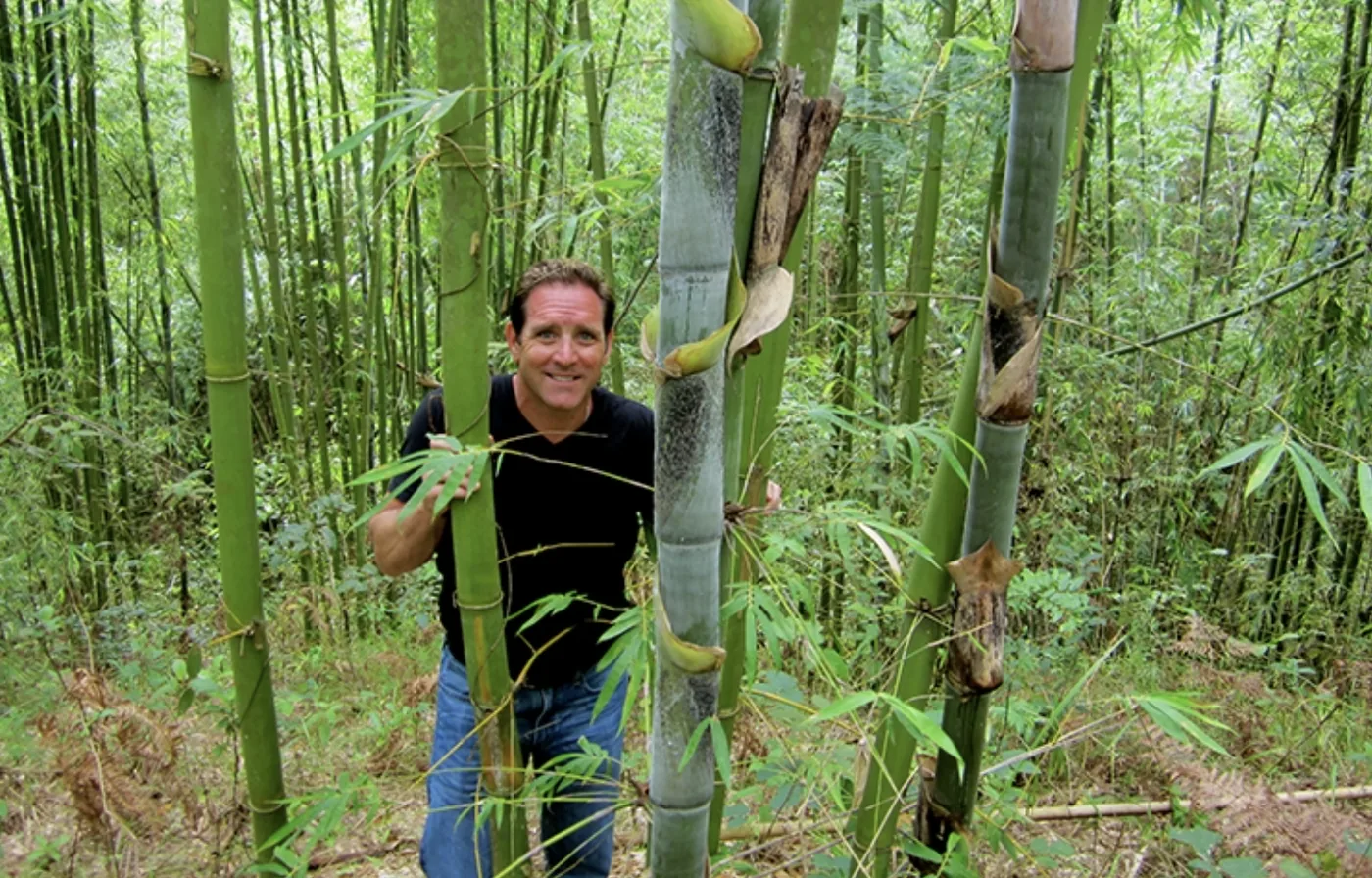
We lost Troy in 2024. One of his last trips was a week in the Philippines with the EcoPlanet team, walking the land and getting to know the people who work it, which is how he had always preferred to lead. The forests he helped plant will outlive everyone who planted them, and his legacy and vision live on.
Fifteen years in, the work is growing faster than it ever has: operations expanding across all five countries, further country expansion in the pipeline, and a team more committed to it than at any point in the company’s history. The carbon is delivering today. The fibre is ready to harvest. The fuel that follows is the reason the first hectare was ever planted.
Serial entrepreneur, restless optimist, and co-founder of EcoPlanet Bamboo. A man who spent his life building things, and decided the best thing he could build was a forest.
Troy had spent his life building things. A clothing company he co-founded at twenty that grew from nothing to nine figures. A private-equity and advisory firm after it. Then an impact fund, built on the belief that capital markets could be pointed at the world’s hardest problems rather than excused from them.
By 2010 he wanted to stop backing the work from a distance and get his own feet on the ground. Bamboo became the answer: a plant that could bring degraded land back to life, pull down carbon at real scale, put rural communities to work, and still stand on its own as a business.
He was honest about what it would take. Bamboo, he liked to remind people, was not a get-rich-quick scheme. It was a patient bet that science and care could turn worn-out land into working forest, and it would take years before anyone could tell whether he was right.
The instinct that put communities at the centre of every plantation he built showed up long before EcoPlanet existed. Earlier in his life Troy founded and supported a global network of orphanages for children in need, and he never treated it as the charitable footnote to a business career. It was the same conviction, applied earlier.
He believed, simply, that the people who tend the land should share in what it creates. Then he built a company that lives by it, and community was never an afterthought bolted on at the end of a project plan.
Troy speaking on Initiative 20×20’s goal to restore twenty million hectares of Latin American land, and the part he believed business could play in getting there.
On one of his last trips, Troy spent a week in the Philippines with the EcoPlanet team, doing what he loved most: walking the land, getting to know the people who work it, and seeing the difference up close. It was exactly how he had always led.
We lost Troy in 2024, and everything he started keeps right on growing. Under Camille’s leadership the company carries his life’s work forward, and the forests he helped plant will outlive everyone who planted them, lifting communities and cooling the planet for generations. That was always the point.
Troy believed degraded land could be brought back to life, that communities could rise with it, and that business could lead the way. Every hectare restored, every person hired, and every tonne of carbon drawn down carries that belief forward.
Triple bottom line is the operating model here. Every farm is built to deliver climate, biodiversity, and community returns at once, and to prove all three through third-party certification.
Restoration doesn’t stop at the farm gate. A quarter to as much as half of every property is permanently set aside for conservation.
Rather than ask the world to take our word for it, we built our impact on among the most rigorous certification schemes applied to bamboo: sustainable forest management, social and environmental co-benefit, and climate standards. Behind them is real work: jobs that pay above minimum wage with benefits, in regions where formal employment is scarce, delivered by teams hired and led almost entirely from the communities where we work.
Every project begins with a socioeconomic baseline study. From that starting point, each action is tracked against defined indicators (jobs, training completions, local procurement, community programmes) and quantified against SD VISta, the leading standard for sustainable-development impact, alongside our carbon certification.
EcoPlanet Bamboo is a committed signatory to the UN Global Compact, with its progress publicly reported. Its plantation and smallholder projects contribute directly to thirteen of the seventeen Sustainable Development Goals, from no poverty and gender equality to climate action and life on land.
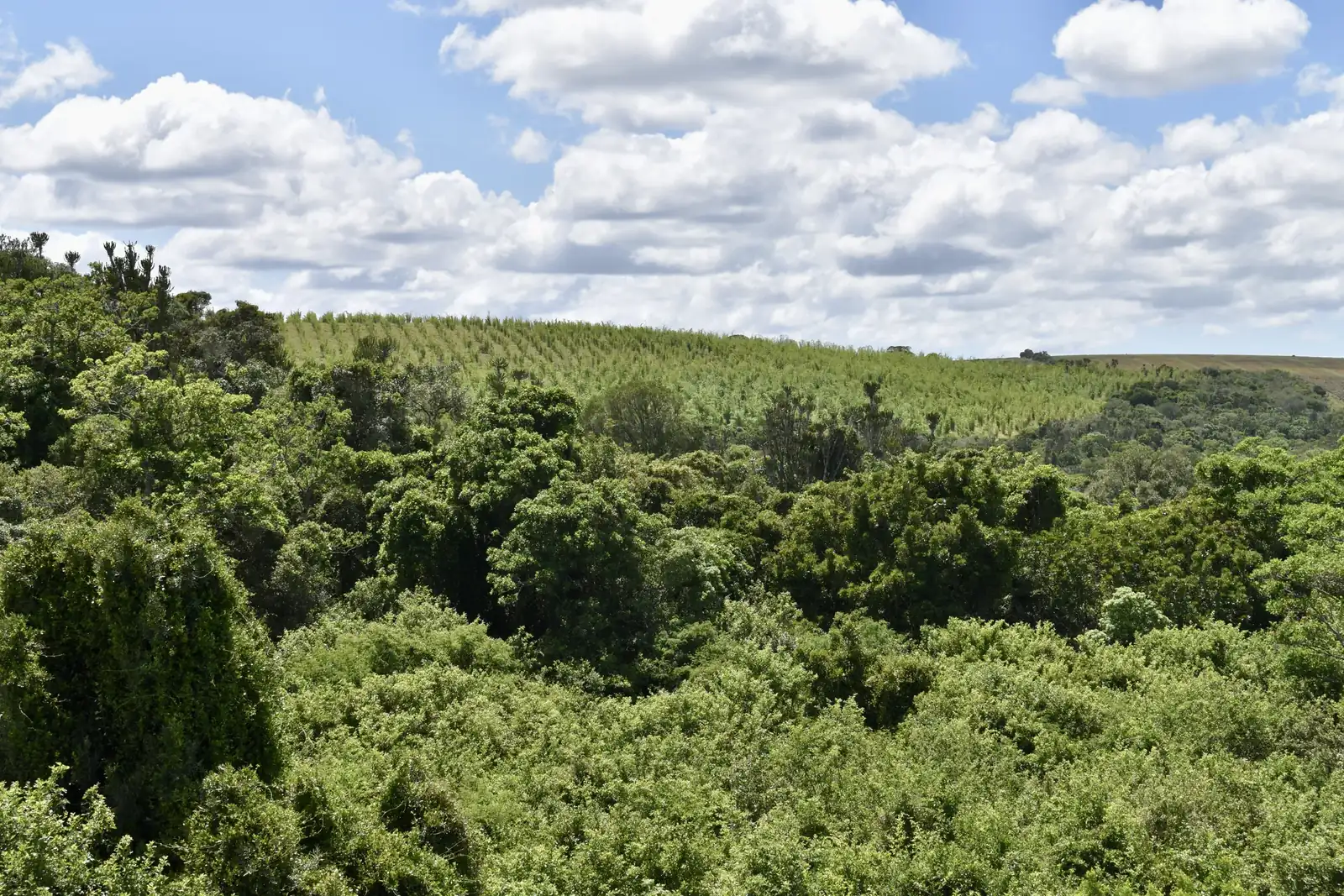
Spekboom thicket restoration in the Eastern Cape, building an elephant and rhino sanctuary alongside a community programme in nearby Pearston.
Explore South Africa →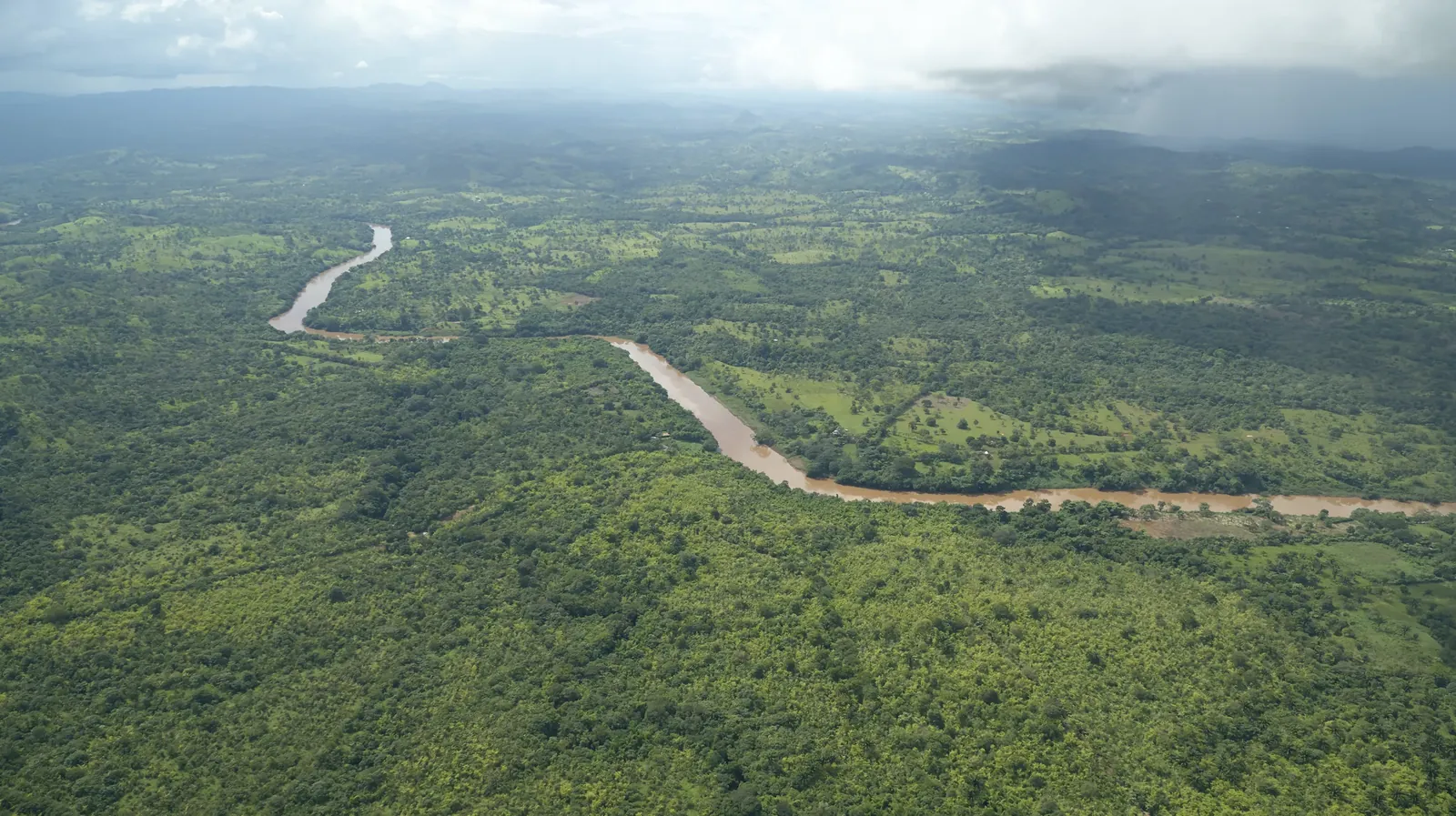
Hundreds of stable jobs paying above minimum wage with comprehensive benefits, in a region of historically high unemployment, funding local health clinics and community infrastructure.
Explore Nicaragua →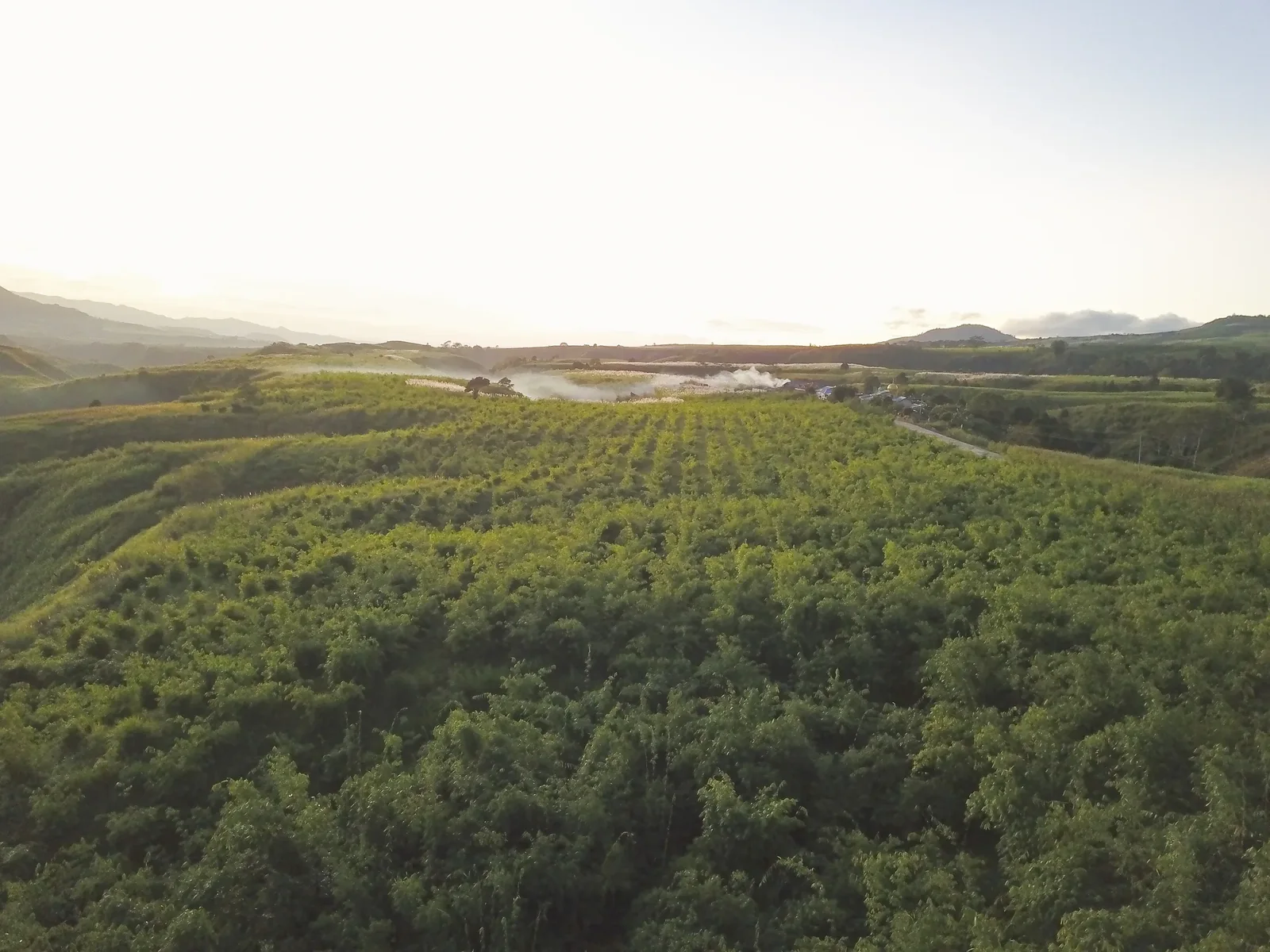
1,600 hectares reforested between 2022 and 2024, developing regenerative family farms with the 600 families living within the project area, quantified against SD VISta indicators.
Explore Philippines →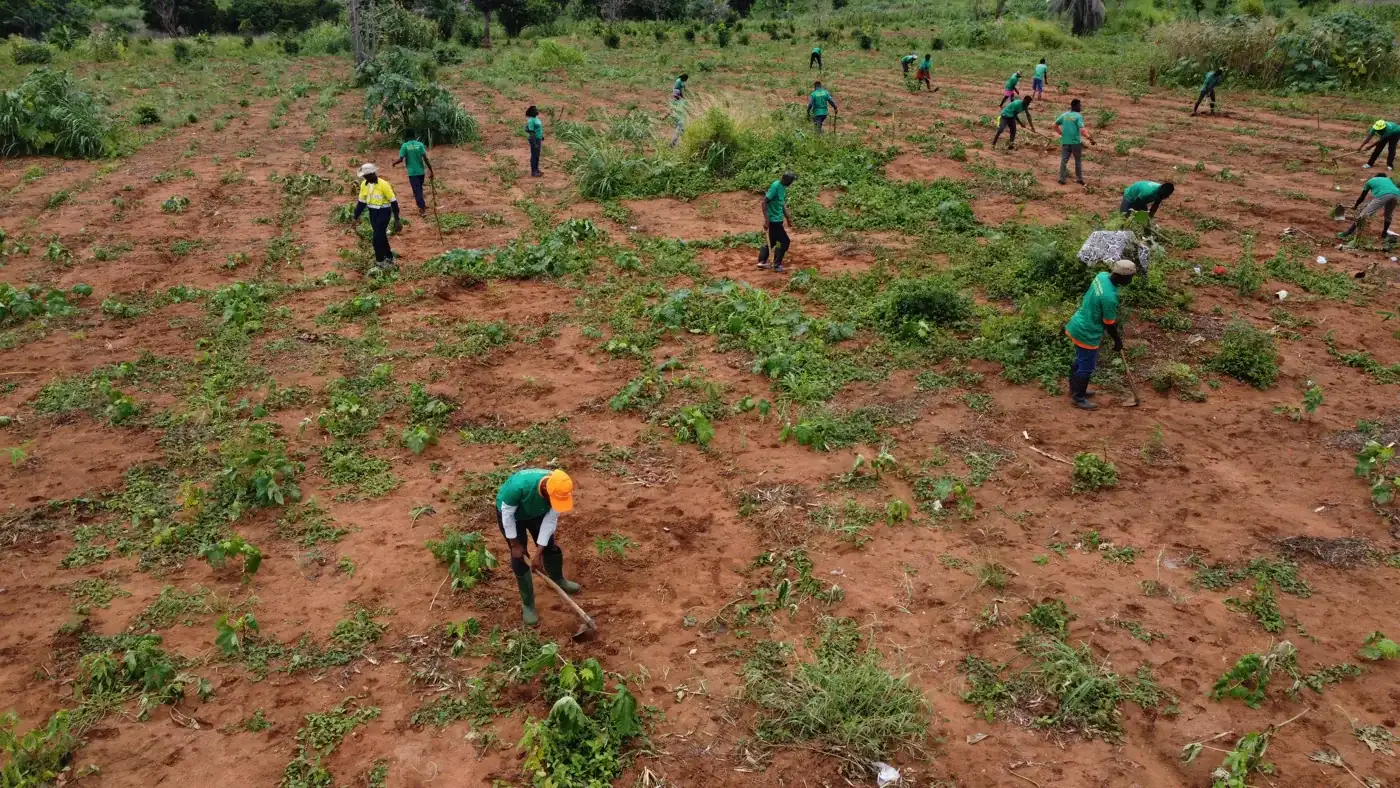
Hundreds of local jobs on the Ghana bamboo public-private partnership, paired with rain-harvesting and sanitation systems installed for surrounding communities.
Explore Ghana →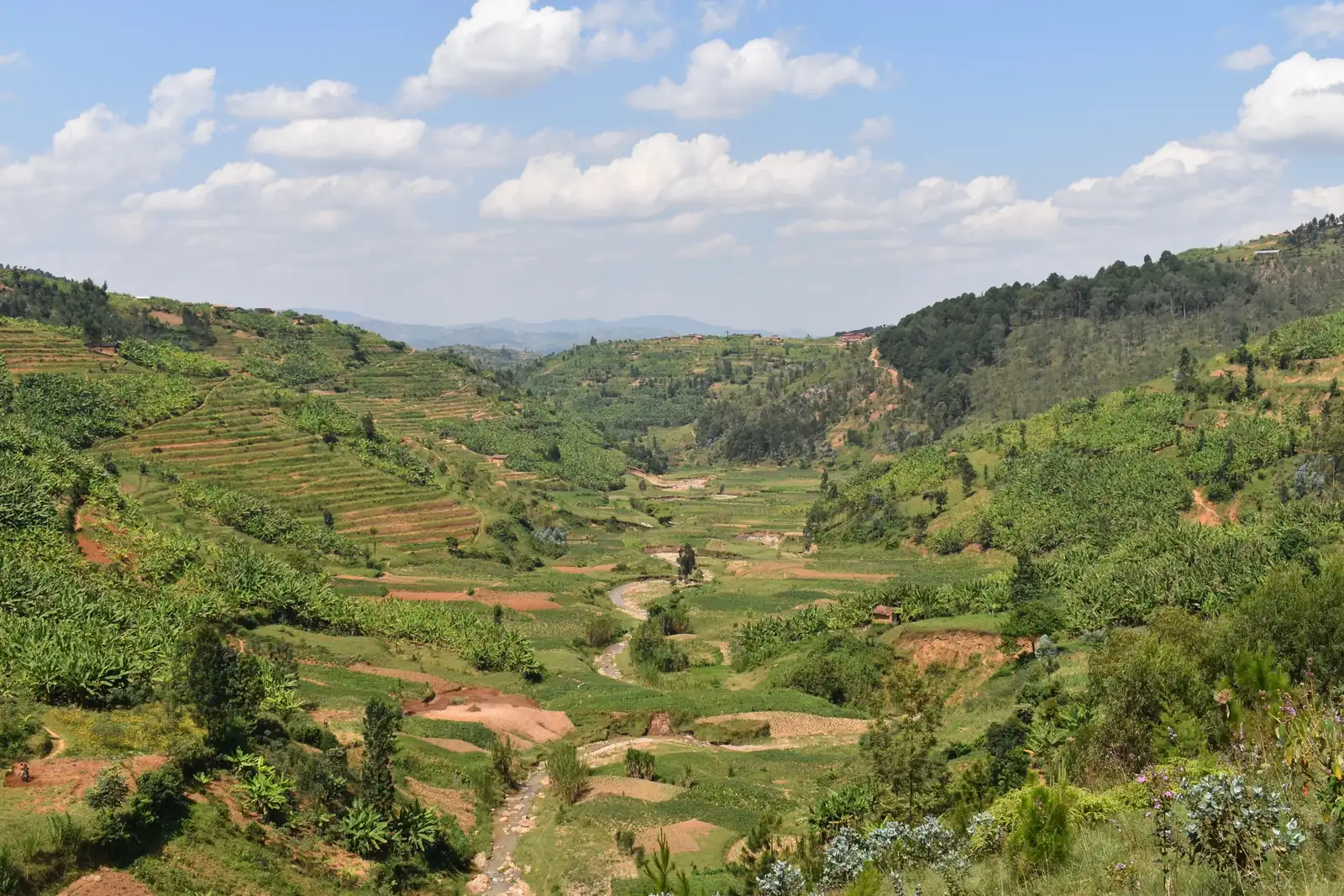
With the African Wildlife Foundation, EcoPlanet delivered the pilot phase of a habitat expansion around Volcanoes National Park, growing the endemic bamboo that feeds endangered mountain gorillas.
Explore Rwanda →We cannot leave tens of millions of people living in poverty and expect a peaceful transition to a green economy.
Every credit carries this impact with it. Tell us which outcomes matter most to your organization. We'll show you exactly where your capital lands.
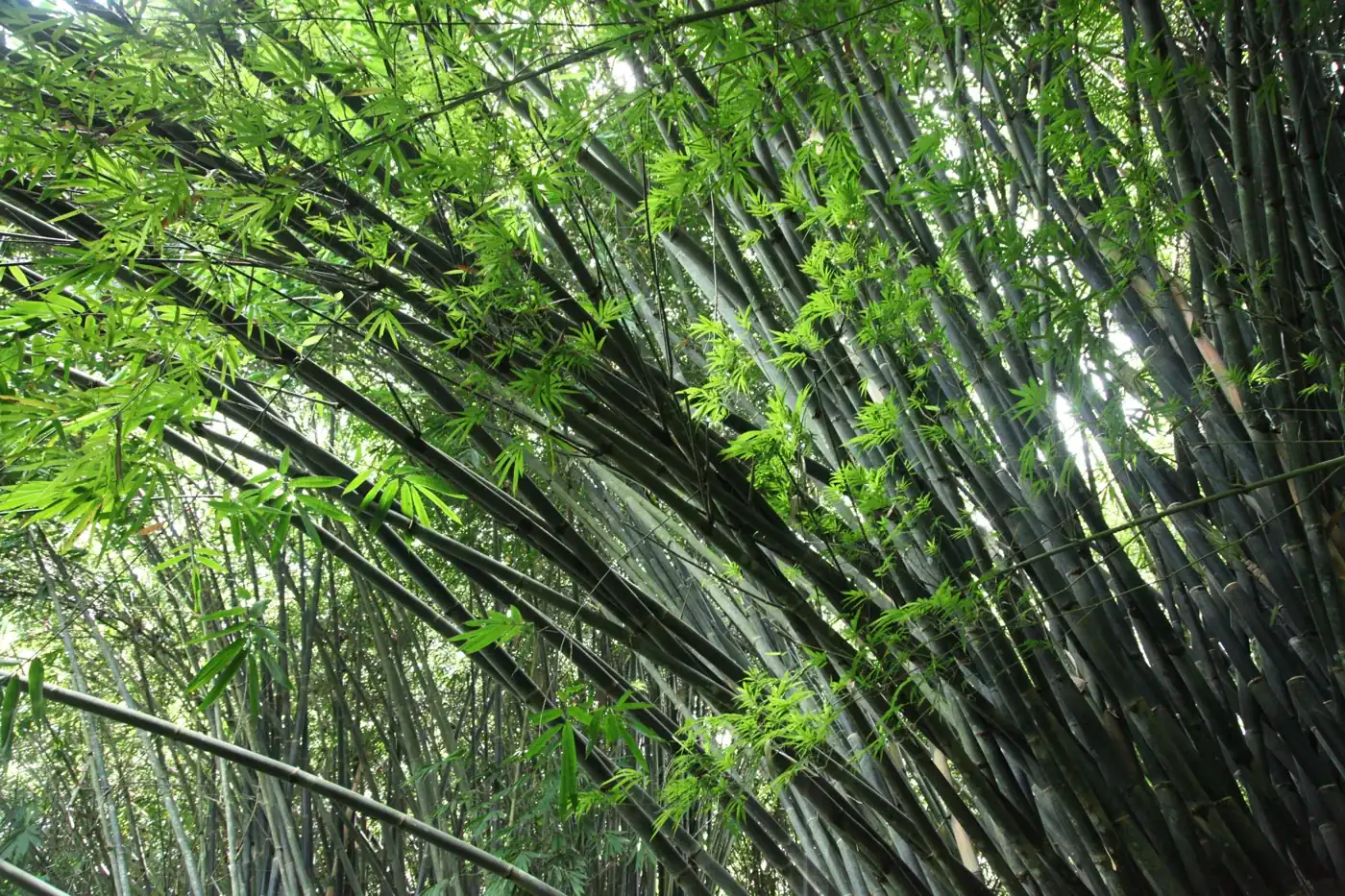
We have electrified our homes and our cars. We cannot electrify our planes. What flying needs is a renewable feedstock grown at scale on land nobody else wants. It is already planted on three continents, it regrows with every harvest, and we are ready to fuel the future.
Airlines and governments have already committed to sustainable aviation fuel, far more of it than the industry can currently make. Scaling it runs into several constraints, and feedstock security is one of the hardest. Most SAF today comes from waste oils and fats, a supply approaching its ceiling, while the crop-based feedstocks used for ethanol, such as soy, corn and palm, carry their own land and food trade-offs. Bamboo offers a scalable, dedicated lignocellulosic feedstock grown on degraded land: already planted on three continents, regrowing with every harvest, and ready to scale.
Eleven minutes on bamboo, aviation fuel, and the courage to scale what we already know works.
What one mature 15,000-hectare farm is modelled to yield each year. This is how the platform scales: not one refinery, but a repeatable unit.
Verified carbon removals fund the platform today. VCS projects across five countries, the first bamboo now standing ready to harvest, and biomass volumes compounding as the plantations mature.
Proven thermochemical and biochemical pathways turn woody biomass into renewable liquid fuels. The work now is pairing the feedstock with the right conversion partners and project finance, biorefineries sited where the bamboo grows.
Sustainable aviation fuel and renewable diesel as a core engine of the platform, replicated across geographies as the feedstock base no fuel venture can shortcut keeps compounding. We started planting fifteen years ago.
EcoPlanet is turning its bamboo into renewable liquid fuels: sustainable aviation fuel and renewable ethanol and diesel for the planes and ships we can't yet electrify.
For airlines, investors, and visionaries who want to join the mission. Let's talk.
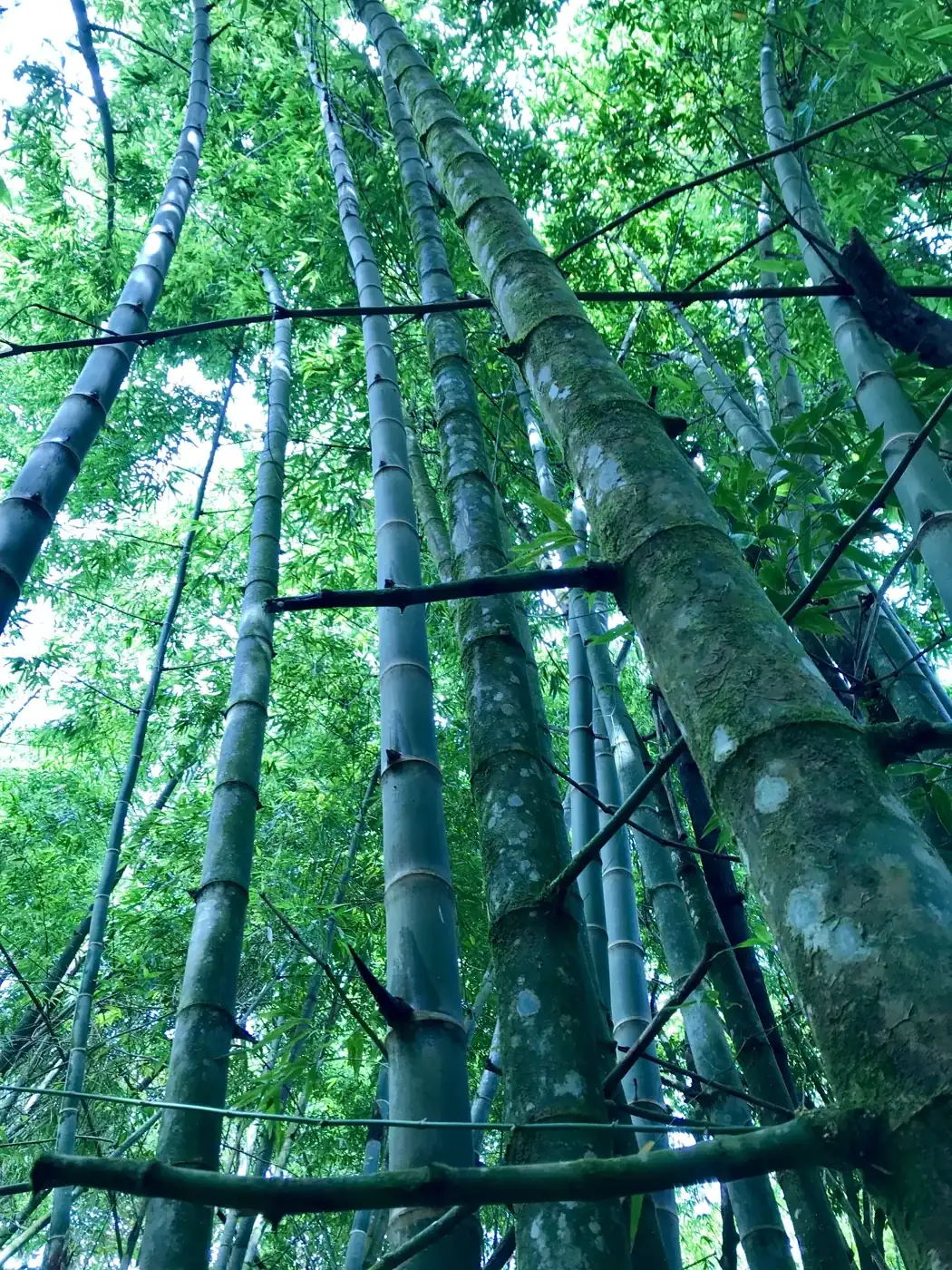
In the West, bamboo is dismissed as a garden weed. In the tropics, it's one of the most powerful tools we have: it pulls carbon from the air while rebuilding a forest economy.
The carbon math has changed. Cutting emissions is no longer enough. The world also has to pull billions of tonnes of CO₂ back out of the atmosphere, starting this decade. New removal technologies are racing to scale, and we need every one of them. But only one method has ever worked at planetary scale: photosynthesis, plants pulling carbon from the air, the way they have for millions of years. The real question is which plant does it fastest, proves it most rigorously, and sustains the people who tend the land.
Bamboo is a grass, not a tree. That single fact rewrites the economics and the climate math: it reaches commercial maturity in six to eight years, draws down carbon at extraordinary rates, and never has to be replanted, because harvesting a pole stimulates new growth. The forest becomes a permanent, living carbon sink.
The misunderstood part: of roughly 1,700 bamboo species, EcoPlanet grows only tropical clumping bamboo, tight, non-invasive clumps, a different organism entirely from the running bamboo that spreads through a garden. Common questions, answered below ↓
Bamboo was a deliberate choice. Before planting a single culm, EcoPlanet evaluated roughly 150 plant species, looking for one that could do three demanding things at once, and bamboo answered all three.
A fast-growing grass with a dense, binding root system, bamboo rebuilds soil, holds water and stabilises ground too far gone for conventional forestry, restoring the land while it grows.
Bamboo is a genuine alternative fibre and fuel: a renewable feedstock with real commercial value, so restoration can pay its own way rather than depend on subsidy.
The distinctive one. Bamboo needs intensive care through its first four to six years, then selective harvesting every year after that, for good. Where conventional forestry means a brief planting boom followed by a decade of near-zero work before a first harvest, bamboo creates sustained, recurring local employment for the life of the forest.
Not the bamboo EcoPlanet grows. Of roughly 1,700 bamboo species, the invasive ones are temperate running bamboos, the kind that takes over a garden. EcoPlanet works exclusively with tropical clumping bamboo, which forms tight, compact clumps with no capacity to spread. It's a fundamentally different organism from the plant most people picture, and it's planted only on degraded land, never by clearing existing vegetation.
Bamboo reaches commercial maturity in six to eight years, versus fifteen to twenty for tropical hardwood, so the carbon drawdown happens far faster, with the majority of removals realized within roughly a decade of planting. Because harvesting takes only select poles and stimulates new growth rather than killing the plant, the forest is never clear-felled and the carbon sink stays permanent.
No. This is bamboo's structural advantage over timber. Conventional forestry releases stored carbon when trees are felled, and the cycle restarts from zero. Bamboo is harvested pole by pole without killing the plant; the root system regenerates continuously and the poles are replaced within a single growing season. The living carbon sink is maintained rather than reset, even under sustainable annual harvesting, for sixty years and beyond.
No. EcoPlanet plants only on land that has already lost its productive value: degraded, marginal ground that no longer supports agriculture. The model restores that land rather than converting active farmland or clearing natural forest, and a quarter to as much as half of every farm is permanently set aside for native species and conservation.
A great deal. As a restoration species it rebuilds degraded soils, stabilizes water tables, reduces erosion, and reconnects fragmented habitat. It delivers both climate mitigation (carbon capture, reduced deforestation) and adaptation (cooler micro-climates, secure rural livelihoods, resilience for vulnerable communities). The harvested fibre then displaces tree-based pulp and packaging, extending the benefit down the supply chain.
Over the last fifteen years EcoPlanet has built deep expertise in large-scale land restoration: more than 1,800 team members, projects across five countries and three continents, and long-running partnerships with governments, corporations and conservation organisations.
We started with bamboo. Over time the platform has grown to include spekboom and other native species, chosen for what a particular landscape actually needs rather than for what we happen to grow.
If there is a project you think we could work on together, we would like to hear about it.
Start a conversation →VCS projects across five countries. Every one open for diligence.
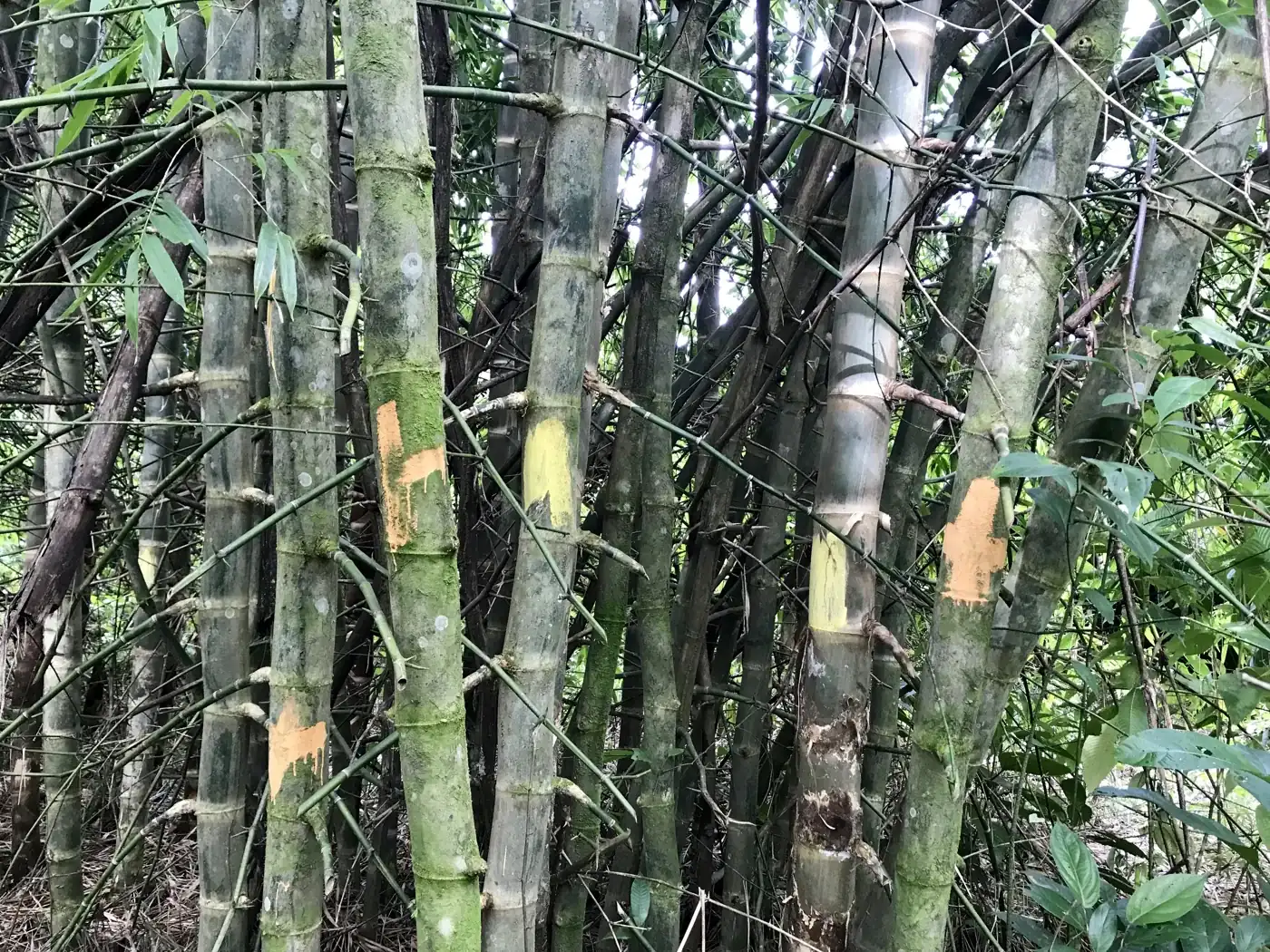
The materials the world still cuts forests for can be grown instead, on land that was already lost.
The world still loses nearly eleven million hectares of forest every year, an area larger than South Korea, and much of it falls for the most ordinary things. Pulp and paper alone account for some 40% of the world's commercial forest cut. Demand grows with every new middle class. The way out is fibre that never touches a forest. EcoPlanet's bamboo fibre is a tree-free, deforestation-free alternative to all of them, with manufacturing planned in-country using green technology that avoids the toxic waste streams of conventional pulp mills.
Can provide a biodegradable and compostable alternative to the plastic and styrofoam single-use packaging the food and beverage industry depends on.
Ancient forests are still felled for products used for seconds. EcoPlanet targets 100% bamboo tissue, turning a daily purchase from deforestation into reforestation.
We are building a bioeconomy where the materials and fuels the world runs on are grown on restored land rather than cut from forests or drilled out of the ground, and where the substitute is the same material the market already wants. Carbon is delivering today. The rest is what comes next, and each market below says exactly where it stands.
Today: tree-derived pulp and fossil plastic and styrofoam, with pulp and paper alone accounting for some 40% of the world's commercial forest cut. EcoPlanet: tree-free bamboo pulp and molded-fibre packaging. Stage: manufacturing planned in-country.
Today: ancient forests are still felled for tissue used for seconds. EcoPlanet: 100% bamboo tissue, turning a daily purchase from deforestation into reforestation. Stage: manufacturing planned.
Today: fossil jet fuel powers a sector that is hard to electrify and set to double by 2050. EcoPlanet: sustainable aviation fuel from bamboo grown on degraded land. Stage: in development. Renewable Fuels →
Today: ships and heavy-duty transport cannot readily be electrified and still burn fossil fuel. EcoPlanet: renewable liquid fuel from the same bamboo biomass. Stage: in development. Renewable Fuels →
Reliable knowledge on growing and managing bamboo at commercial scale barely exists outside China. Our team built it the hard way, across species, geographies and certification standards, and has put it to work for governments, corporations, developers and non-profits.
We work selectively, with entrepreneurs and projects we believe can make a real difference, and we would rather help a few of them properly than spread the team thin. If that sounds like what you are building, we would like to hear about it.
National bamboo feasibility and value chain studies, GIS and remote sensing, plantation management plans, restoration design, and carbon quantification and project documentation for bamboo.
Ongoing management services for early-stage bamboo operations across geographies, tailored to each project, from nursery development through full-scale plantation build-out.
Guidance for governments, companies, and non-profits on keeping bamboo value chains green from seed to sale, including selection of manufacturing technologies designed for bamboo's unique properties.
Whether you are planning future fibre offtake or a manufacturing partnership, the conversation starts here.
A decade of coverage, talks, and recognition.
Camille Rebelo's case for bamboo as the feedstock of the post-fossil economy.
A cover feature on Camille Rebelo's journey building a continent-spanning restoration company.
How the co-founders built an answer to the world's fibre demand on land nothing else would use.
A long-form look at the founding, the conscious-capitalism model, and triple-bottom-line returns.
An early profile of co-founder Troy Wiseman and the triple-bottom-line company he set out to build.
The World Bank features EcoPlanet's co-founder on bamboo, carbon, and development finance.
Coverage of EcoPlanet's expansion and the case for bamboo as a regenerative crop.
AWF on the Volcanoes National Park restoration with EcoPlanet in Rwanda.
The World Bank's political-risk arm backs EcoPlanet's operations in Nicaragua.
Coverage of the expanded World Bank guarantee backing the platform.
Three ways. Harvesting bamboo doesn't kill the plant. The living root system stays in the ground and regrows, so the carbon sink persists through every harvest cycle. A quarter to as much as half of every farm is set aside permanently for native species and conservation. And every project is monitored and re-verified under the VCS for decades, with registry records anyone can audit.
Every project is developed under the Verified Carbon Standard (VCS) administered by Verra, the world's most widely used voluntary carbon program. Projects are independently validated and periodically verified by accredited third parties, and each is listed publicly on the Verra registry, where anyone can inspect the project design, monitoring reports, and issued credits. Several projects also pursue SD VISta assessment of their community and biodiversity co-benefits.
Because it's transparent and it aligns incentives. Rather than buying anonymous tonnes from a trader, buyers fund specific, named projects and can see exactly what their capital supports: the land, the planting, the verification. That direct, project-level transparency is why institutional buyers, funds, and governments engage with confidence.
Removals. Bamboo and the associated native species physically draw CO₂ out of the atmosphere and store it in biomass and soil as the forest grows. This is a nature-based removal, not an avoidance or "do not cut" credit. This is the credit type most sought after by corporate buyers and the one most aligned with science-based net-zero pathways.
Bamboo is harvested without killing the plant. The root system regenerates and keeps sequestering for decades, so the living carbon sink is maintained rather than felled. A quarter to as much as half of every farm is permanently set aside for conservation, and projects carry the standard VCS buffer-pool contributions that insure against reversal across the program.
Carbon accrues as the forest grows, with independent verification events on a multi-year cadence typical of nature-based projects. Issuance builds over each project's lifetime, so forward agreements can be structured against a credible, modeled delivery schedule that's grounded in fifteen years of real planting data.
Substantial ones, and they're certified rather than asserted: 99%+ local hiring, roughly half of management roles held by women, jobs in regions of extreme unemployment, community health and water infrastructure, and biodiversity restoration. EcoPlanet is a UN Global Compact signatory contributing to 11 of the 17 Sustainable Development Goals. Buyers can weight the impact story toward the outcomes their stakeholders care about.
The four most recent projects alone represent roughly 7.5 million tonnes of CO₂e in lifetime issuance, with projects across five countries and additional geographies in development. Volume and timing can be discussed against your target horizon.
Most engagements are forward offtake agreements: multi-year contracts for future delivery, structured against each project's modeled issuance schedule. Every engagement is shaped to the buyer: vintages, volumes, geography, and the impact outcomes you want to stand behind. For projects already delivering, current-vintage conversations are equally welcome. This mirrors where the market itself is heading. Forward contracting for high-integrity nature-based removals grew sharply in 2025 and is now the dominant structure for buyers.
Three layers of protection. First, delivery schedules are modeled conservatively from fifteen years of real planting and growth data, not best-case projections. Second, every project contributes to the VCS buffer pool, the program-wide insurance mechanism against reversals. Third, the portfolio itself spans five countries on three continents, diversifying weather, operational, and political risk in a way no single-project developer can.
EcoPlanet works at institutional scale, so engagements are typically multi-year and project-scale rather than retail purchases. That said, if you're early in scoping your strategy, reach out anyway: shaping an offering around a buyer's stage and priorities is exactly what the team does.
Yes. EcoPlanet operates real farms with real teams on the ground in all five countries, and welcomes buyer and investor visits as part of diligence. Every project also links directly to its public Verra registry record for remote verification.
With precedent. EcoPlanet built a national bamboo public-private partnership with the Ghana Forestry Commission and contributes to AFR100 and Initiative 20×20 restoration commitments. New geographies begin with three ingredients: genuinely degraded land, communities ready to partner, and aligned institutions. If your region has all three, the team welcomes early conversations. Select "Government / institutional" in the form.
Possibly. Outreach like this is how the best conversations start. EcoPlanet adds new geographies selectively, and three things matter most: genuinely degraded land at meaningful scale, communities ready to partner from day one, and clarity on land tenure and authority. If that sounds like your situation, write to us with the location, the approximate hectares, the land's current status and tenure, and who holds the authority to act. The more of that picture you send, the faster the team can give you a real answer.
That's what the platform was built for. EcoPlanet grows industrial bamboo with a certification heritage few feedstocks can match, and partnership conversations span renewable fuels, materials, fibre, and manufacturing. Tell us what you make, the volumes you need, and your timeline, then select "Fuel or offtake partnership" in the contact form, and the conversation continues with the team, under NDA where appropriate.
Directly. EcoPlanet's project-finance structure means capital is deployed into the named project it funds: land preparation, planting, local employment, community infrastructure, and the certification that verifies all of it, never a trading book or general overhead. Outcomes are reported through independently certified frameworks rather than self-assessment, and engagements can be shaped around a funder's specific thesis: biodiversity, gender equity, livelihoods, or climate. Select "Philanthropy / impact funding" in the contact form to start.
Bamboo-led, not bamboo-only. The platform is degraded-land restoration with the right species for each ecology. The proof is already on the registry: the Spekboom project (VCS 3628) restores native Albany thicket in South Africa's Eastern Cape using spekboom, an indigenous succulent, with no bamboo involved. Bamboo remains the commercial backbone because nothing else pairs its growth rate with its harvest economics. But where another native system is the right answer for the land, that's what gets planted. More on the platform beyond bamboo →
Tell us your priorities and we'll route you to the right person on the team.
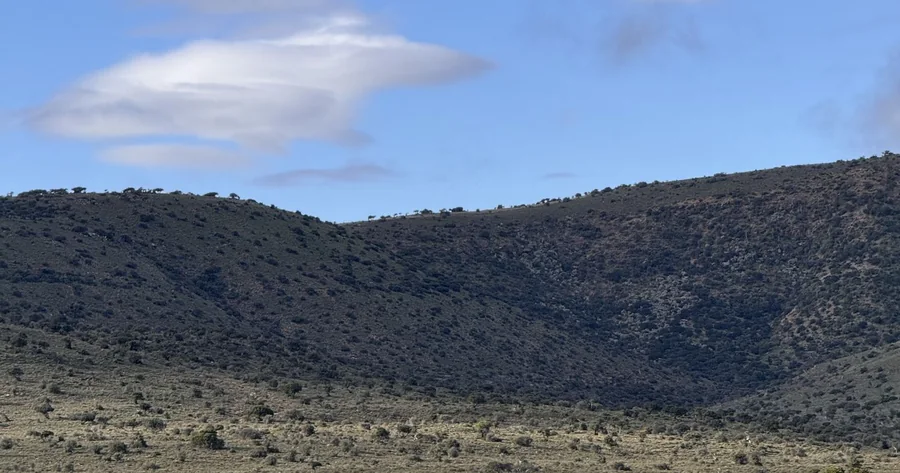
The Eastern Cape Restoration Project, spanning Sand River Sanctuary and neighbouring farms near Somerset East and Pearston, brings back the Albany Subtropical Thicket with spekboom and bamboo, anchored in one of the province’s most under-served towns.
In the Eastern Cape, impact is paced to the multi-decade life of the restoration. Impact is designed into the project and quantified against SD VISta indicators.
Desiree joined Sand River as a fixed-term general worker and stood out for how she looked after her colleagues. EcoPlanet backed her through SAMTRAC, a health-and-safety qualification recognised across Africa, and mentored her into a safety-leadership role. In 2026 she became one of two staff trained to help lead the site’s new Black Soldier Fly circular-economy facility. Her path is the project’s promise in one person: build skills and leadership that stay with local people.
Pearston is served by a single health clinic. In 2025 the project expanded the Gracey Clinic with two fully serviced consultation rooms (power, air conditioning and plumbing ready for immediate use), plus a sheltered waiting area, designed together with the Department of Health and the local ward councillor. It builds on a mobile clinic EcoPlanet brought to the farm so workers could see a nurse without losing a day’s pay.
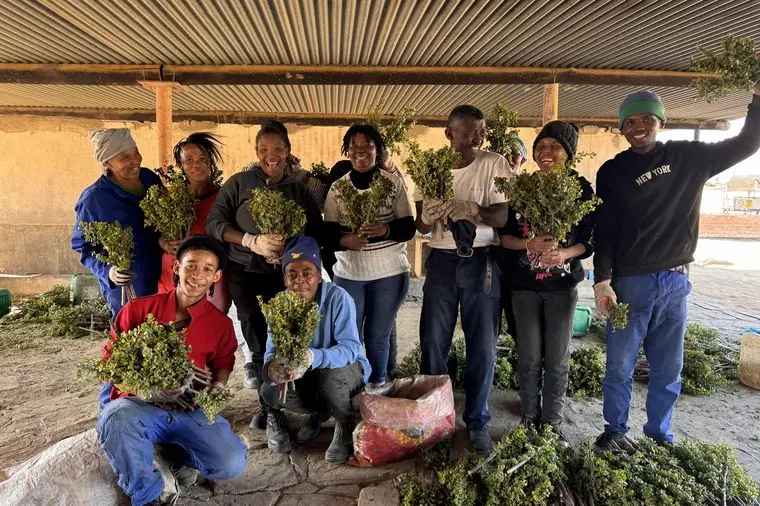
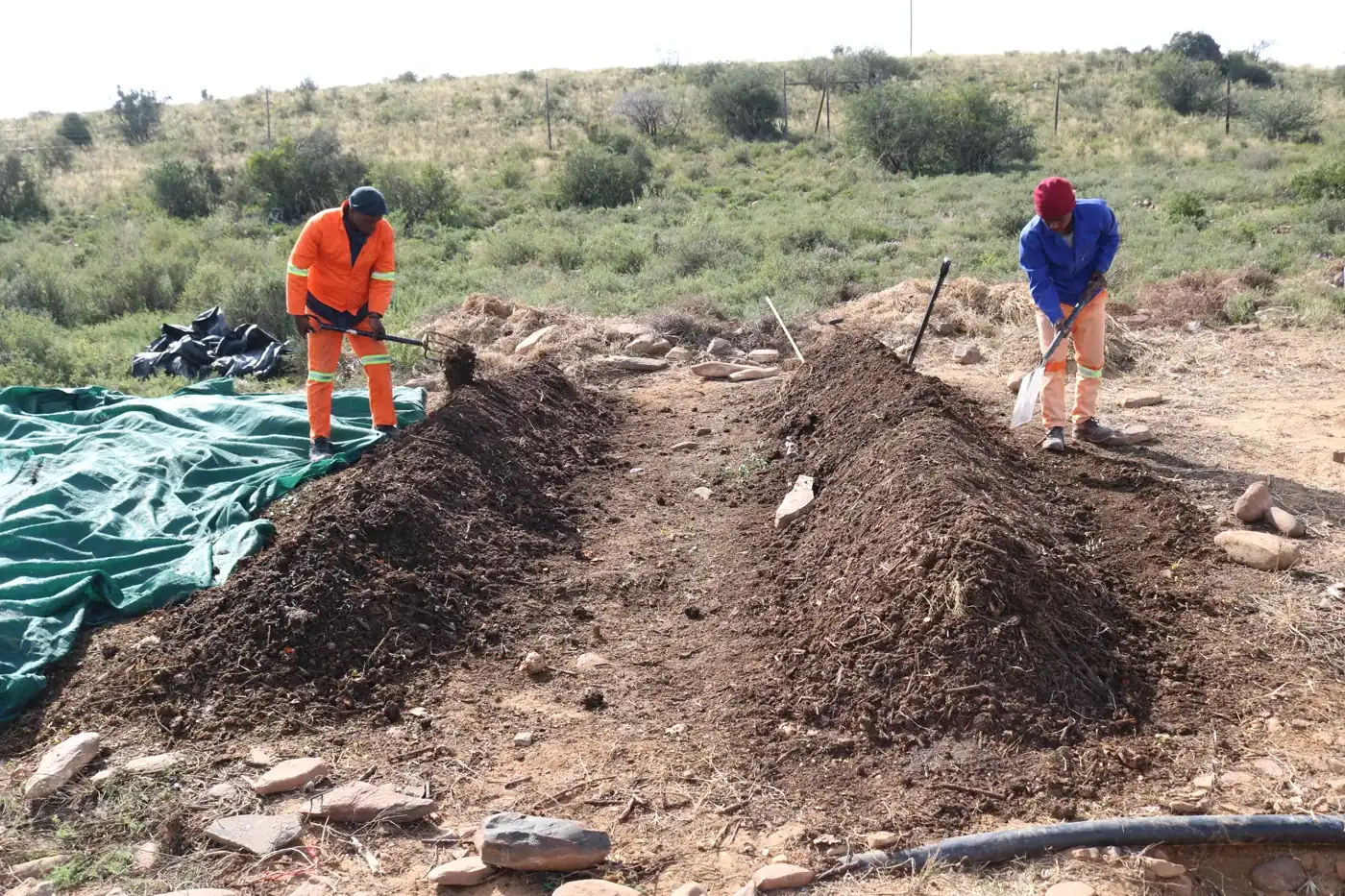
Pearston residents travel roughly 100 km for fresh produce. The garden and growhouse at Sand River, which began as worker training, now supply Swiss chard, beetroot, carrots and more to workers, local schools, day-care centres and Pearston’s soup kitchens. Workers trained in vegetable production, worm-tea fertilisation and post-harvest handling, and each took home repurposed tyres to start a garden of their own. At Lukhanyiso Primary, a rainwater-harvesting system and a school growhouse now feed the meal programme, with learners growing and taking home their own spinach and lettuce.
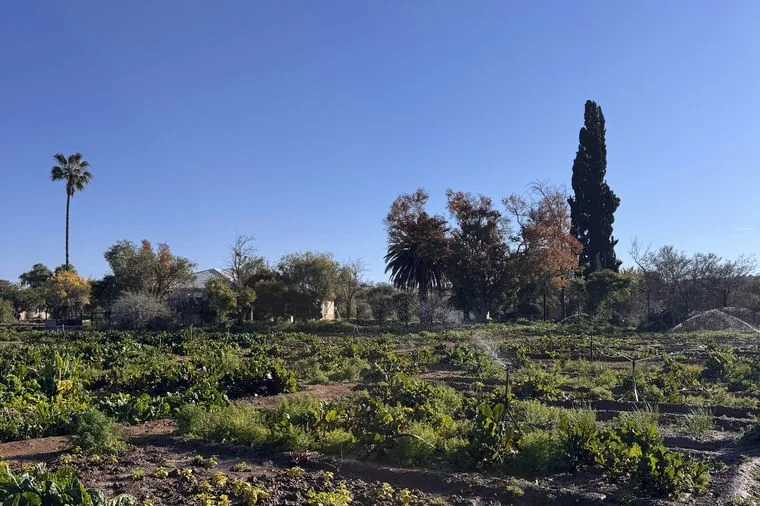
Two Verra carbon projects here: VCS 3627, now fully sold, and VCS 3628, together form an elephant and rhino sanctuary across the restored land. Overgrazed farmland is being restored with densely planted native spekboom, which rebuilds vegetation, stabilises soils and stores carbon, with riparian corridors replanted in indigenous species. EcoPlanet has applied to have Sand River declared a Protected Environment under South Africa’s Protected Areas Act: legal protection in perpetuity for a landscape sheltering CITES- and IUCN-listed species, including cycads, with neighbours intending to follow. A beekeeping programme rounds it out, with spekboom honey on the way.
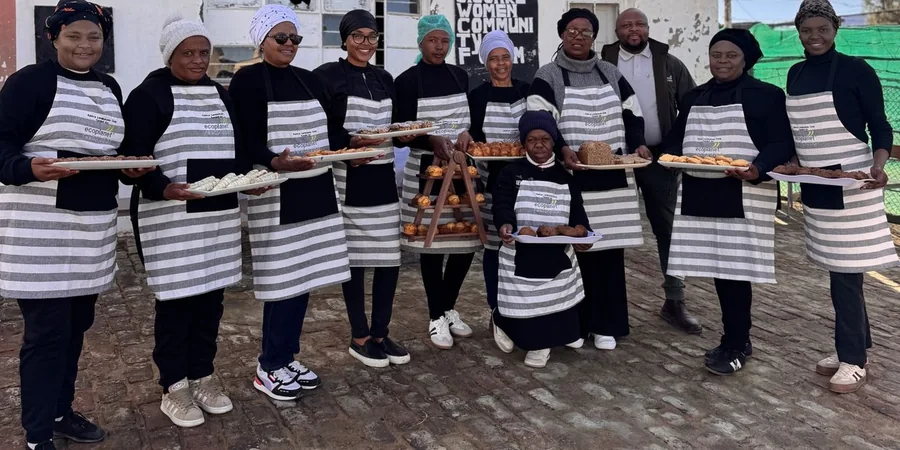
A women’s forum at Sand River gives female workers a platform to raise concerns and celebrate together. On Bosch Farm, women trained in baking and small-business skills, and a group formed a co-operative and registered Kamva Lembokodo, the town’s own bakery. Ikamva, the future; imbokodo, women’s strength. Two young people from Pearston are on full trade scholarships in electrical studies and welding, with tuition, accommodation and stipends covered, and community members have trained as accredited Nature Guides.
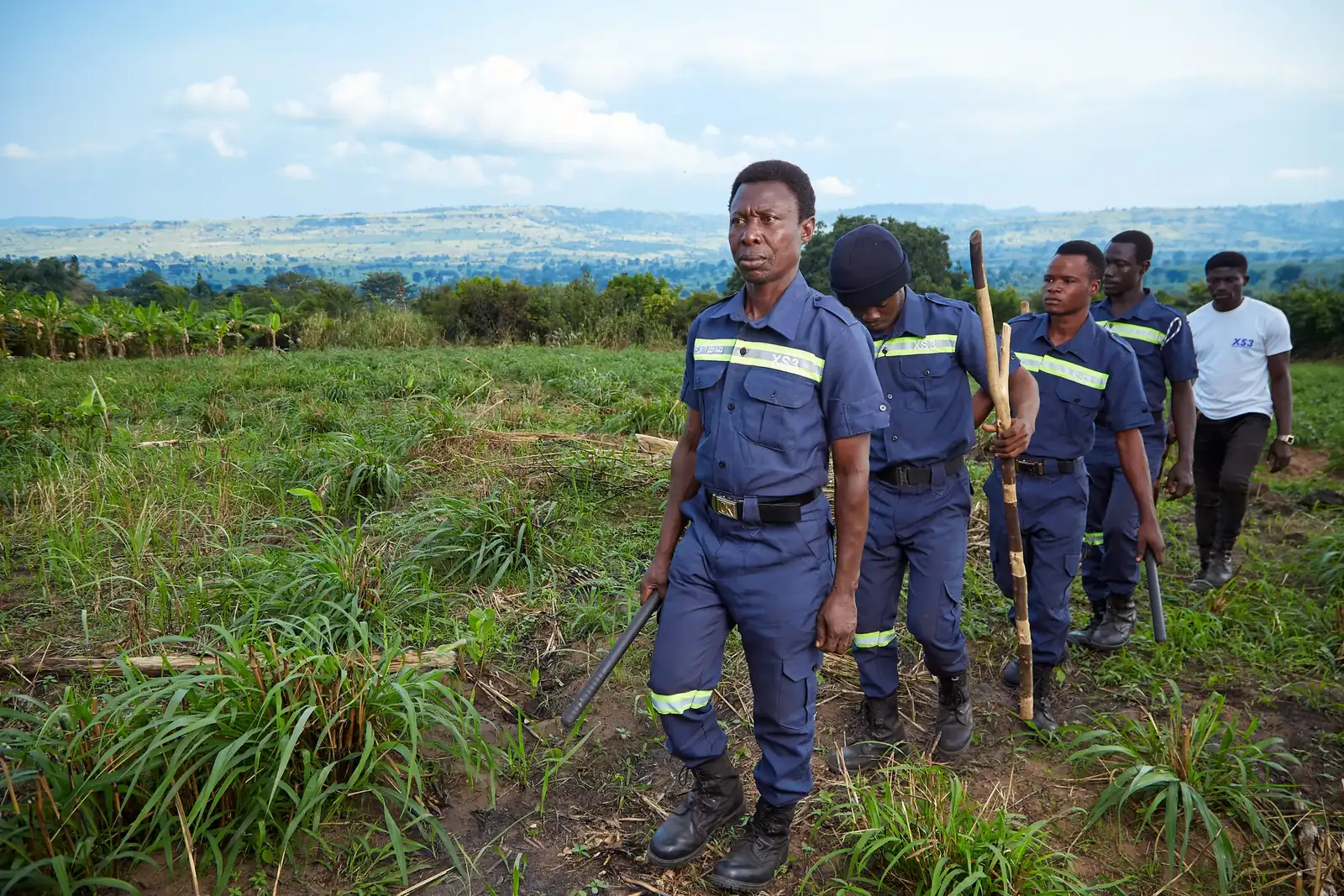
The North Bandai and Bandai Hills Bamboo Reforestation Projects, a public-private partnership with the Government of Ghana since 2015, across the forest-fringe communities of the Ashanti Region.
In Ghana, a deep, decade-long development programme runs alongside fast-growing bamboo. Impact is designed into the project and quantified against SD VISta indicators.
Philomena Yayra rose from worker to supervisor of the regenerative Demonstration Farm and earned a diploma in tropical agriculture. John Bio went from tricycle driver to monitoring team leader on a higher-education bursary. Rose Alor is completing an electrical-engineering apprenticeship, with an internship at the Electricity Company of Ghana. Careers that began in the forest and kept going.
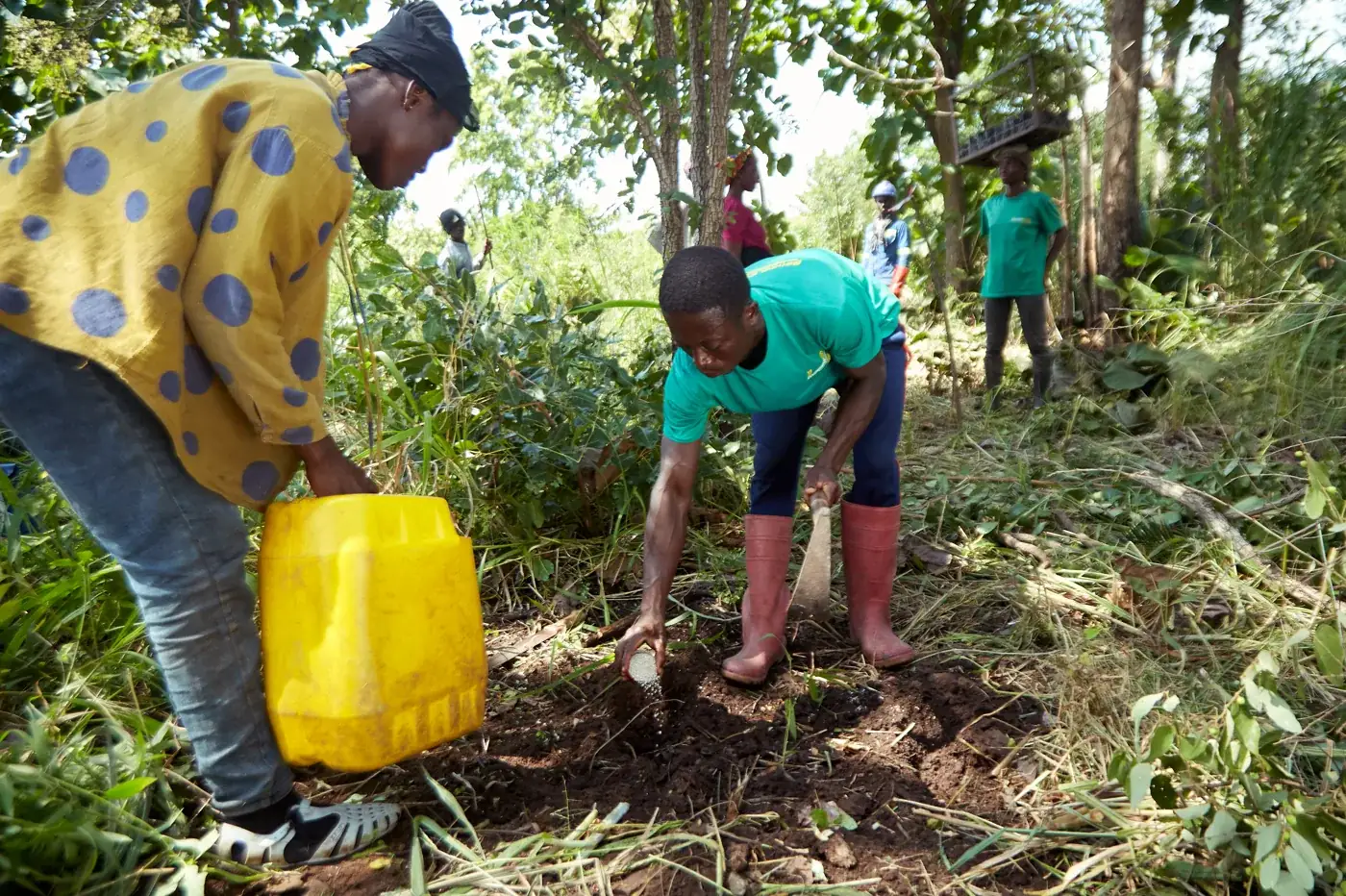
Mentukwa once drew its drinking water from the Afram River; a new borehole gave the village clean water for the first time. In Odoayaase, a mechanised borehole with filtration followed. Toilet blocks have gone up community by community: Odoayaase, Oseikrom-Mankala, Brefa Onyemso, Boamah Krom, and Ananekrom, several on land granted by traditional chiefs through Free, Prior and Informed Consent.
Every September, EcoPlanet hosts one of Ghana's largest World Bamboo Day celebrations: seminars with the Forestry Commission, school drama, sport, and the handover of completed projects: a classroom block, a computer lab, teachers' housing, a community centre. In 2024, the chief of Oseikrom and his elders enstooled EcoPlanet's Managing Director as ‘Nana Sumpa’ in recognition of the company's commitment to the communities.
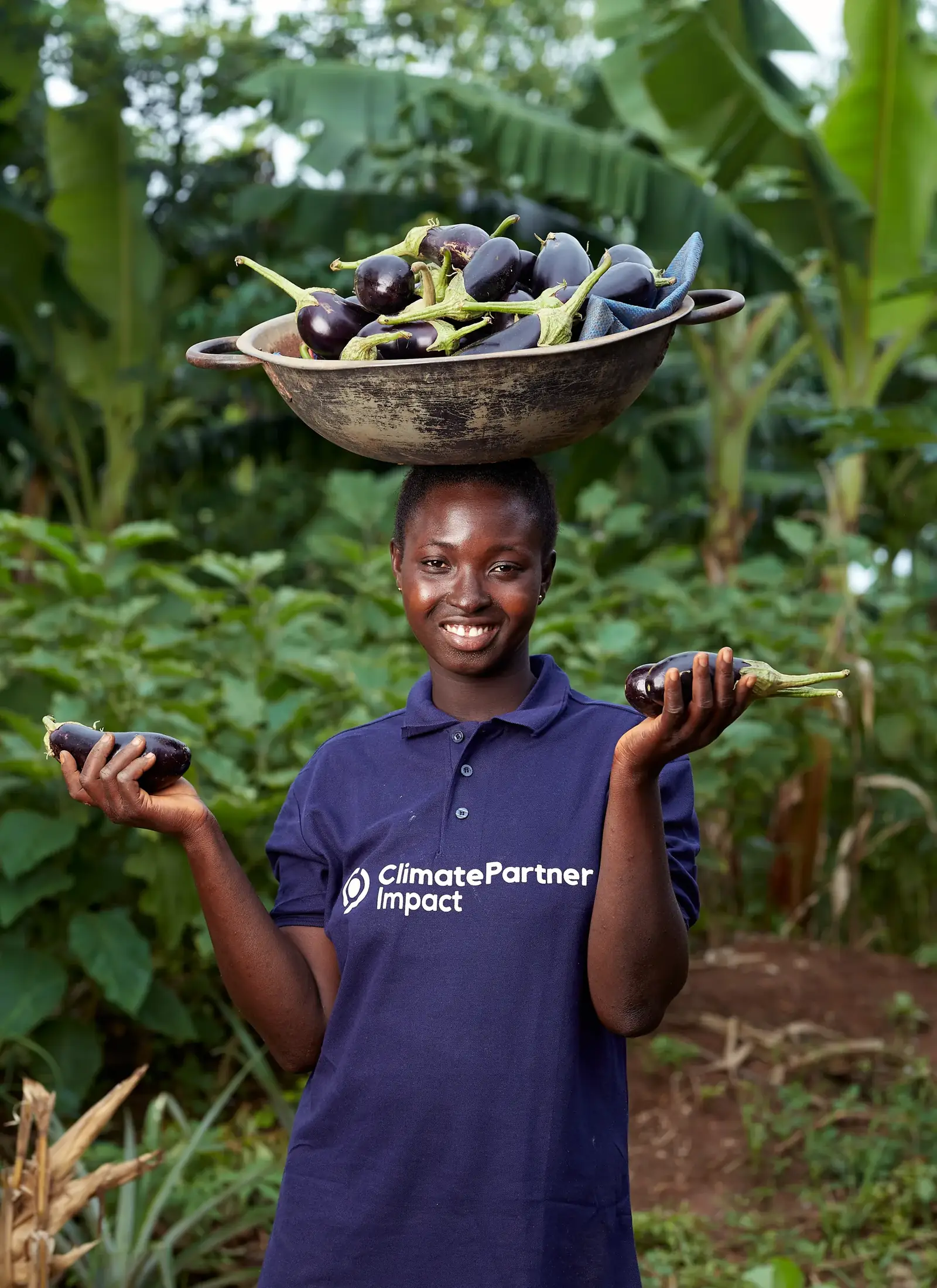
Three communities launched enterprises in trades they chose themselves: traditional glass-bead making, dressmaking, and bar and liquid soap production, most participants women, each group given a workspace and starter equipment on land allocated by traditional leaders.
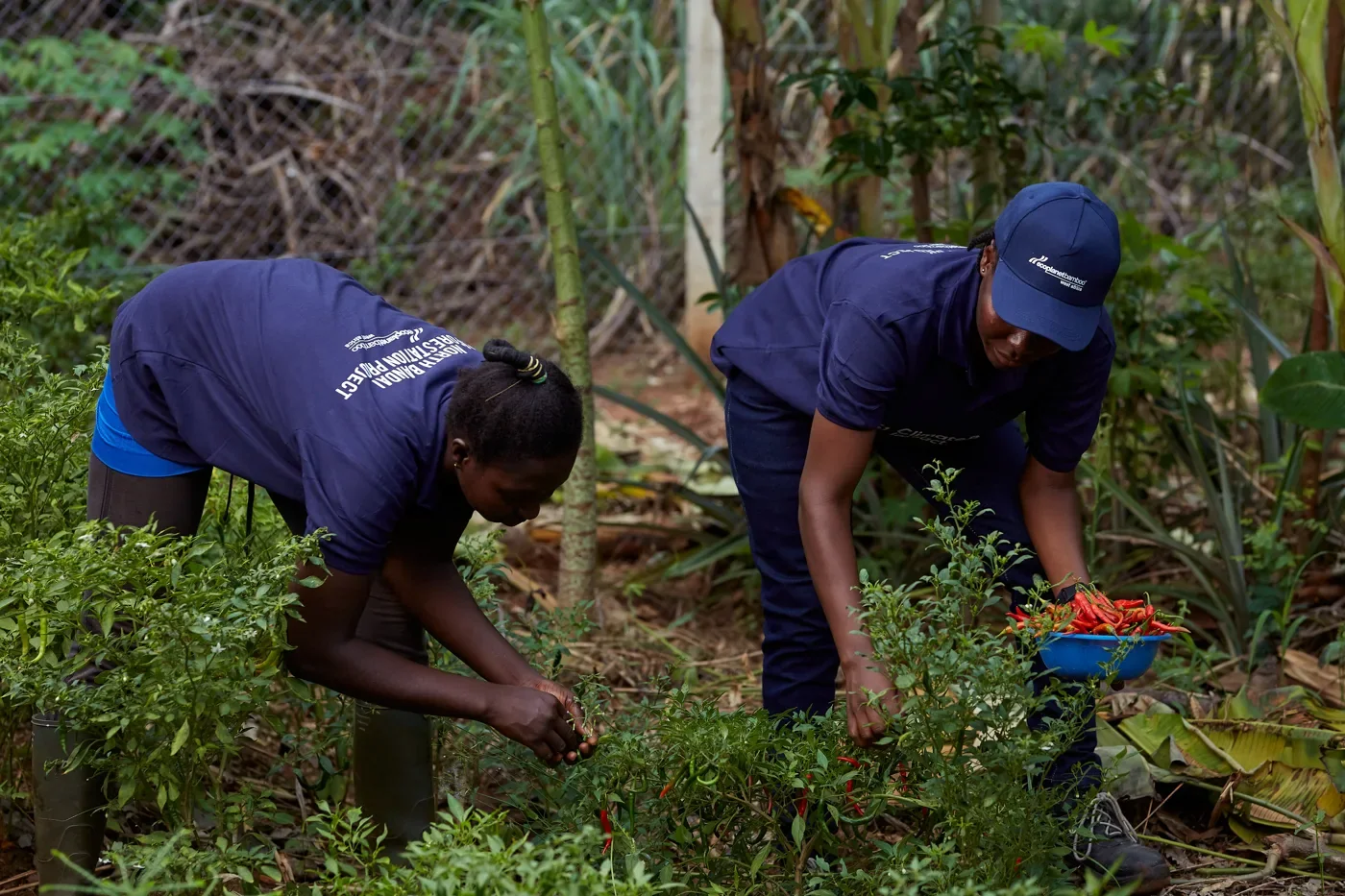
Vegetable growhouses feed learners at Bebuso and Aberewapong schools; kitchen gardens improve food security for households in North Bandai; and the Eco-Guardians school clubs have children leading debates, planting fruit trees and learning regenerative gardening first-hand.
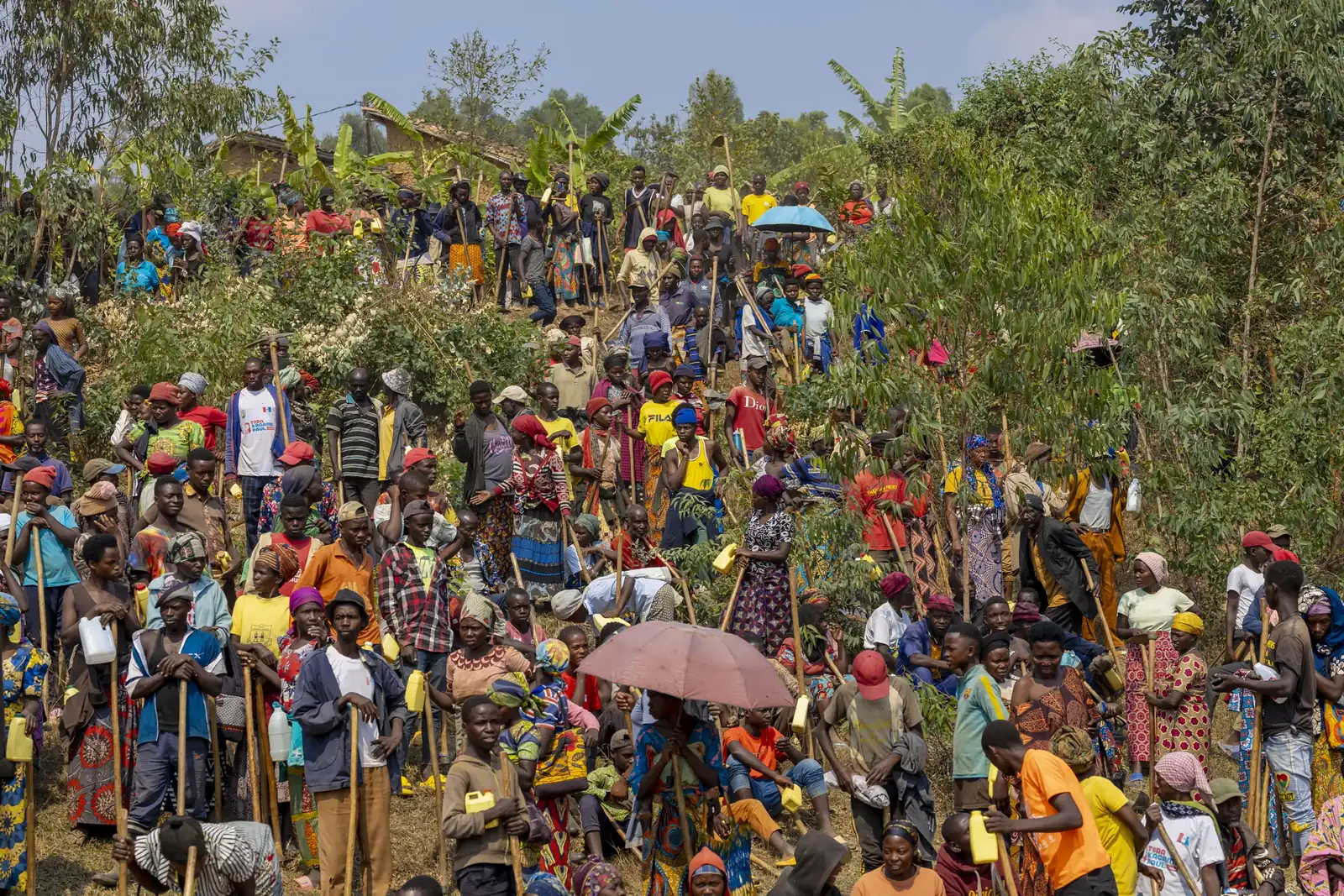
The Rwanda Riparian Restoration Project, replanting degraded riverbanks with giant clumping bamboo across eight districts — Ngororero, Karongi, Muhanga, Ruhango, Nyamagabe, Kamonyi, Nyaruguru and Gisagara — in partnership with the Rwanda Water Resources Board.
In Rwanda, community programmes run alongside a conservation partnership. Impact is designed into the project and quantified against SD VISta indicators.
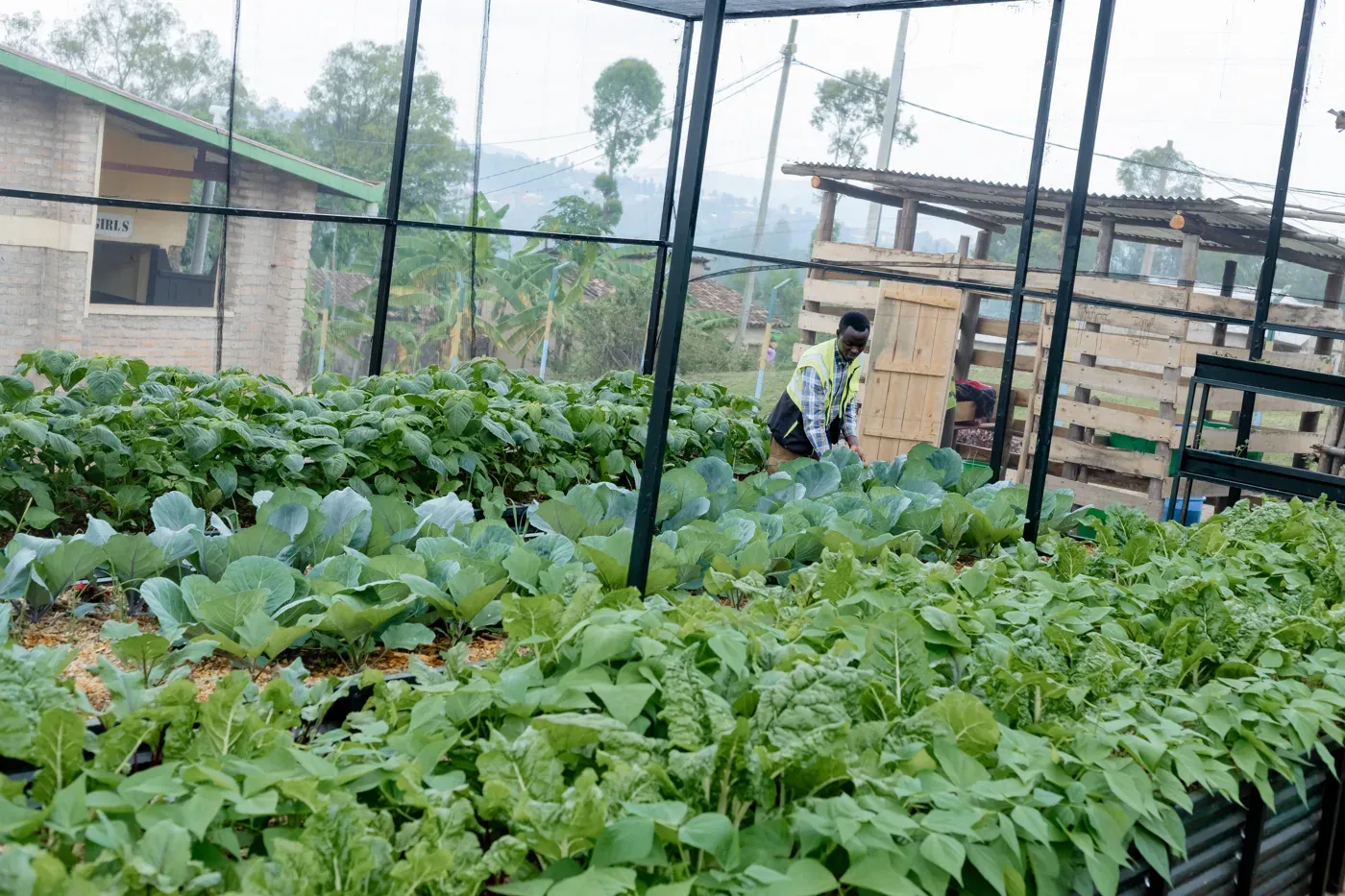
At an Early Childhood Development centre, EcoPlanet built a netted growhouse that grows produce year-round: raised beds, composting, worm-tea fertiliser, with crops chosen to fight iron deficiency in young children. Harvests go straight into school meals, and the site doubles as a living classroom. Beneficiaries reported food-secure days rising from 12 a month to 20.
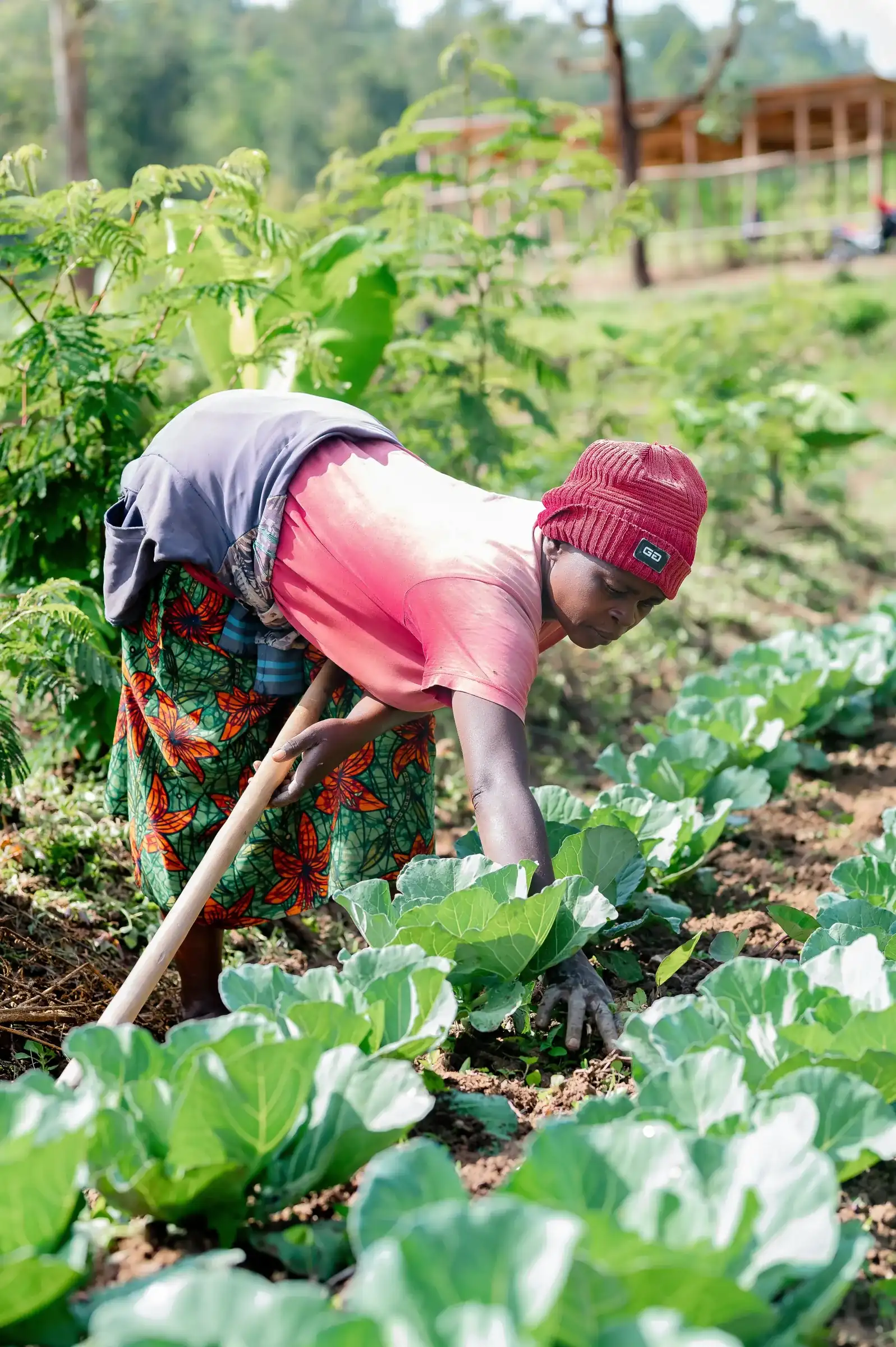
Beside the Nyabitare River, smallholders turned conventionally farmed plots into a communal regenerative farm: a multi-layered agroforestry system with an on-site nursery and earthworm composting. The farmers are trained to run it themselves, so what is being built is capability rather than a hand-out. Every farmer kept a household food garden through the transition, and the group elected its own cooperative leadership and secured supply agreements with local restaurants and schools.
Gitega Primary, which had no water for handwashing, got running taps in 2025, serving the school and the surrounding community, with maintenance guaranteed under a district-government MOU. Taps followed at Bukiro Secondary, a priority the community itself flagged.
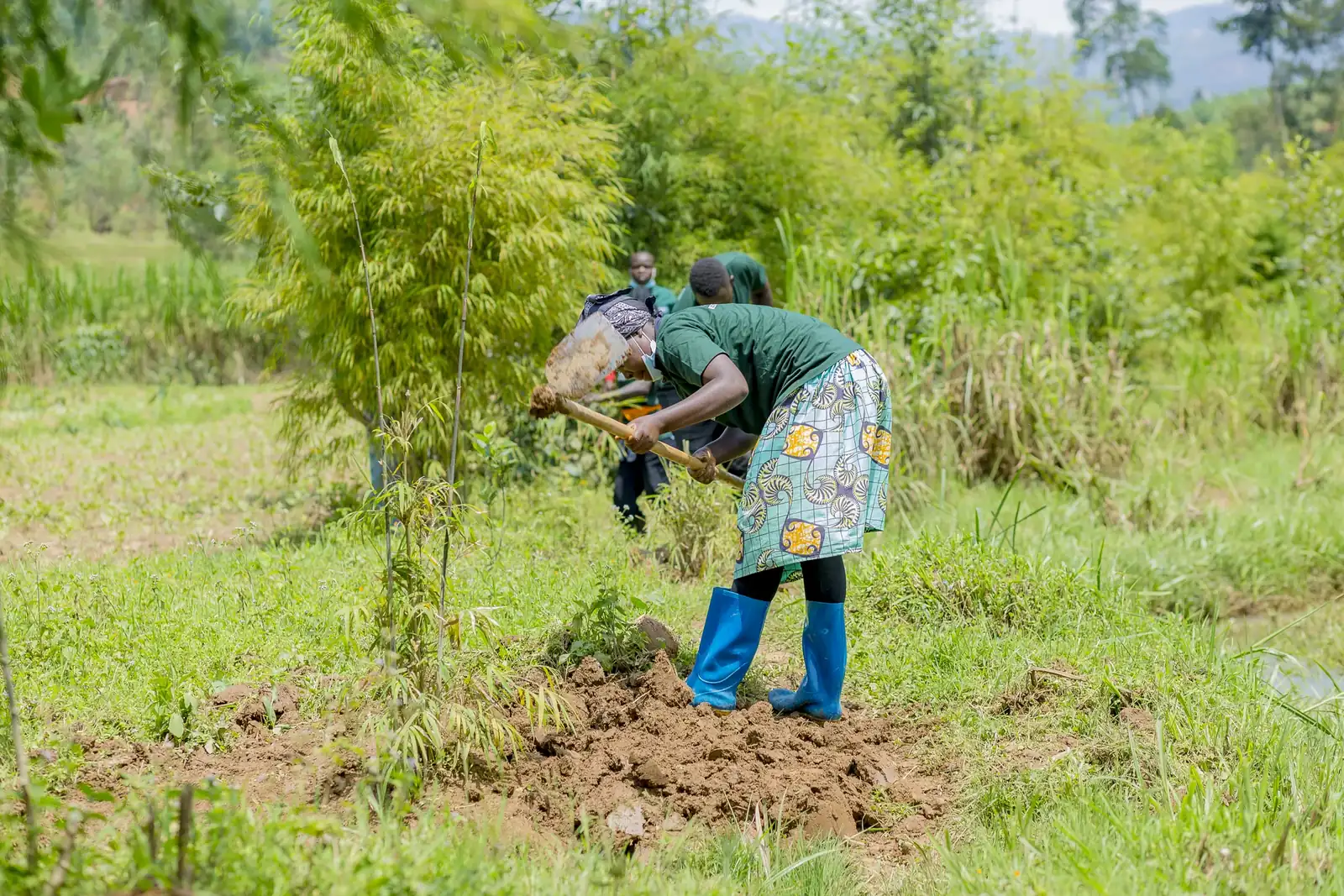
Across eight districts, 120 community members trained in sustainable gardening: raised beds, composting, worm-tea fertiliser and diversified cropping. Sixty household vegetable gardens were established from that training, benefiting 295 people, with households drawn from the Government’s Sustainable Graduation Database so the most vulnerable came first.
Head teachers, ECD and primary teachers, five community health workers and local officials trained together on climate change, composting and raised-bed gardening. Twelve teachers now carry the lessons into their classrooms, reaching 400 children, where the baseline was none: the primary curriculum had covered neither climate education nor sustainable gardening.
EcoPlanet's founding plantations (Rio Kama, Rio Siquia and San Jose on Nicaragua's Atlantic Coast) restoring degraded cattle pasture into certified bamboo forest since 2010.
In Nicaragua, the founding project, community and conservation work has run alongside the plantations since 2010. Impact is designed into the project and quantified against SD VISta indicators.
In November 2012, EcoPlanet's Central America Project became the first audited by the Rainforest Alliance to achieve VCS alongside CCB certification. Bamboo had long sat in a grey area between agriculture and forestry; EcoPlanet developed the first accurate methods for measuring its carbon, helping put bamboo on the map as a legitimate climate species.
EcoPlanet received the U.S. Secretary of State's 2014 Award for Corporate Excellence for its Nicaragua operations, one of three winners from nine finalists, cited for sustainable development, labour rights, a 20% natural-habitat set-aside, the employment of people with disabilities, and the promotion of women into management.
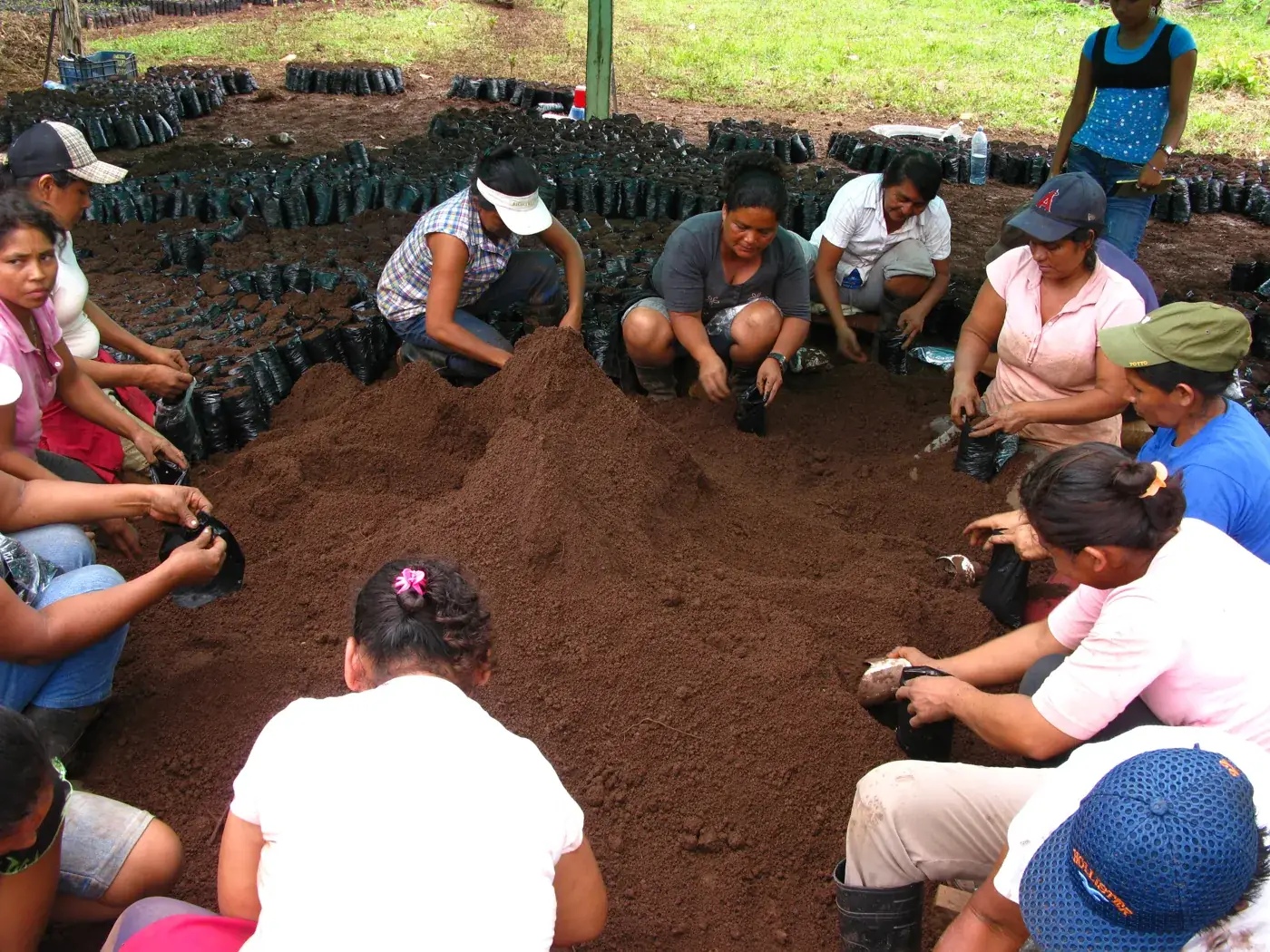
Communities around Rio Siquia had rarely known formal paid work. During the 2011 planting phase, employment surged and the average daily wage rose 300%. As more women were hired, the plantation's first promotion went to a young woman from the community: Rio Siquia's first female supervisor.
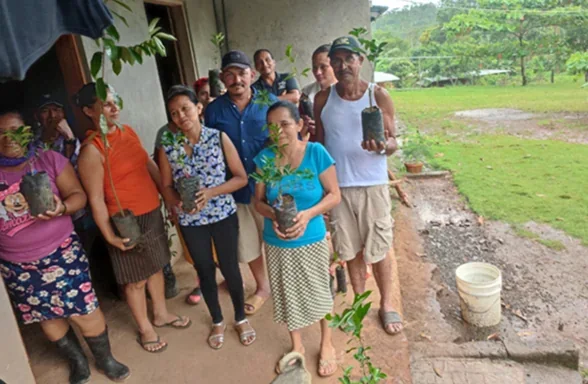
From 2012, EcoPlanet ran a community development programme shaped by local consultation: a village drinking-water system, school repairs and teacher support, and farm infirmaries open to community emergencies. More recently, a fruit-orchard and food-security programme has distributed grafted fruit trees to worker families and to nine households and the primary school in Río Calderón, with training on tree care and nutrition.
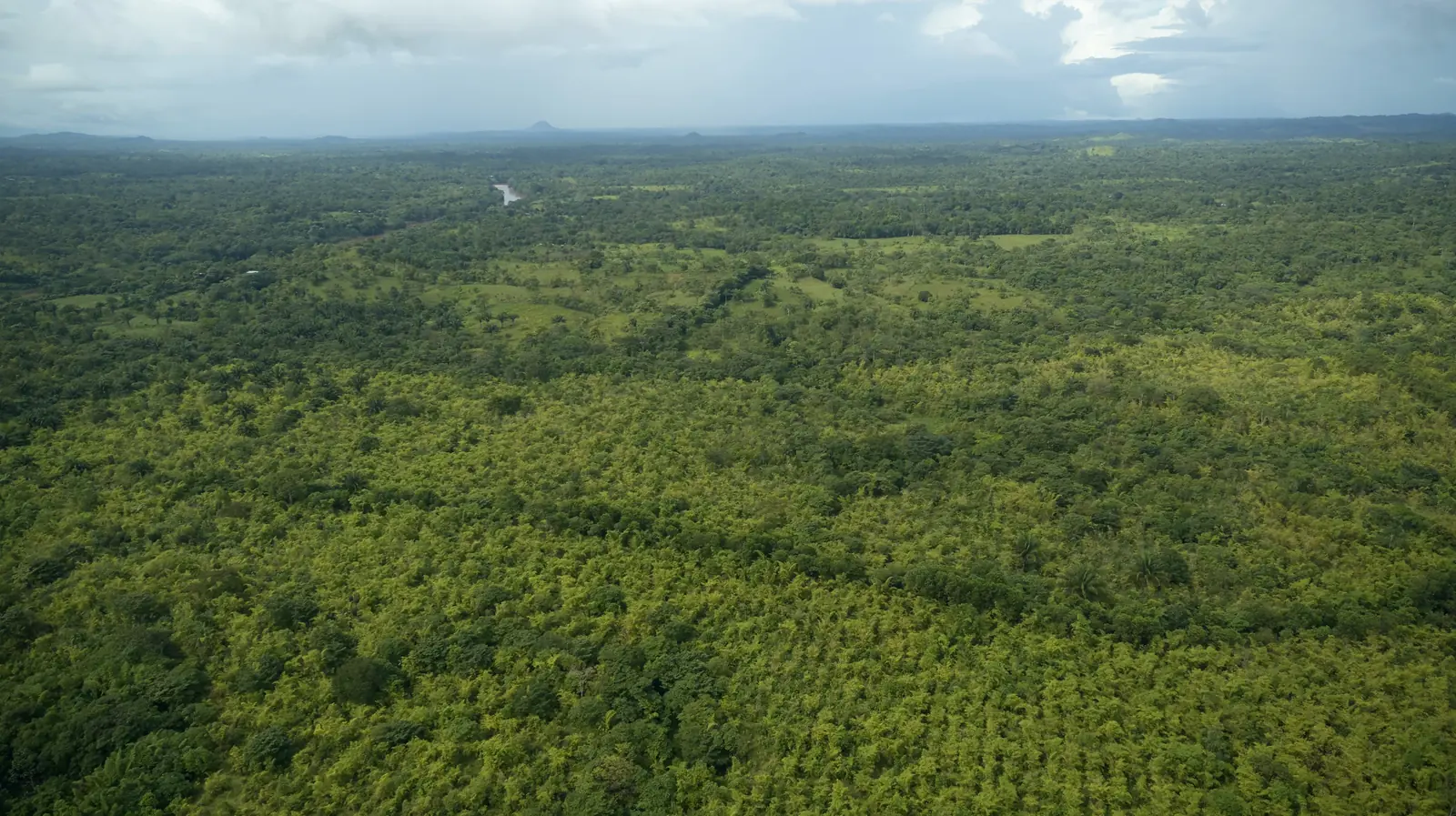
By 2015, EcoPlanet had restored thousands of hectares of degraded land, a model showcased at COP21 for Nicaragua's Initiative 20x20, and set aside primary tropical forest for conservation, anchoring a vision for a tree-free bamboo bio-refinery and paper mill.
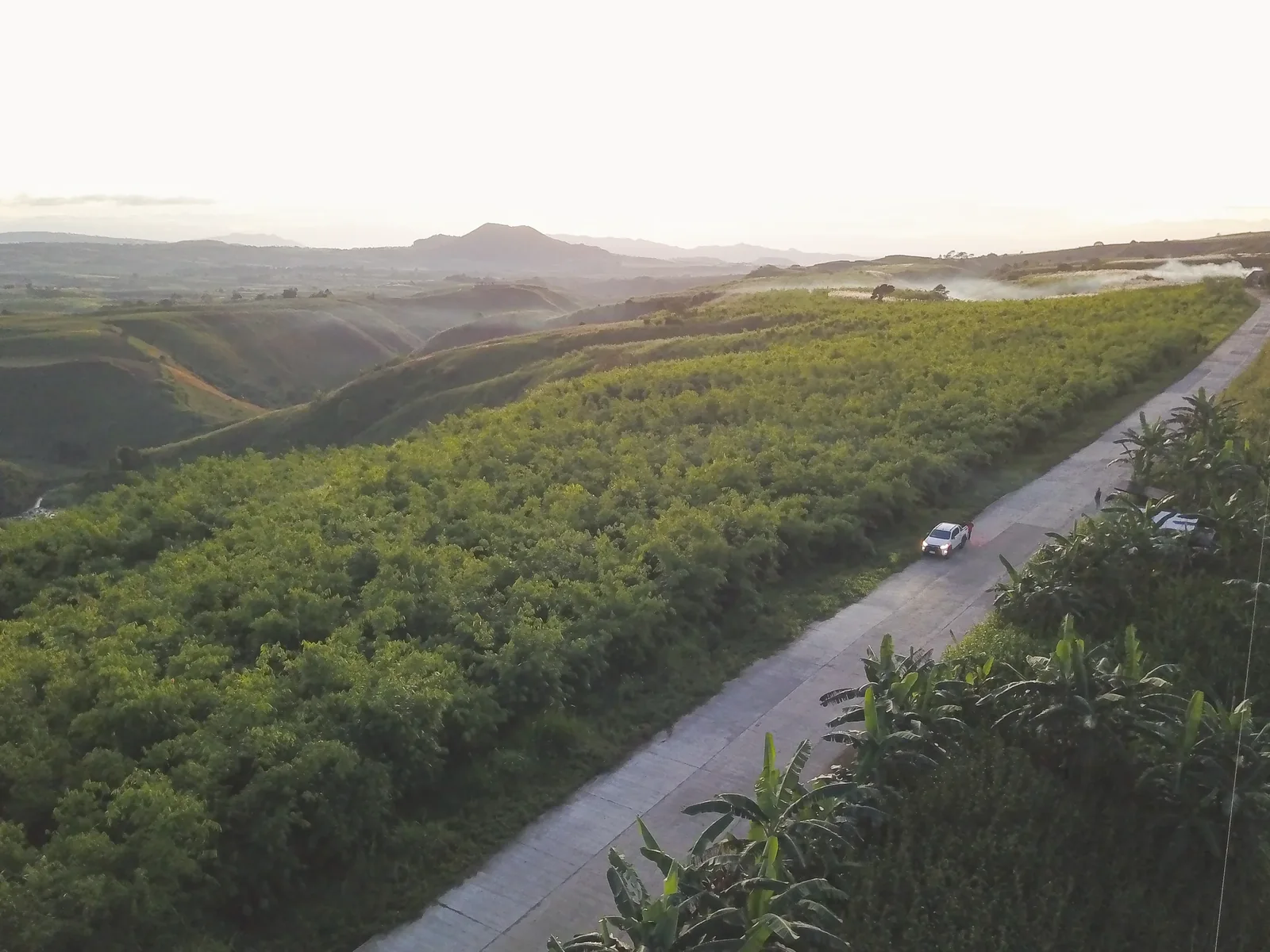
The Lanao del Sur Bamboo Reforestation Project, with Sunriser Peoples Inc. in the Bangsamoro region, across 17 communities of Maranao, Cebuano and Talaandig peoples. Our newest geography, framed around what we are building together.
In the Philippines, community engagement comes first. We build the relationships and understanding before designing development programmes. Impact is designed into the project and quantified against SD VISta indicators.
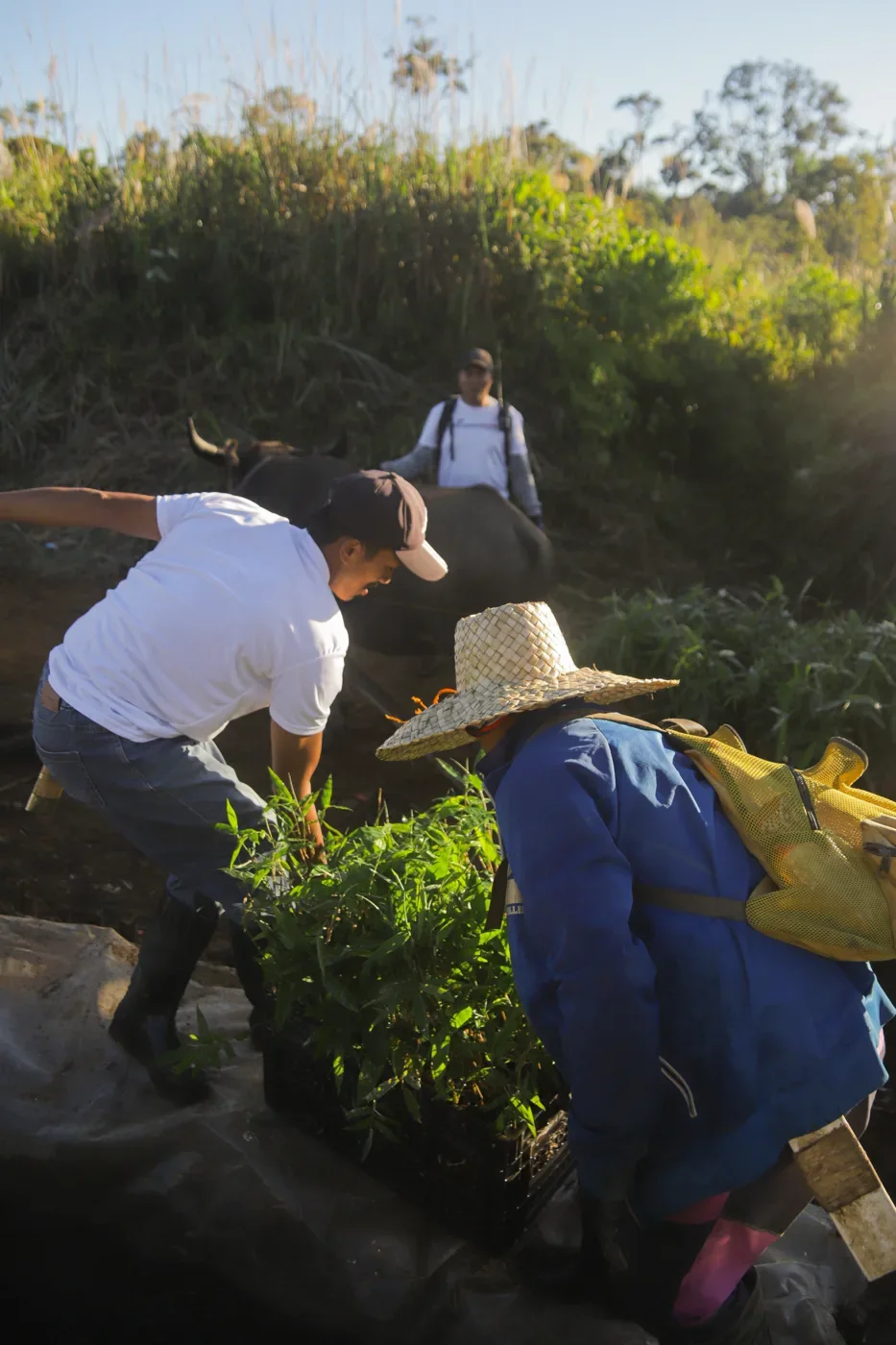
In 2025, EcoPlanet completed communal toilet facilities in Amai Manabilang, the project's first community infrastructure, answering a severe sanitation gap identified in the 2024 assessment, with a design adapted to local cultural norms and gender-specific cubicles.
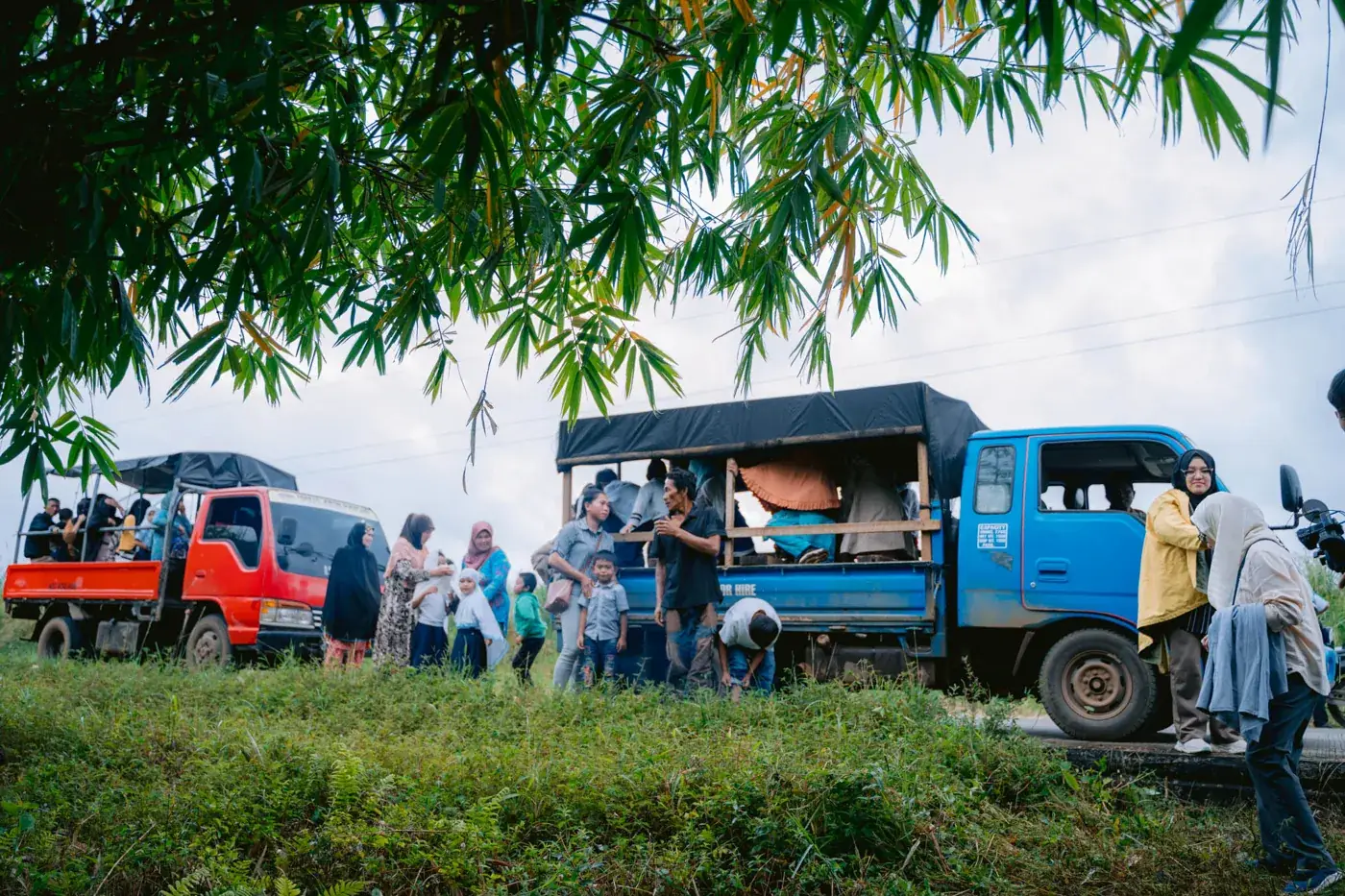
The programme is built on consultation. In 2024 the team carried out a socio-economic assessment across a municipality of 17 communities, home to Maranao, Cebuano and indigenous Talaandig peoples, and every intervention now proposed traces directly to needs the communities themselves identified.
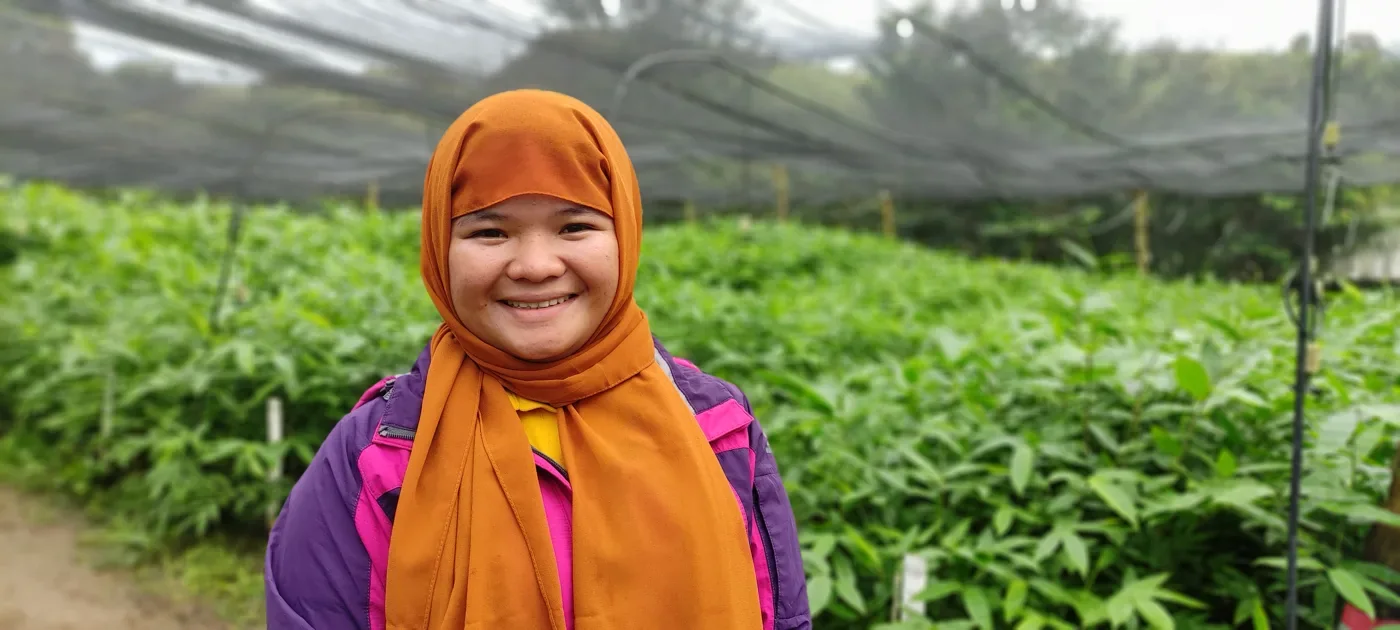
Shaped by the 2024 assessment: communal toilets with rainwater harvesting and solar lighting across three communities; a growhouse at an Early Childhood Development centre modelled on Rwanda's; 10,000 fruit trees; and regenerative model farms whose smallholders become eligible for 25-year Stewardship Certificates, a major land-tenure win.
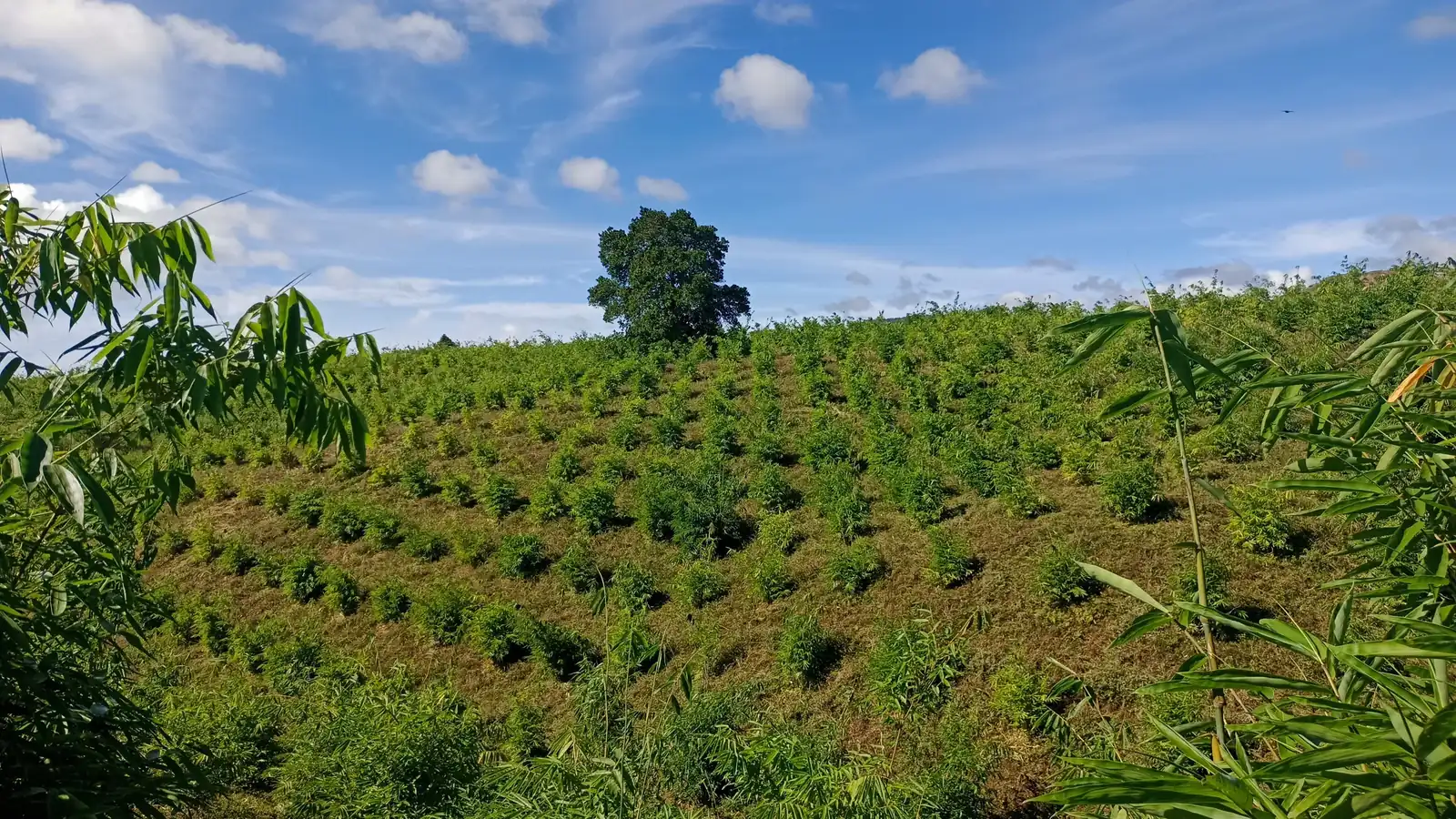
In 2016, EcoPlanet received a request from the highest level of the Philippine government to assist the country's bamboo road map, part of a national 500,000-hectare bamboo restoration commitment.
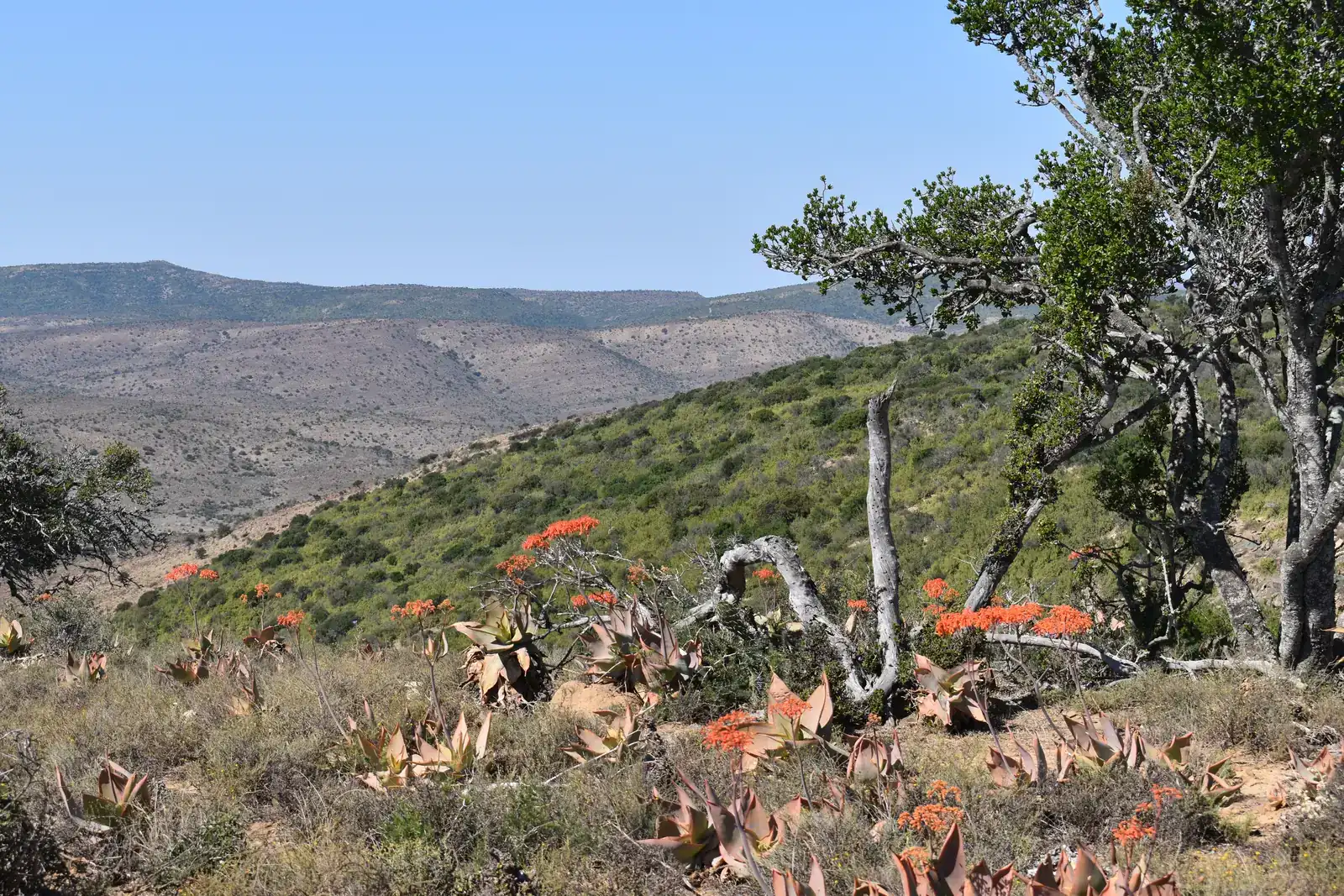
Sand River Sanctuary, Somerset East, South Africa. Spekboom thicket restoration, and a future home for elephant and black rhino.
Restoration of degraded former pasture in the Eastern Cape. Together with the neighbouring project, Sand River anchors a contiguous conservation sanctuary of more than 10,000 hectares. The final 1,725-hectare allocation remains available.
Ex ante estimate, 2026–2055. Delivery subject to monitoring, verification and issuance; no VCUs issued to date.
Twenty-six kilometres from Pearston, in a semi-arid reach of the Eastern Cape, lies land a century of overgrazing left economically unviable: former grazing farms stripped of the native subtropical thicket that once covered them. The Eastern Cape Restoration Project is bringing that ecosystem back, replanting Portulacaria afra (spekboom). The farm runs to 6,145 hectares, of which 5,665 is the carbon project area, and 3,470 hectares have been planted so far. With the expanded Vaalklip farm alongside it, the restoration spans more than 10,000 hectares. The thicket it rebuilds supports 1,500 plant species, three hundred of them found nowhere else on Earth.
Spekboom is one of the defining species of South Africa’s subtropical thicket, and uniquely suited to restoring it. It forms a dense evergreen canopy that holds soil moisture, halts erosion and shelters other native species as they return. Through a water-thrifty form of photosynthesis, it opens its pores at night to keep drawing down carbon while losing almost no water, making it extraordinarily drought-tolerant where little else survives. It grows from cuttings, so establishment needs no irrigation; and as the canopy closes, soils recover, organic matter builds, and the ecosystem begins to heal itself.
This is removal, not avoidance: physical carbon drawn down into biomass and soil. Scientific studies estimate that intact spekboom thicket can store more than 200 tonnes of carbon per hectare, and that restored sites can approach those levels within 35 to 50 years, given favourable conditions and well-managed browsing. The risks the science flags (frost, poor soils, uncontrolled browsing) are actively mitigated here, on a project grounded in peer-reviewed research.
As the thicket returns, so does the wildlife it shelters. Together with the neighbouring project, this land is becoming a contiguous conservation sanctuary of more than 10,000 hectares, a future home for the African elephant and the critically endangered black rhino.
Dual registration: Verra VCS 3628 and the South Africa National Carbon Registry.
1,725 hectares of spekboom planted across three seasons, 2026 to 2028.
First issuance 2030, then triennial verification through to 2055.
100-year permanence. Spekboom thicket is restored rather than harvested, so the carbon is committed to the land for a century.
Registered under AR-ACM0003, migrating to VM0047.
Full technical materials are available under NDA: the validated project design document, carbon accumulation model and monitoring plan.
In the Eastern Cape, impact is paced to the multi-decade life of the restoration, designed into the project and quantified against SD VISta indicators.
Restoration at this scale puts hundreds of people in Pearston back to work, and thanks to existing partners like Volkswagen ClimatePartner, the community programme is already resourced for the full thirty-year life of the sanctuary. It runs today, so a buyer joins work that is already working, not work that needs underwriting. Quantified against Verra’s SD VISta standard.
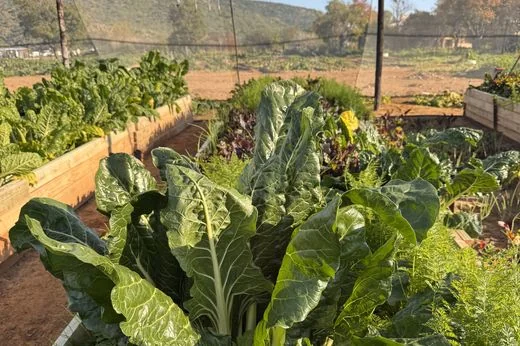
A worker-owned garden on the farm. Everything it grows goes to feeding the workforce and their families, not to market.
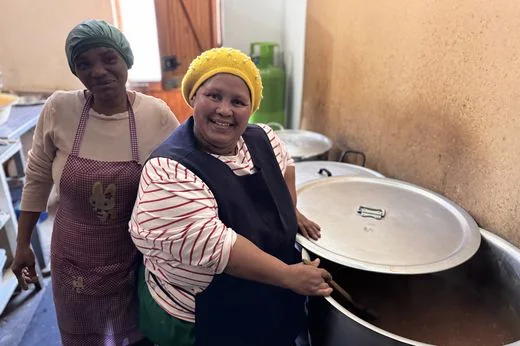
Equipment for the Pearston soup kitchen, increasing the number of hot meals it can serve each week.
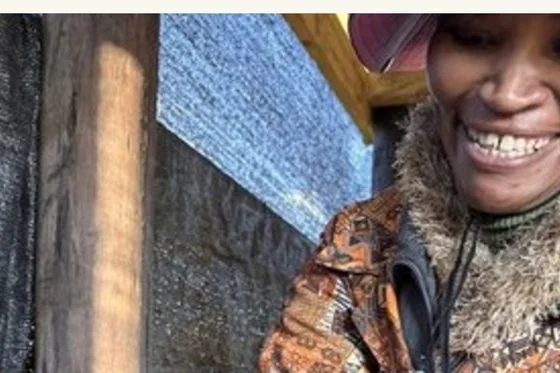
On-site vermiculture producing worm castings and worm tea, an organic fertilizer that feeds the gardens and returns organic matter to depleted ground.
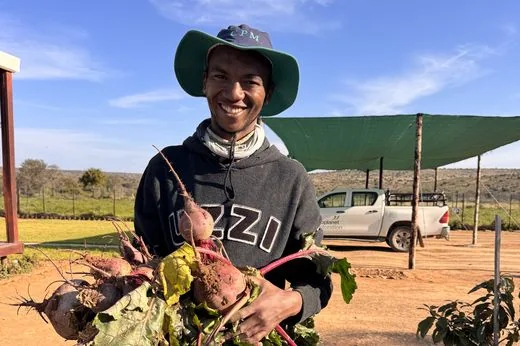
Garden beds built at workers’ own homes, with training in growing fruit and vegetables, so food security follows them home.
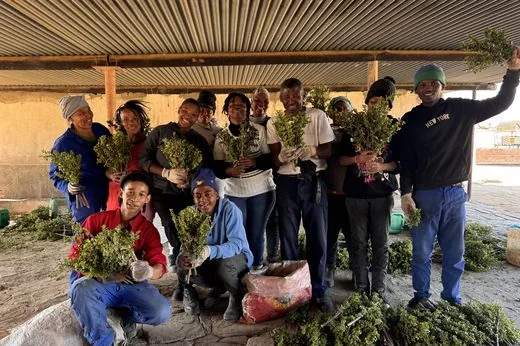
Permanent and seasonal work in nurseries, cutting preparation, planting and monitoring, in one of South Africa’s highest-unemployment districts.
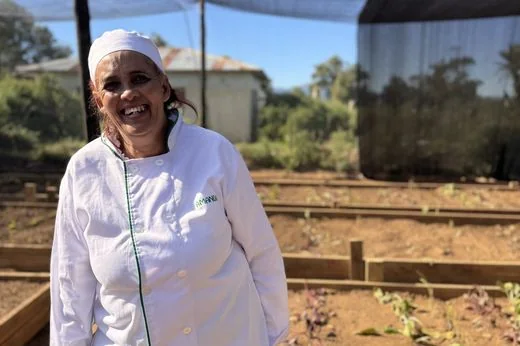
Training in ecological restoration, horticulture and enterprise, capability that stays in Pearston long after planting is complete.
See the full South Africa impact story →
Ten local women own the town’s bakery, a registered co-operative putting fresh food within reach in a food desert.
A worker-owned garden on the farm. Everything it grows goes to feeding the workforce and their families, not to market.
Training in ecological restoration, horticulture and enterprise: capability that stays in Pearston long after planting is complete.
Lanao del Sur, Mindanao, Philippines. Native bamboo restoring an upland montane watershed, and anchoring a long-term peace.
The project covers an 8,360-hectare project area on the island of Mindanao: 5,000 hectares of native bamboo reforestation alongside 1,200 hectares of native tree reforestation, 1,000 hectares of conservation, and 620 hectares of regenerative smallholder farms worked with the 600 families who live here.
This offering covers 4,000 of the bamboo hectares. Launched in 2022, it became the second project in the Philippines ever registered by Verra, and 1,600 hectares are already planted and growing, implemented by EcoPlanet's own trained team of more than 220 people on the ground.
Projected removals across this offering. Delivery subject to monitoring, verification and issuance. Full technical materials, delivery schedules and commercial terms are shared under NDA.
Decades of conflict and instability left Lanao del Sur with degraded uplands and few formal jobs. Reforestation at this scale changes both. The project employs 225 people, 35 percent of them women, and pairs every planted hectare with investment in the families who live in the watershed.
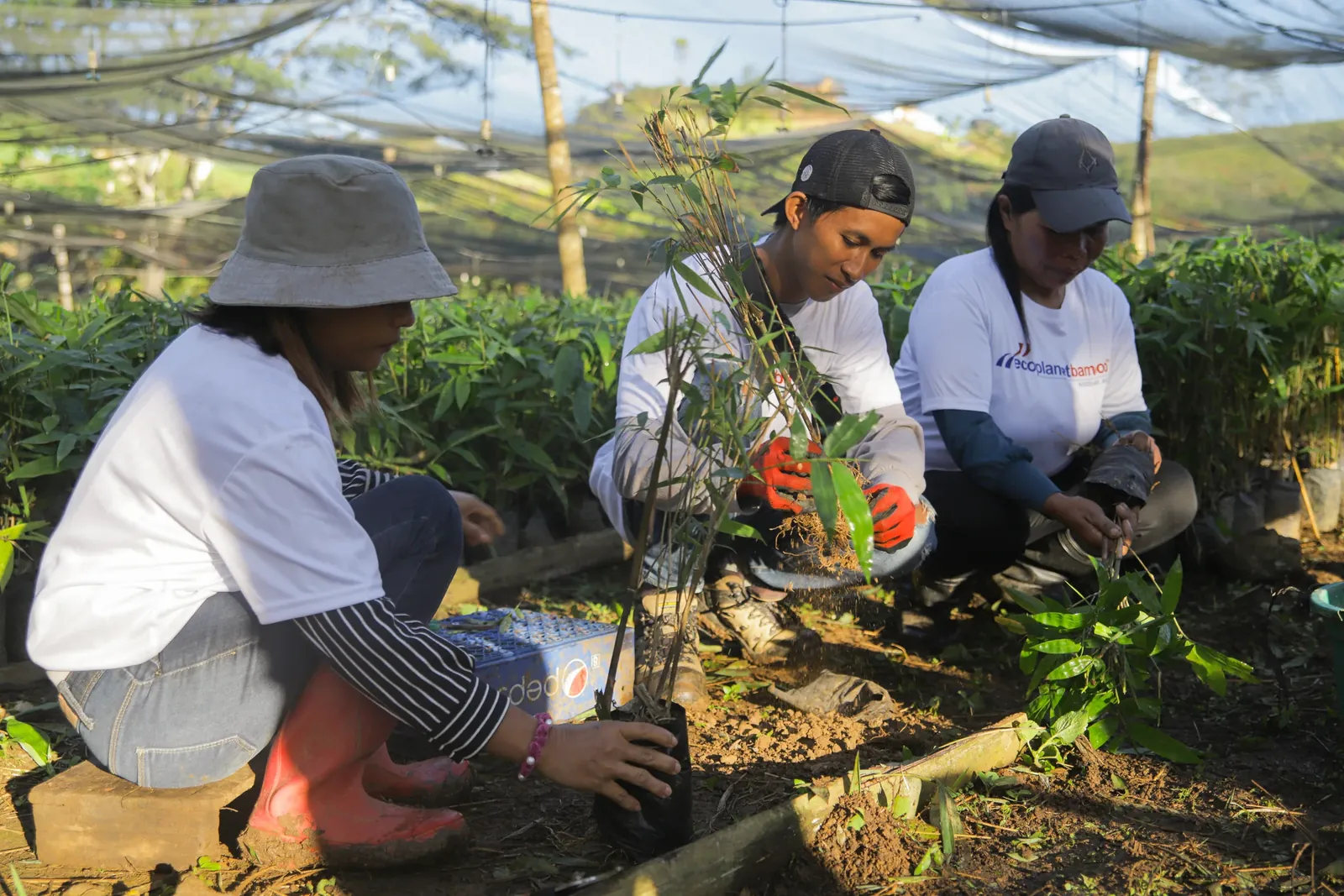
The bamboo sits inside an 8,360-hectare mosaic of conservation, native tree restoration and regenerative smallholder farming, with 1,000 hectares held under conservation.
AI-enabled drones, live dashboards and real-time monitoring measure planting and carbon across every hectare, supporting the MRV an accredited body then verifies.
Registered with Verra under VCS 2958, with impact quantified against SD VISta.
The remaining 2,400 hectares are planted over three seasons, 2026 to 2028.
First issuance 2028, then biennial verification to 2036.
Removals complete within eight years of each planting. The forest is managed as a permanent carbon sink for more than sixty years, on a 50-year renewable land lease.
Registered under AR-ACM0003, migrating to VM0047 at first verification.
Full technical materials are available under NDA: the validated project design document, carbon accumulation model and monitoring plan.
A dedicated social impact fund runs annually over ten years, targeting transformational change for the 600 families within the project area, while 1,000 hectares are held under conservation.
A full-scale nursery run by local hands produces every seedling the project plants, steady skilled employment close to home.
35 percent of project roles are held by women, from nursery production to field monitoring and administration.
Ongoing consultation with the communities of the project area shapes where and how every block is planted.
San José Farm and El Rama, Nicaragua. The project that proved the model.
Heavily degraded pastureland converted into biodiverse bamboo ecosystems, generating the world's first accredited bamboo carbon offsets under the Verified Carbon Standard. The project supports hundreds of stable jobs paid above minimum wage and funds local health clinics in a region of historically high unemployment.
First validated under the VCS in 2013 and most recently verified in 2021. Delivering; inquire for current vintages.
Before Nicaragua there was no accredited bamboo carbon anywhere. This is the project that established that a bamboo forest on abandoned pastureland could be measured, verified and issued against the Verified Carbon Standard, and it remains the reference for everything EcoPlanet has built since.
The land was cattle pasture, grazed until it no longer supported much of anything. What stands there now is a biodiverse bamboo ecosystem, established from native Guadua and managed on a permanent footing rather than cleared and replanted.
The region has a long history of high unemployment. The project supports hundreds of stable jobs paid above minimum wage, and funds health clinics that serve the surrounding communities.
Registered with Verra under VCS 1085, the first large-scale bamboo project on the registry.
Audited by the Rainforest Alliance in 2012 to achieve VCS alongside CCB certification.
First validated in 2013, most recently verified in 2021.
Delivering. Inquire for current vintages.
Backed by World Bank Group (MIGA) investment guarantees for the plantations, issued 2012.
Full technical materials are available under NDA: the validated project design document, carbon accumulation model and monitoring plan.
The clinics, the wages and the fruit-tree and food-security programmes around Rio Calderon are the part of this project that does not appear on a registry.
Communities around Rio Siquia had rarely known formal paid work. Through the 2011 planting phase, employment surged and the average daily wage rose 300%.
A village drinking-water system, school repairs and teacher support, and farm infirmaries, shaped by local consultation from 2012 onward.
By 2015 thousands of hectares of degraded land had been restored, with primary tropical forest set aside for conservation alongside it.
Ashanti Region, Ghana. A national-scale bamboo public-private partnership on land degraded by fire and charcoal harvesting.
An 11,145-hectare public-private partnership regenerating land degraded by fire and illegal charcoal harvesting. Over 775,000 bamboo clumps have been planted, integrated with native trees. The workforce is nearly half women, and the project funds rain-harvesting and sanitation systems for surrounding communities.
Two adjacent registered projects, North Bandai and Bandai Hills, managed as a single restoration landscape. Fully committed.
This project's allocation is fully committed, so no volume from it is available for offtake. There is scope to expand restoration in this region, and we are glad to talk to anyone interested in building on what is already running in Ghana.
Verify VCS 2928 on the Verra registry ↗Verify VCS 2929 on the Verra registry ↗
This is degraded forest reserve land, stripped by repeated fire and illegal charcoal harvesting until it stopped regenerating on its own. The partnership restores it at national scale, planting clumping bamboo integrated with native trees rather than as a monoculture, and holds the result under a long-term public-private agreement.
North Bandai and Bandai Hills are separately registered under the Verified Carbon Standard but sit adjacent to one another and are managed as one restoration landscape, which is why the hectares and the clump counts are reported together.
Roughly half the people working this landscape are women, in a sector where that is uncommon. The project also funds rain-harvesting and sanitation systems for the communities around it.
Two adjacent registered projects, VCS 2928 (North Bandai) and VCS 2929 (Bandai Hills), managed as a single restoration landscape.
A national-scale public-private partnership across 11,145 hectares in the Ashanti Region.
More than 775,000 bamboo clumps established, integrated with native trees and remnant forest.
Nearly half of the people working this landscape are women.
Fully committed. No allocation is currently available for offtake.
Full technical materials are available under NDA: the validated project design document, carbon accumulation model and monitoring plan.
The rain-harvesting and sanitation systems, and the food-growing work around the plantations, are what the partnership looks like from inside the communities that host it.
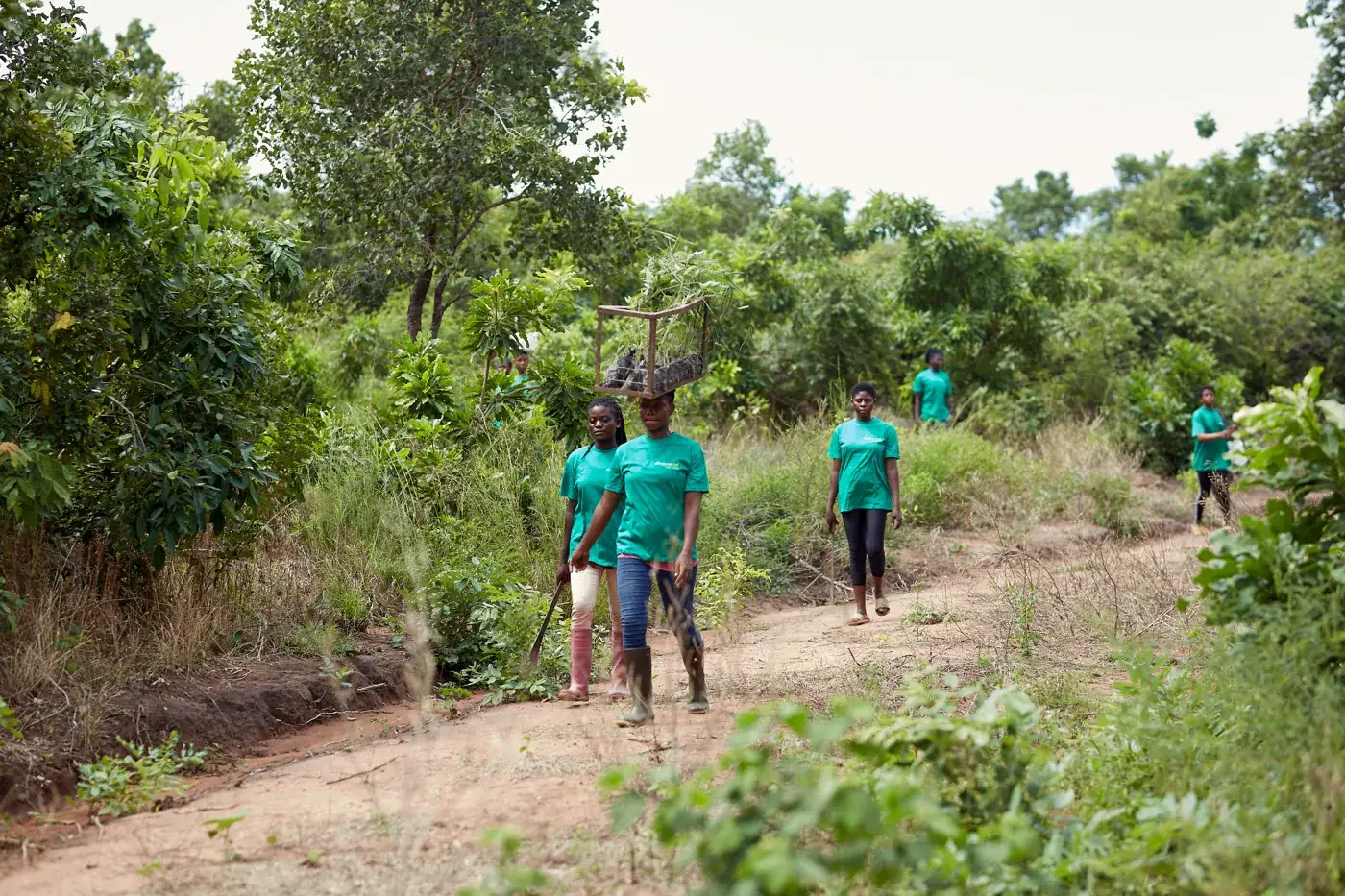
Philomena Yayra rose from worker to supervisor of the regenerative demonstration farm and earned a diploma in tropical agriculture. John Bio went from tricycle driver to monitoring.
Mentukwa once drew its drinking water from the Afram River. A new borehole gave the village clean water for the first time, with a mechanised borehole and filtration at Odoayaase.
Vegetable growhouses feed learners at Bebuso and Aberewapong, kitchen gardens improve household food security, and Eco-Guardians clubs run in the schools.
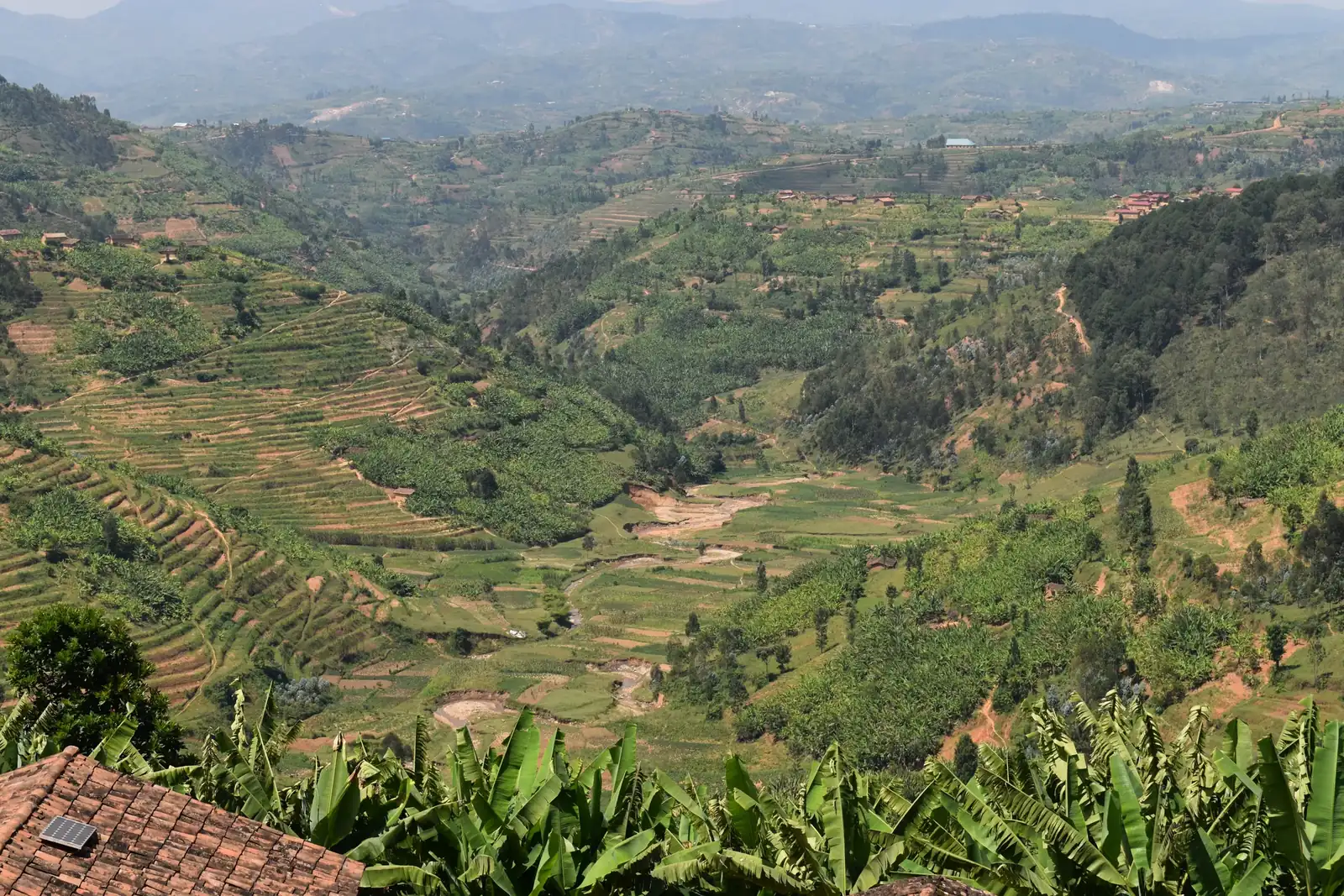
Riparian buffer zones nationwide, Rwanda. A living barrier of clumping bamboo for the country's rivers, protecting water, soils and slopes.
Rwanda's riparian buffers, the strips of land lying directly against its rivers, are government-tenured and protected, yet fragile and exposed to the country's heavy rains. Launched in 2022 after a three-year grant-financed pilot, the project plants non-invasive clumping bamboo along these banks: a living barrier that binds soils, softens heavy rainfall, and cuts flooding and siltation downstream.
Registered by Verra in December 2023. The first 1,000 hectares, planted in 2022 and 2023, are under contract. A 320-strong workforce, 46 percent of them women, planted a further 1,170 hectares across 2024 and 2025.
Projected removals across this offering. Delivery subject to monitoring, verification and issuance. Full technical materials, delivery schedules and commercial terms are shared under NDA.
Rwanda is steep, densely farmed and heavily rained on, which is a combination that moves topsoil downhill fast. Restoring the strips of land either side of the watercourses is the highest-leverage intervention available: it reduces erosion and topsoil loss from sloping agricultural land, protects water quality downstream, and does it on land too narrow and too wet to farm well anyway.
Once planted, the restored buffers are protected under Rwandan law, with activity limited to health thinning, and the local districts share in the delivery fee that funds that protection for the long term.
Each planted clump delivers its full carbon over a conservative ten-year period, based on more than five years of measured growth data.
Registered by Verra in December 2023 under VCS 3072, with SD VISta.
The remaining 2,830 hectares are planted over three seasons, 2026 to 2028.
First issuance 2027, then biennial verification to 2037.
The buffers are government-tenured, and protected under Rwandan law once restored.
Registered under AR-ACM0003.
Full technical materials are available under NDA: the validated project design document, carbon accumulation model and monitoring plan.
The project creates employment in remote areas across Rwanda where formal jobs are scarce. 320 people work across its nurseries and riverbanks, 46 percent of them women, and wages earned along the buffers flow into the hillside communities above them.
A netted growhouse at an Early Childhood Development centre, growing organic produce for children at the age when nutrition shapes everything that follows.
120 community members trained in sustainable gardening, and sixty household vegetable gardens established from that training, benefiting 295 people.
Beside the Nyabitare River, smallholders have turned conventionally farmed plots into a communal regenerative farm, and are trained to run it themselves.
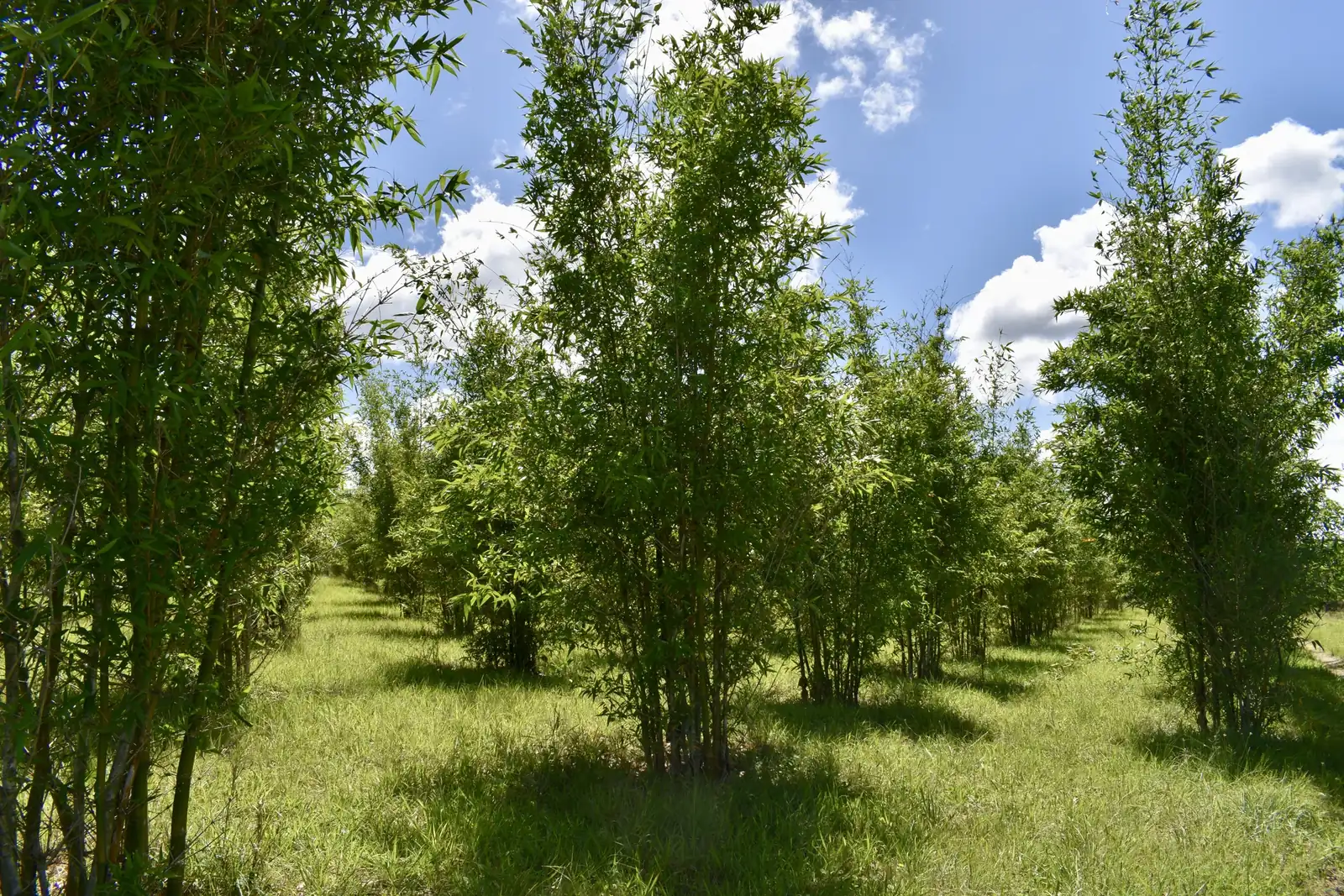
Eastern Cape, South Africa. Giant bamboo returning degraded farmland to production, with projected carbon removals and a fibre future.
The project converts degraded, overgrazed farmland across South Africa's Eastern Cape into managed giant bamboo, working toward a target of 7,000 planted hectares. It is assembled farm by farm rather than as a single block, which is part of how it works: each is a small, distinct property with its own soils and history. Kowie was the pilot that proved the model and is not itself a carbon project. Three carbon farms have followed it: Glenfillan, Good Hope and Woody Cape.
1,000 hectares are already planted, with the remaining 2,500 following over three seasons from 2026. Bamboo's rapid growth delivers each hectare's removals within roughly a decade of planting, while the standing forest is managed as a permanent carbon sink.
Projected removals across the full project. Delivery subject to monitoring, verification and issuance. Full technical materials, delivery schedules and commercial terms are shared under NDA.
A century of overgrazing degraded these farms and hollowed out the rural employment they once carried. Replanting at this scale puts people back on the land: permanent field teams, nursery and propagation roles, and seasonal planting crews drawn from the surrounding communities. Unemployment in the town stood at 86% when we arrived.
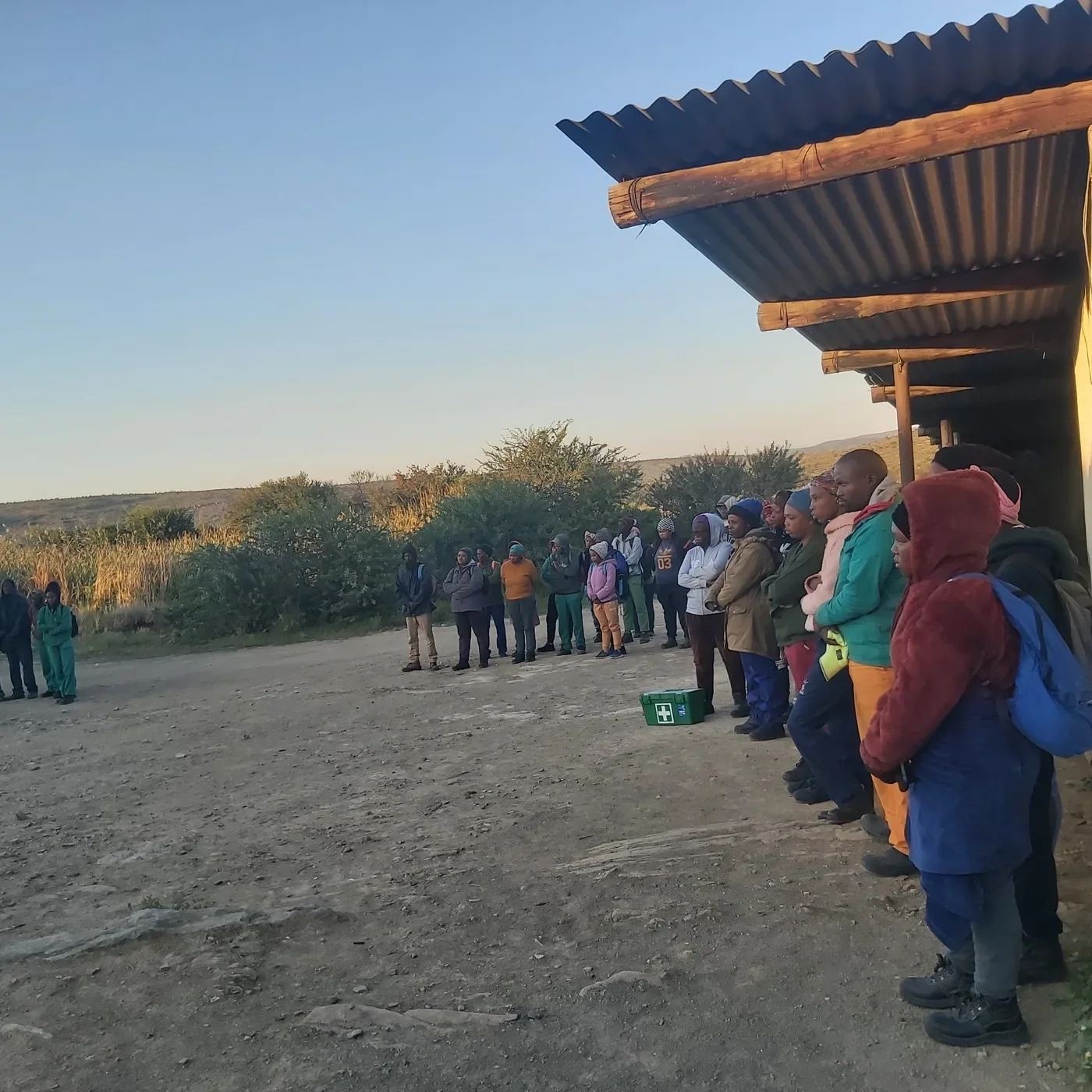
A registered Verra carbon project on a working forestry estate. Selective culm harvest maintains the standing carbon stock.
Private freehold land held by the project, so there are no lease renewals to negotiate and tenure risk is materially reduced.
Registered by Verra under VCS 3632.
The remaining 2,500 hectares are planted over three seasons, 2026 to 2028.
First issuance 2028, then biennial verification to 2038.
Each planting delivers its removals within roughly ten years. Selective culm harvest maintains the standing carbon stock for the long term.
At maturity the estate can sustainably supply roughly 355,000 tonnes of bamboo feedstock a year, so the same hectares that deliver carbon also carry a fibre crop.
Full technical materials are available under NDA: the validated project design document, carbon accumulation model and monitoring plan.
Because the bamboo is also a crop, the jobs do not end when planting does. Managed harvest, processing and manufacturing build a rural industry on restored land, with training in propagation, field operations, soil health and plant care at its core.
Trained crews and seed planters establish each season’s blocks, steady work through the 2026 to 2028 planting window.
On-site compost production returns organic matter to ground stripped by a century of overgrazing.
Bamboo blocks sit within a wider estate where native thicket is retained and recovering across the hillsides.
Whether you're securing high-integrity removals, exploring an offtake partnership, or backing the platform. We'll route you to the right person and shape an offering around your priorities.
Tell us what you're building toward. We look forward to exploring it together.